
Community Participation
Can an NDIS support worker take me to the gym or a sports club?
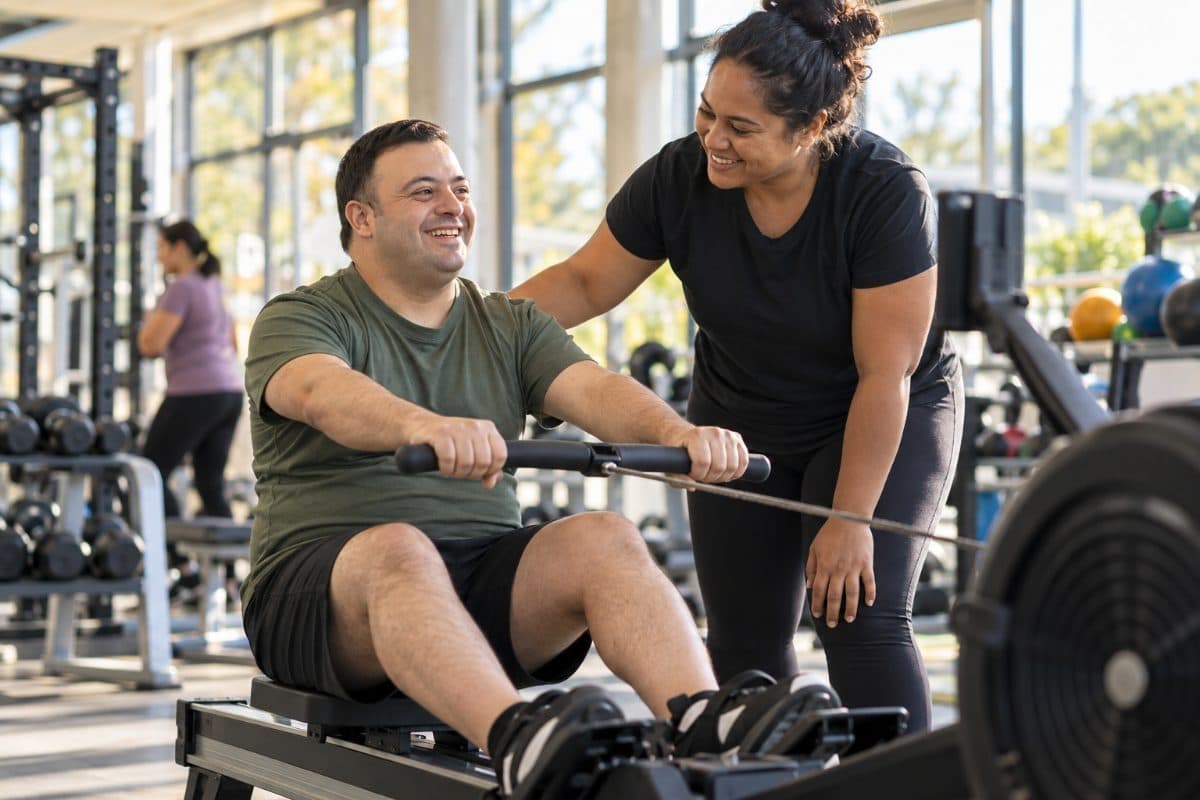
Yes, an NDIS support worker may be able to accompany you to a gym or sports club and help you participate, if the support relates to your disability needs and is covered by your plan. Ordinary memberships and participation fees are generally your own cost.
निःशुल्क परामर्श बुक गर्नुहोस्
Key takeaways
- A support worker can assist with participation, not replace a coach, physiotherapist or exercise professional.
- The person’s NDIS plan and needs determine whether support costs can be claimed.
- Discuss access, transport, timing and boundaries before booking a support shift.
What can a support worker do at the gym?
A worker’s role is to provide the disability-related assistance you need to take part. That might mean helping you organise the visit, move through an unfamiliar space, communicate with venue staff, follow a routine you have chosen, or access equipment in ways that are within the worker’s role and competence. Your preferences should guide the outing. You may want someone nearby while you take part independently, or support with the practical steps that make attendance possible. Before attending, explain what assistance is helpful, what you prefer to do yourself, and what you do not want someone to do. Gym instruction, personal training, exercise prescription and clinical decisions are different roles. A support worker should not be treated as a physiotherapist or exercise physiologist. Ask the gym about qualified instructors. Speak to an appropriate allied health professional if you need clinical advice.
What about a local sports club or group?
The same distinction applies to an ordinary sports club, social league, recreation centre or introductory group session. A worker might assist with arrival, communicating preferences, following the group schedule, getting ready for participation or returning home. Consider the setting. Ask whether the venue has an accessible entrance, toilets and change rooms that meet your needs. Ask who will run the session, whether equipment is available, and what the club expects of people attending with a support worker. Do not assume a sports club provides disability support. Participation can look different from person to person. One person may want to practise a sport; another may want to join a community group, watch a local match or build confidence attending a regular session. The plan should reflect the person’s own interests, not a standard activity chosen for them.
Will the NDIS pay for the worker, the gym or the club?
It is important to separate the support from the activity itself. A disability-related worker’s time may be funded when the applicable rules and a participant’s plan allow it. The gym membership, ordinary club fees, uniforms and everyday equipment are generally not covered simply because a person has NDIS funding. Core supports can be relevant to day-to-day help with social and community participation. Capacity building may relate to developing skills and independence, but these budgets are not interchangeable by default. The exact support item and claim depend on the funded support, plan wording and applicable rules. If you are unsure which budget applies, ask your planner or support coordinator and check the current NDIS guidance. Do not book on the assumption that every fitness activity or every associated charge can be claimed. No hourly rate is quoted here because arrangements and individual circumstances differ.
Can a support worker help me travel there?
Getting to the venue may be a separate part of the plan. Some people need help using public transport, travelling with a worker or arranging a suitable journey. Which travel and transport costs are claimable depends on the support and current rules. Before the first session, discuss where you will meet, whether you are travelling together, any mobility equipment, what happens if the session runs late, and who pays any parking, fare or venue charge. For further reading, see the Transport service page and the NDIS transport assistance in Sydney guide linked in the SEO pack. They are useful starting points for discussing logistics without assuming that any particular journey will be funded.
What should I arrange before the first visit?
Start with the activity you want to do and the reason it matters to you. Write down the assistance you would need to attend comfortably, such as help with planning, communicating, getting ready or navigating a busy environment. Sharing those details helps clarify a worker’s role. Ask the venue about accessibility and attendance conditions. Ask about clothing and equipment without assuming they are included in disability funding. Then discuss the length of the outing, including travel and time at the venue. Agree on a meeting point, what you want help with, how you will communicate if plans change, and any risks the worker should know about.
How can I choose a good fit?
A worker who respects your choices can make it easier to plan an outing around your preferences. Discuss your preferred pace, interests, communication style and degree of independence. Ask direct questions about the tasks you need help with, especially any physical assistance. You can also ask whether the same worker may be available for a regular schedule, what happens if someone is unavailable, and how feedback is handled. If a particular activity has health or safety demands, take advice from the appropriate clinician or qualified sports professional. Having a disability support worker present does not turn a community gym session into therapy, nor does it replace normal venue safety rules.
Western Sydney participation: practical local questions
In Parramatta, someone planning an activity may want to check how they will navigate the venue and meet their worker in a busy town centre. In Northmead, starting close to familiar streets may make the first outing easier to organise. These are planning examples, not claims about any specific facility. In Blacktown, check the venue’s session timetable and whether the chosen activity suits your needs. In Castle Hill, check entry arrangements and the location of accessible facilities before committing to a booking. No travel times or specific venue availability are assumed. For participants in Carlingford, Epping and Toongabbie, the key question is still what support you need to take part. A local service location does not mean every gym or sports club has been assessed for accessibility. Contact the venue directly for its current arrangements.
About Valencea in Western Sydney
Valencea is a small, founder-led NDIS support provider based in Western Sydney. The founders are Arash Hasanzadeh and Sunny Ria. Its approach includes one-to-one support, preference-based matching and a free Meet and Greet with no obligation. It works with self-managed and plan-managed participants. Shifts have a two-hour minimum.
FAQ
Can an NDIS support worker come into the gym with me?
Potentially, yes. A support worker may attend to help you participate when the assistance is related to your disability and meets your plan and funding rules. Check the gym’s visitor rules and whether it charges for companion entry. Discuss the precise tasks and boundaries with the provider before you book.
Does the NDIS pay for my gym membership?
Ordinary gym memberships are generally personal expenses, not NDIS-funded supports. Funding may instead cover eligible disability-related help that allows you to attend or use the facility. Check your plan with your planner or support coordinator before spending money. Ask the gym separately about its membership and entry policies.
Can a worker take me to a football, basketball or swimming club?
A worker may be able to help you access a sports or recreation activity if the support fits your needs and plan. The club decides its own access and session requirements. Ask in advance about facilities, equipment, supervision and any companion fees. A worker is not automatically a coach, swimming instructor or clinical professional.
Are sports registration fees and uniforms covered?
A disability-related support needed to attend may be considered differently under the plan. Check the current rules with your planner or support coordinator and ask the sports organisation for a clear cost breakdown before signing up.
Can I use core supports for a gym support worker?
Core supports may be relevant to assistance with social and community participation, but using them depends on what your plan includes and whether the support satisfies current claiming rules. Do not assume capacity building and core budgets can be swapped. Your planner or support coordinator can help clarify the appropriate budget and support item.
Can a support worker drive me to a sports activity?
Transport or travel assistance may be relevant, but whether a particular journey is available and claimable needs checking. Agree on pickup points and what happens if the activity finishes earlier or later than expected.
Can I use a worker if my plan is NDIA-managed?
Not with Valencea at present. If your plan is NDIA-managed, speak to your planner or support coordinator about eligible provider options. More generally, your funding management type affects which providers you can engage and how services are paid for.
कुरा गर्न तयार हुनुहुन्छ?
सम्पर्कमा रहनुहोस् र हाम्रो टोलीले तपाईंको योजनाका लागि साँच्चै के सम्भव छ भनेर पत्ता लगाउन मद्दत गर्नेछ।
सहयोग अनुरोध गर्नुहोस्सम्बन्धित सेवाहरू
Valencea बारे
सधैं, मानिस पहिलो।
Valencea एउटा सरल विश्वासमा निर्मित NDIS सहयोग प्रदायक हो: हरेक व्यक्तिले छनोट, मर्यादा र जडानले भरिएको जीवन बाँच्न योग्य छ। हाम्रो टोलीले सहभागी, परिवार र स्याहारकर्ताहरूसँग मिलेर वास्तविक जीवनसँग मिल्ने सहयोग प्रदान गर्छ, उल्टो होइन।
निःशुल्क परामर्श बुक गर्नुहोस्
