
NDIS Planning, Plan Reviews and Reassessments
How to Prepare for Your NDIS Plan Review
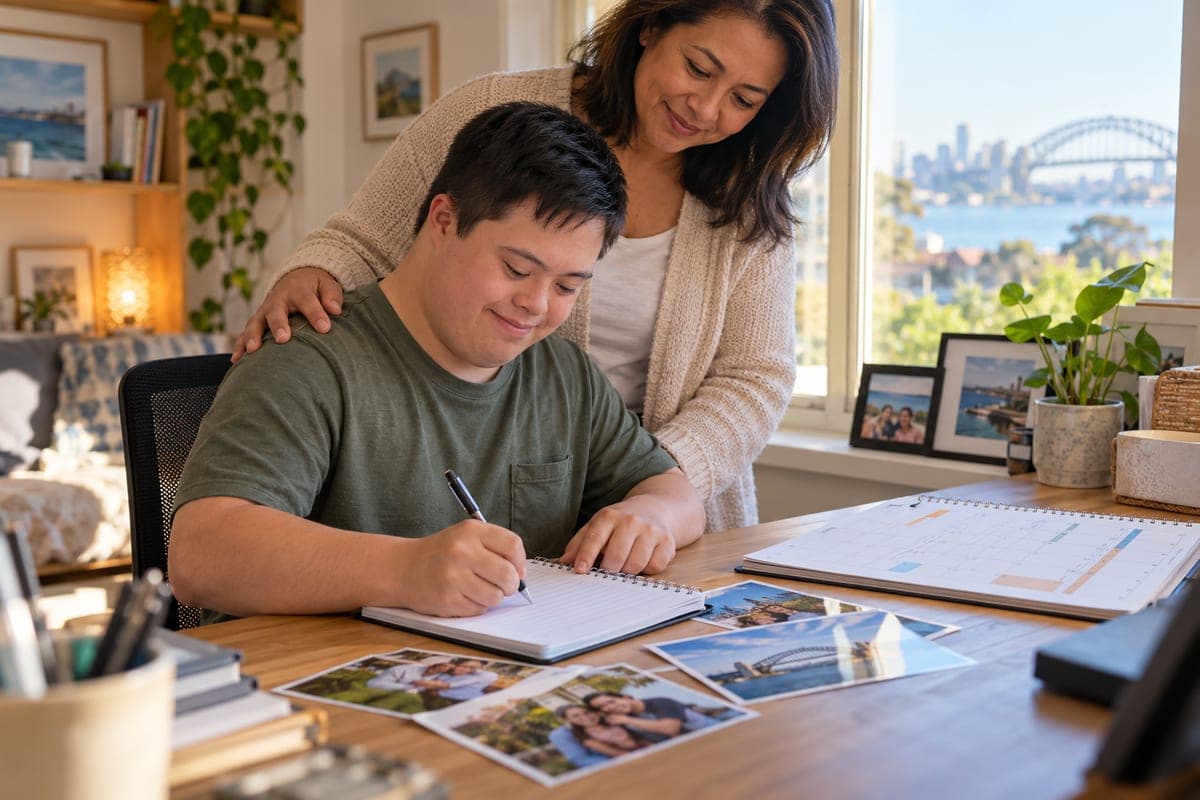
Preparing for your NDIS plan review starts with a simple question: does your current plan still support the life you want to live? Your review is an opportunity to reflect on what's working, what isn't working and whether your disability-related support needs have changed. You do not need to have every answer ready, but a little preparation can make the conversation easier.
NDIS plans are considered periodically, although not every participant needs a full reassessment. The National Disability Insurance Agency (NDIA) now commonly uses terms such as plan check-in, plan reassessment and plan variation. Many people still call the process a plan review. Understanding the difference can help you prepare for the right conversation.
Whether you live in Parramatta, Blacktown, Castle Hill, Northmead or elsewhere in Western Sydney, this guide explains how to organise your information, describe your everyday support needs, collect relevant evidence and prepare questions. The aim is to help you explain your situation clearly, without feeling that you must prove your value or exaggerate your difficulties.
निःशुल्क परामर्श बुक गर्नुहोस्
Quick answer: How do you prepare for an NDIS plan review?
To prepare for your NDIS plan review, read your current plan, identify what's working and what needs to change, collect relevant evidence and write down your goals and everyday support needs. Bring examples of how your supports have helped, where gaps remain and what changes you expect in your life. Ask your my NDIS contact what evidence is required and whether your next step is a check-in, reassessment or variation.
You can use a notebook, phone, spreadsheet or simple folder to organise everything. The most useful information is specific, accurate and connected to your real circumstances.
- Read your current NDIS plan, goals and funding categories.
- Write down the supports you've used and how they have helped.
- Record changes in your circumstances, routines or support needs.
- Collect attendance records, provider progress notes and relevant reports.
- Prepare examples of challenges or supports that haven't worked.
- Think about your goals and upcoming life changes.
- Prepare questions and ask whether you can bring someone you trust.
1. Understand what happens during an NDIS plan review
An NDIS plan review is often the name participants use for discussions about their next plan. Officially, the NDIA may organise a check-in to understand whether your current supports remain suitable. Depending on your circumstances, your plan may continue without major changes, or a reassessment may be needed.
Your my NDIS contact may contact you before your plan's reassessment date to arrange a check-in. This conversation can cover your existing supports, progress towards goals, changes in your life and whether your plan continues to meet your needs.
A plan reassessment is generally used when significant changes mean your current plan no longer meets your disability-related support needs. A plan variation may be appropriate for certain minor, urgent or short-term changes. These processes are not interchangeable, and the information required can differ.
An upcoming plan date does not automatically mean that every participant will receive a completely new support package. Your next plan depends on your circumstances and the NDIA's assessment under the applicable rules.
If you are unsure which process applies, contact your my NDIS contact before gathering extensive paperwork. Understanding what the NDIA needs can save time and help you focus on relevant information.
- Check the reassessment date shown in your current plan.
- Ask whether a routine check-in is expected.
- Confirm whether you need a reassessment or a variation.
- Ask what forms and supporting information are required.
- Find out how and when to submit evidence.
- Keep copies of communications about your plan.
2. Review your current NDIS plan, goals and support budget
Before discussing changes, spend some time understanding your existing plan. Read the goals, funded supports, budget categories and any relevant conditions. Look at what you expected your plan to achieve when it started and how things have worked in practice.
Your plan may include funding for different types of disability-related supports. Some supports may help with everyday activities, while others may focus on building skills and independence. The way a particular support is funded depends on your plan, the applicable NDIS rules and how your funding is managed.
For example, a participant in Northmead might receive assistance with household tasks, shopping or community participation. During preparation, they could reflect on whether those supports have made daily routines more manageable, supported meaningful choices or helped them participate in activities that matter to them.
Consider whether you have been able to use the support you needed. An unused budget does not automatically mean that support was unnecessary. There may have been cancellations, difficulty finding suitable workers, changes in circumstances or barriers to accessing services.
Likewise, spending your budget does not automatically establish that additional funding is required. The NDIA considers relevant evidence, current needs, eligibility and applicable funding rules.
If you're self-managed, check the records you use to track invoices and support spending. If you're plan-managed, your plan manager may be able to provide relevant statements or spending information. Ask questions about anything you do not understand rather than assuming a particular funding category can cover an activity.
- What were the goals in my current plan?
- Which supports have I used regularly?
- Which activities have become easier or more accessible?
- What barriers are still affecting my daily life?
- Have I experienced cancellations or gaps in support?
- Are there supports I couldn't access despite having an identified need?
- What would I like to maintain or change in my next plan?
3. Gather evidence and progress notes for your NDIS plan reassessment
Evidence helps the NDIA understand your circumstances and make decisions about your next plan. The most useful evidence explains your actual support needs, how they affect daily life and why particular supports may be appropriate.
Before your review, write down the supports you've used, the progress you've made towards your goals and anything that hasn't worked as expected. Include examples wherever possible. These might be attendance records, progress notes from your provider, relevant professional reports or specific stories about everyday activities.
For example, instead of simply writing 'I need help with shopping', describe what happens when you shop, which tasks you can do independently, where you need assistance and what a support worker does to help. This gives a clearer picture than a general statement alone.
Similarly, if community participation support has helped you attend a regular social activity, record what changed. Perhaps you now attend more consistently, feel more comfortable in the community or have begun learning a new routine. If challenges remain, describe them accurately.
Evidence can also explain why a support has not achieved the expected result. A support may not have been suitable, it may have been delivered inconsistently, or your circumstances may have changed. Being open about difficulties is as important as describing positive progress.
For a formal reassessment request, the NDIA may require recent evidence showing a significant change in ongoing support needs. Supporting documents may include information from treating health professionals, therapists or support workers, depending on the circumstances. Ask the NDIA what evidence is necessary and whether existing documents are sufficiently current.
A support provider can explain the services it has delivered and relevant observations, but it cannot replace a qualified professional assessment where one is required. Your own experience and preferences should remain central to the information you provide.
Valencea can help participants organise a factual summary of supports it has delivered and relevant progress observations where records are available. This can make a review conversation easier, but the NDIA decides what evidence it will accept and whether plan changes are appropriate.
- Keep a copy of your current NDIS plan.
- Gather relevant provider attendance records and progress notes.
- Include recent professional reports where available and relevant.
- Write down examples of successful support and remaining challenges.
- Record missed services, cancellations or access barriers where relevant.
- Describe the practical help you need rather than relying only on broad labels.
- Ask your my NDIS contact whether additional evidence is required.
4. Explain changes in your daily life and support needs
Your support needs may change even when your disability or diagnosis remains the same. Changes in your living arrangements, daily routine, informal support or access to services can all affect how your plan works in practice.
You might have moved to a different home, started studying, taken on a new routine or experienced a change in the assistance available from family members. You might also be preparing for an important transition, such as leaving school, starting work or moving towards more independent living.
When explaining a change, focus on its practical effect. Describe what has changed, when it happened, how often it affects you and what assistance may now be required.
For example, a participant in Blacktown who previously relied on a family member for regular shopping assistance might explain that the family member is no longer available at the same times. The participant could describe the shopping tasks they find difficult and the support they currently need.
Another participant in Castle Hill might want to develop more independence with meal preparation. They could describe which steps they manage independently, which steps require assistance and how structured support could contribute to their goals.
Do not exaggerate difficulties or minimise achievements. Your circumstances deserve to be understood accurately. If your needs vary from day to day, describe that variation and provide examples of both easier and more challenging days.
You can also explain changes you expect in the future. The NDIA may consider upcoming life transitions when assessing a plan, although not every anticipated change will result in different funding.
- What has changed since my current plan started?
- Has my home or living situation changed?
- Has the assistance I receive from family or friends changed?
- Are new responsibilities or routines affecting my support needs?
- Do my needs vary across different days or situations?
- Am I preparing for a change in study, work or community activities?
- What practical support would help me manage these circumstances?
5. Prepare your NDIS goals and explain what independence means to you
Your NDIS goals should reflect what matters to you, not simply what another person thinks you should achieve. They may relate to daily living, independence, relationships, community participation or other meaningful areas of your life.
Before your NDIS plan review, look at your existing goals and consider whether they still reflect your priorities. Some goals may remain important for several years. Others may need to change as you gain skills, experience new challenges or develop different interests.
Independence does not mean doing everything without assistance. For one person, it might mean choosing when to go shopping and having the right support to get there. For another, it might mean learning to prepare a simple meal, maintaining friendships or taking a more active role in household routines.
A useful way to describe a goal is to connect it with an activity and explain the barriers you currently face. For example, instead of saying 'I want to be more independent', you could say 'I want to become more involved in planning and preparing my meals, but I currently need support with organising ingredients and completing parts of the routine'.
Goals are an important part of planning, but identifying a goal does not automatically make every related activity an NDIS-funded support. The NDIA applies relevant funding rules and considers the connection between your disability-related needs and the requested supports.
You can discuss your goals with someone you trust before the meeting. The final description should still reflect your own choices and preferences.
- Choose goals that are meaningful to your life.
- Identify goals you've made progress towards.
- Keep goals that remain relevant.
- Describe new goals or priorities clearly.
- Connect each goal with practical barriers or support needs.
- Explain what progress would look like for you.
- Ask how your goals relate to the supports in your current plan.
6. Prepare questions for your NDIS review meeting in Western Sydney
A plan check-in or reassessment conversation can involve unfamiliar terminology and important decisions. Preparing questions beforehand gives you a better opportunity to understand what is being discussed.
You do not need to memorise NDIS terminology or speak in a particular way. You can use your notes, explain things in your own words and ask for information to be repeated or clarified.
If you want someone with you, ask about including a family member, trusted friend or another appropriate person. A participant may find it easier to explain everyday circumstances when someone who knows their routine is present. Your preferences about who participates should be respected.
If English is not your preferred language, ask the NDIA about interpreting or language assistance for your planning conversation. Having information explained in a language you understand can help you ask questions and make informed decisions.
Participants living in Parramatta, Blacktown, Northmead, Castle Hill and other parts of Sydney can prepare in the same way regardless of whether their check-in takes place in person, by phone or through an online meeting.
During the conversation, use real examples and explain why they matter. If a question is unclear, ask what it means. If you don't know an answer, it is better to say so than to guess.
After the meeting, consider asking for a written summary of the discussion and any next steps. This can help you identify whether further evidence is needed or whether there are outstanding questions.
- Does my current plan still meet my assessed support needs?
- What information is needed to consider any proposed changes?
- Is a check-in, plan variation or reassessment appropriate?
- How will my existing supports be considered?
- What should I do if my circumstances change again?
- Can I provide additional information after our conversation?
- How will I be told about decisions concerning my plan?
- Who can explain the decision if I do not understand it?
7. Understand plan funding, management options and possible changes
Understanding how your funding is managed can help you prepare for your next NDIS plan. Participants may have self-managed, plan-managed or NDIA-managed funding, or a combination of management arrangements across their plan.
With self-managed funding, you take responsibility for managing the relevant support payments and records. With plan-managed funding, a registered plan manager helps manage invoices and payments for the funding they administer. With NDIA-managed funding, additional provider registration requirements apply.
The management arrangement may affect which providers you can use. Valencea currently supports self-managed and plan-managed participants. Its NDIS provider registration is in progress, so it cannot currently deliver NDIS-funded services to participants using NDIA-managed funding for those supports.
If you are considering changing how your plan is managed, raise the question with your my NDIS contact. Do not assume that changing your funding management arrangement automatically changes the amount of support available.
You should also review any relevant funding periods, categories or restrictions shown in your plan. The ability to use funding for a particular support depends on your individual plan and current NDIS rules.
If you are concerned that your funding will run out before the end of your plan, record the issue and seek clarification promptly. Your plan manager, where applicable, may be able to help explain expenditure, while the NDIA can advise on formal plan changes.
NDIS legislation and funding arrangements can change. Rules affecting new, renewed or reassessed plans may differ depending on when they take effect. For this reason, avoid relying on assumptions from an older plan or information shared by someone whose circumstances are different.
For current eligibility, budget rules, funding periods or spending questions, check with the NDIA, your plan or your plan manager before making decisions.
- Identify which parts of your plan are self-managed, plan-managed or NDIA-managed.
- Check your current budget categories and any funding periods.
- Review spending records and remaining funding where available.
- List funding questions you do not understand.
- Ask how proposed plan changes could affect existing supports.
- Confirm provider eligibility before arranging services.
- Check official NDIA guidance rather than relying on outdated information.
8. What to do after your NDIS plan review or reassessment
Once your check-in or reassessment conversation is finished, your next step depends on the outcome. Your existing plan may continue, changes may be considered, or the NDIA may request additional information.
Keep a record of what was discussed and any actions you agreed to complete. If you have been asked for further evidence, confirm what is required and how to provide it.
If you receive a new or varied plan, read it carefully. Check your goals, funded supports, management arrangements, funding periods and any conditions that affect how you can use the plan.
Compare the new arrangements with the support you are currently receiving. You may need to discuss scheduling, service agreements or the practical delivery of supports with your provider.
If something in the plan is unclear, contact your my NDIS contact or the NDIA. If you disagree with a decision, ask about the applicable review process, the type of decision made and any relevant time limits. A review of an NDIA decision is different from a routine plan check-in.
You can also consider whether your existing providers remain suitable. Your preferences, communication needs, support arrangements and goals may have changed. It is reasonable to discuss what works well and what you would like to approach differently.
Remember that planning is not only about obtaining a document. It is about understanding how approved supports can be organised around your everyday life.
- Request or keep a summary of your check-in or meeting.
- Submit any additional information requested by the NDIA.
- Read your new or varied plan carefully if one is issued.
- Confirm the supports and funding arrangements that apply.
- Discuss any relevant service changes with your providers.
- Ask questions promptly if the outcome is unclear.
- Keep records of important decisions and correspondence.
Your action checklist
Use this practical checklist before your next NDIS plan review or check-in. You can complete it over several days rather than trying to organise everything at once.
Start with the information you already have. A clear notebook containing everyday examples can be useful alongside formal reports and records. The purpose is to make your circumstances understandable, not to create unnecessary paperwork.
If you are helping a family member prepare, involve them in the process and respect their preferences about what information is shared. Ask before discussing personal details with other people.
- Find my current NDIS plan and check the relevant dates.
- Confirm whether my next conversation is a check-in, reassessment or variation request.
- Read my current goals, support categories and management arrangements.
- Write down which supports have worked well and why.
- Record supports that have been difficult to access or have not worked as expected.
- Describe changes in my daily routine, circumstances or support needs.
- Collect useful attendance records, provider notes and relevant reports.
- Ask the NDIA what evidence is required and whether it must be recent.
- Write down specific examples of how support affects my everyday life.
- Review my current goals and consider any new priorities.
- Prepare questions about my next plan and approved supports.
- Decide whether I want a trusted person or language assistance for the conversation.
- Keep copies of documents I submit.
- After the meeting, check the outcome and follow up on any outstanding questions.
Talk to Valencea about preparing for your NDIS plan review
If Valencea has provided your supports, we can help put together a factual summary of the services delivered and relevant progress observations, where records are available. This may help you explain how your daily life assistance, community participation, domestic support or other services have worked in practice.
Valencea is a founder-led support provider based in Northmead, Western Sydney. Arash and Sunny personally oversee care, and both speak English and Persian. We support self-managed and plan-managed NDIS participants. Our registration is still in progress, so we cannot currently provide NDIS-funded services under NDIA-managed funding.
We do not provide support coordination, plan management, therapy or official NDIS planning decisions. However, we can discuss the practical supports we offer and whether they may suit your goals, subject to your plan and applicable NDIS rules.
Your first Meet and Greet with Valencea is free and comes with no obligation. To talk about support options, call or WhatsApp 0494 798 710 or email hello@valencea.com.au. We are open Monday to Sunday, 7:00am to 8:00pm.
Official Australian sources
The following official Australian sources explain NDIS plan changes, reassessments, participant rights and support arrangements. Check the latest information directly because NDIS legislation, procedures and guidance may change.
- National Disability Insurance Scheme — official participant information (ndis.gov.au)
- NDIS — How to prepare for a plan reassessment (ndis.gov.au/participants/changing-your-plan/types-plan-changes/how-prepare-plan-reassessment)
- NDIS — What is a plan reassessment (ndis.gov.au/participants/changing-your-plan/types-plan-changes/what-plan-reassessment)
- NDIS — Guide to changing your plan (ndis.gov.au/participants/changing-your-plan/types-plan-changes/guide-changing-your-plan)
- NDIS — How to prepare for a check-in (ndis.gov.au/participants/changing-your-plan/your-next-plan/how-prepare-check)
- NDIS Quality and Safeguards Commission — participant rights and safeguards (ndiscommission.gov.au)
- myGov — Australian Government online services (my.gov.au)
About this guide
This guide was prepared for Valencea to help NDIS participants and families understand how to prepare for a plan review, check-in or reassessment. It provides general information only, not medical, legal, financial or individual NDIS planning advice. Your circumstances and the current NDIS rules determine which processes apply. For official decisions and funding questions, check with the NDIA, your plan or your plan manager. Last reviewed: 30 October 2026.
FAQ
What should I bring to my NDIS plan review?
Bring your current NDIS plan, a list of your goals, notes about your everyday support needs and any relevant evidence. Attendance records, provider progress notes, professional reports and examples of what's working or not working can help explain your situation. Ask your my NDIS contact which documents are required for your particular meeting.
How often does the NDIS review your plan?
NDIS plans are considered periodically, but the timing and type of discussion depend on your individual plan and circumstances. You may have a check-in before your plan's reassessment date, and a full reassessment is not automatically required every time. Check your current plan and speak with your my NDIS contact about what to expect.
What is the difference between an NDIS plan review and a reassessment?
Plan review is a common term participants use when discussing their next plan. The NDIA may instead refer to a check-in, plan reassessment or plan variation, depending on the circumstances. A reassessment generally considers significant changes in support needs, while a variation may address certain smaller, urgent or short-term changes.
Can I ask for my NDIS plan to be reassessed early?
You may be able to request a reassessment if your circumstances have changed significantly and your current plan no longer meets your needs. Under the rules introduced in August 2026, a formal reassessment request must be made by the participant, their nominee or their child representative, using the required process and supporting evidence. Contact the NDIA to confirm the current requirements before submitting a request.
Can my NDIS funding be reduced after a plan review?
Your next plan may contain more, less or different supports depending on the NDIA's assessment and the funding rules in effect. A reassessment does not automatically mean an increase or reduction in funding. Explain your current needs clearly and ask the NDIA how any decision was reached.
Do I need a medical or therapy report for my NDIS plan review?
Not every routine check-in requires a new professional report. If you request a reassessment because your ongoing support needs have changed significantly, the NDIA may require recent supporting evidence, including relevant professional assessments or reports. Ask your my NDIS contact exactly what is needed before arranging additional documents.
What if I have not achieved my NDIS goals?
You can explain the progress you've made and the barriers that remain. Not achieving a particular goal does not mean you should hide difficulties or describe progress inaccurately. Focus on what happened, what support was available and what may need to change.
Can a family member attend my NDIS plan review meeting?
You can ask to have a trusted person, such as a family member or friend, involved in your check-in or planning conversation. Their role should support your preferences and help you communicate your needs, rather than replace your voice. Confirm the meeting arrangements with your my NDIS contact.
Can I have an interpreter at my NDIS plan review?
If you need language assistance, ask the NDIA about interpreting options when arranging your meeting. Clear communication is important when discussing your goals, supports and funding. You can also prepare notes in your preferred language to help explain your circumstances.
What happens if I disagree with my new NDIS plan?
You can ask the NDIA to explain the decision and discuss the applicable decision review process. Different types of decisions and plan changes can have different requirements and time limits. Check the official NDIA guidance for your situation rather than assuming that another routine check-in is the appropriate next step.
Can an NDIS support provider help me prepare for a plan review?
A support provider may be able to give you factual information about the services delivered, attendance and relevant progress observations. These records can help explain what support has looked like in practice. Providers do not decide NDIS funding or replace professional assessments where those are required.
Can Valencea help with my NDIS plan review in Western Sydney?
Valencea can discuss supports it has delivered and help organise a factual service summary where records are available. It also offers a free, no-obligation Meet and Greet for people exploring its support services. Valencea works with self-managed and plan-managed participants, but does not provide support coordination, plan management or official NDIA planning services.
Do I need to change my support worker when my NDIS plan changes?
A new or varied plan does not automatically mean you must change your support worker. You should check whether your approved supports, funding arrangements and service agreement remain suitable. If your needs or preferences have changed, discuss possible adjustments with your provider.
What should I do if my NDIS budget is running out before my plan ends?
Review your current spending records and check which funding categories and periods apply. Speak with your plan manager if you are plan-managed, or contact your my NDIS contact to discuss the circumstances. Additional funding is not automatic, and the NDIA will determine whether any formal change is appropriate.
कुरा गर्न तयार हुनुहुन्छ?
सम्पर्कमा रहनुहोस् र हाम्रो टोलीले तपाईंको योजनाका लागि साँच्चै के सम्भव छ भनेर पत्ता लगाउन मद्दत गर्नेछ।
सहयोग अनुरोध गर्नुहोस्सम्बन्धित लेखहरू
Valencea बारे
सधैं, मानिस पहिलो।
Valencea एउटा सरल विश्वासमा निर्मित NDIS सहयोग प्रदायक हो: हरेक व्यक्तिले छनोट, मर्यादा र जडानले भरिएको जीवन बाँच्न योग्य छ। हाम्रो टोलीले सहभागी, परिवार र स्याहारकर्ताहरूसँग मिलेर वास्तविक जीवनसँग मिल्ने सहयोग प्रदान गर्छ, उल्टो होइन।
निःशुल्क परामर्श बुक गर्नुहोस्
