
Daily Living Support
What counts as daily personal activities under the NDIS?
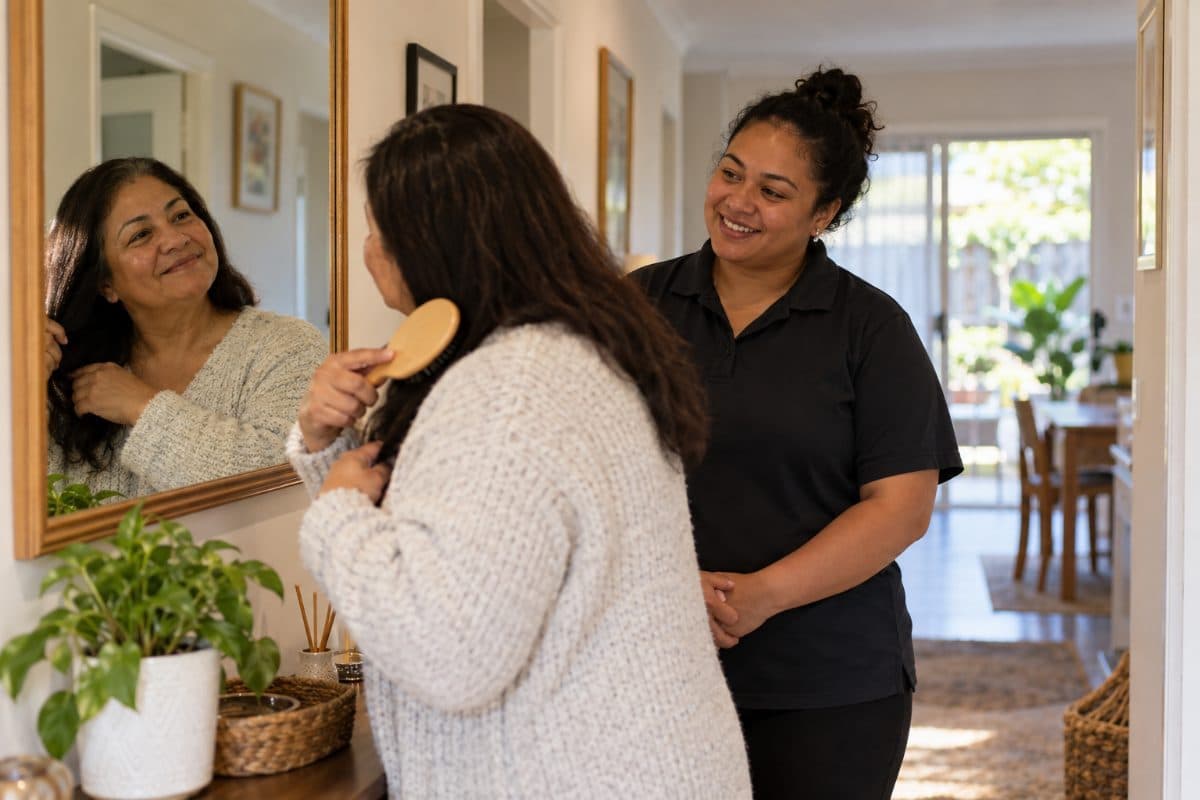
Daily personal activities under the NDIS are everyday self-care tasks a person may need help to complete because of their disability. They can include getting ready in the morning, dressing, personal hygiene, eating and moving safely around the home. What support is funded depends on the person’s plan, needs and applicable NDIS rules.
निःशुल्क परामर्श बुक गर्नुहोस्
Key takeaways
Daily personal activities focus on personal routines, not every job around the house. A support worker may provide practical assistance or prompts, depending on the task and the person’s preferences. Personal care and household assistance are related but different. Funding needs to be checked against the participant’s plan.
What Is Assistance With Personal Domestic Activities Under the NDIS?
Assistance with personal domestic activities under the NDIS is everyday support at home that may cover both personal care and household tasks. Personal activities can include showering, dressing, grooming and eating. Domestic activities can include cleaning, laundry, meal preparation and tidying. What is funded depends on the participant's plan, goals and what is reasonable and necessary. You can describe the help you want in your own words.
- Personal care: Assistance with showering, dressing and grooming.
- Eating and meals: Support with eating and preparing everyday meals.
- Household cleaning: Help with cleaning and maintaining living spaces.
- Laundry: Assistance with washing, drying and organising clothing.
- Home routines: Support with tidying and managing everyday household activities.
How Personal and Domestic Support Can Work Together at Home
Personal and domestic assistance can work together during the same support worker visit when the participant's plan allows it. For example, someone might want support getting dressed, followed by breakfast preparation and a little laundry. Describing the sequence of tasks, the level of help you prefer and your usual routine makes it easier to discuss suitable support. Valencea serves Sydney and Western Sydney.
- Morning routine: Assistance with showering, dressing and preparing breakfast.
- Daytime routine: Help with laundry, tidying and preparing meals.
- Evening routine: Support with personal care and everyday household tasks.
- Individual preferences: Discuss which activities you want help with and how you prefer to complete them.
Getting dressed and ready for the day
A person may need help choosing clothes, fastening buttons, putting on shoes or organising items for their morning routine. They may ask for verbal prompts rather than physical help. The right approach should follow their preferences and agreed support needs.
Showering, bathing and personal hygiene
Some people need help preparing bathroom items, washing or completing other personal hygiene routines. These are intimate tasks. Consent, dignity, privacy and safe working arrangements matter.
Grooming and appearance
Brushing hair, basic grooming, oral hygiene and getting ready for an appointment can be part of a daily personal routine. The person may prefer to do as much as possible independently, with a support worker helping only with steps that are difficult.
Eating and drinking
Assistance at mealtimes might involve setting out food, getting utensils within reach or providing routine prompts. Meal preparation is a related, separately described service.
Toileting and continence routines
Toileting and continence-related tasks may be described as daily personal activities. They are private and can involve varying levels of risk.
Daily personal activities, household tasks and getting out: what is the difference?
Daily personal activities are about looking after yourself, such as dressing, hygiene and eating. Household tasks are about looking after your home, such as cleaning and laundry. Getting out and about, for example to appointments or community activities, is described separately again.
The three are often needed in the same week, so a single worker may help with more than one. They are still described, planned and funded as separate kinds of support, which is why it helps to list the exact tasks you want help with rather than a general label.
How do core supports and capacity building differ?
Core supports generally relate to help with day-to-day activities. Capacity building focuses on developing skills and greater independence over time. The categories are not interchangeable, and funded supports need to align with the participant’s plan and current rules.
What about medication and higher-level care?
Medication assistance can involve safety requirements and different levels of responsibility. Do not assume that prompting, handing over medicine or administering it are the same task. Clinical nursing tasks, therapy and intensive or complex support needs should be discussed with appropriately qualified professionals and your planner or support coordinator. A general daily routine should never be used to bypass the level of training or clinical assessment an activity requires.
How to describe the help you need
Start with one ordinary day. Think about when you wake, wash, dress, eat, move around your home and prepare for bed. Note which steps you do independently, which need prompts, and which need practical assistance. Explain what matters to you: privacy, timing, routine, communication and personal choice.
About Valencea in Western Sydney
Valencea is a small, founder-led NDIS support provider based in Western Sydney. Its co-founders are Arash Hasanzadeh and Sunny Ria. Both speak Persian and English. The business offers a free, no-obligation Meet and Greet and one-to-one support, with a minimum two-hour shift. It works with self-managed and plan-managed participants.
Valencea offers Assistance with Daily Life, Personal Care and Domestic Assistance as separate services you can combine, and a free Meet and Greet is the place to talk through your own routine.
FAQ
Can NDIS assistance with personal domestic activities include meal preparation?
Yes. Meal preparation is an example of a domestic activity that may be included in everyday support. A support worker can assist with preparing meals alongside other suitable activities when the participant's NDIS plan allows it.
Can I choose how much help I receive with personal and domestic activities?
You can describe your support needs and preferences in your own words. For example, you might want help completing certain tasks or prefer assistance while participating in an activity yourself. The support provided should reflect your individual needs and the funding available in your plan.
Can I ask for personal care and household assistance in the same visit?
Yes. A support worker can assist with both personal and domestic activities during one visit when your NDIS plan allows it. You can discuss your preferred routine, such as getting ready in the morning followed by laundry or meal preparation.
Does showering count as a daily personal activity?
Showering can be an example of a daily personal activity when disability-related assistance is needed. However, the type of help, funding and safety requirements depend on the person’s circumstances and plan.
Is dressing part of daily personal activities?
Getting dressed can be part of daily personal activities. Support might involve prompts, arranging clothing or practical help with difficult steps. How it is delivered should reflect the person’s wishes and their specific needs. Whether the task is funded should be checked against the participant’s own plan and the relevant current rules.
Does the NDIS fund help with eating?
Mealtime support may be relevant where a person needs disability-related help with everyday activities. The exact task matters: setting up food is different from complex feeding or swallowing support. Funding must be checked against the individual plan and current rules. Seek clinical advice for tasks involving swallowing or other health risks.
Are cleaning and laundry daily personal activities?
Cleaning and laundry are generally better described as domestic or household assistance rather than personal self-care. They may still be relevant disability supports in some circumstances, but their funding category and eligibility require a plan-specific check. Explain the actual task when speaking with your planner or support coordinator instead of assuming the label decides funding.
Are daily personal activities included in core supports?
Assistance with daily personal activities is commonly discussed in relation to NDIS core supports. The exact support item, available budget and claiming rules depend on the plan and current arrangements. If you are uncertain, ask your plan manager, planner or support coordinator before you commit to any service or claim.
Can a support worker help with medication?
Medication tasks need a careful distinction between reminders, practical assistance and administration. The level of risk and any clinical requirements must be assessed rather than assumed. This article does not provide medication advice.
Can an NDIA-managed participant use this provider?
This provider currently accepts self-managed and plan-managed participants. If your plan is NDIA-managed, speak with your planner or support coordinator about your available provider options and the requirements that apply to your plan.
How can I prepare for a first conversation about personal care?
Write down the tasks you want help with, when you need them, any preferences about privacy and how much assistance you want. Identify tasks that involve manual handling, medication or clinical needs. Bring any questions about your NDIS budget to your planner or support coordinator. A first conversation should clarify what the provider can actually offer.
कुरा गर्न तयार हुनुहुन्छ?
सम्पर्कमा रहनुहोस् र हाम्रो टोलीले तपाईंको योजनाका लागि साँच्चै के सम्भव छ भनेर पत्ता लगाउन मद्दत गर्नेछ।
सहयोग अनुरोध गर्नुहोस्सम्बन्धित सेवाहरू
सम्बन्धित लेखहरू
Valencea बारे
सधैं, मानिस पहिलो।
Valencea एउटा सरल विश्वासमा निर्मित NDIS सहयोग प्रदायक हो: हरेक व्यक्तिले छनोट, मर्यादा र जडानले भरिएको जीवन बाँच्न योग्य छ। हाम्रो टोलीले सहभागी, परिवार र स्याहारकर्ताहरूसँग मिलेर वास्तविक जीवनसँग मिल्ने सहयोग प्रदान गर्छ, उल्टो होइन।
निःशुल्क परामर्श बुक गर्नुहोस्
