
Choosing a Support Worker
NDIS Support Worker Training: What Participants Should Know
Answer first
NDIS support worker training helps workers understand safe, respectful disability support. It can include learning about participant rights, communication, everyday assistance and spotting risks. But finishing a course does not automatically make someone the right worker for you. When choosing support, ask about relevant learning, practical experience, boundaries and how the worker will respect your preferences. This guide explains what to look for and which questions to ask in a first conversation with a provider in Western Sydney.
मुफ़्त परामर्श बुक करें
Key takeaways
Here are the main points in this guide.
- Training matters, but weigh it alongside practical ability and personal fit.
- Ask what learning a worker has done and how it relates to the support you need.
- Respect, consent, privacy and clear communication matter in everyday support.
- A Meet and Greet is a chance to talk about your routine, preferences and expectations.
- Check that the provider can deliver the support you need and work with the way your plan is managed.
What does NDIS support worker training involve?
Training is learning that helps a worker give disability support safely and respectfully. It may cover communication, personal boundaries, everyday assistance, awareness of risks, and what to do when something goes wrong.
Some learning is general. Other learning should relate to particular activities, such as helping someone prepare meals, travel in the community or follow a daily routine.
The important difference is between knowing something and being able to do it. For example, a worker may know that participants should make their own choices. In practice, that means asking how you want something done, rather than taking over.
A useful question to ask is: "How does your training change the way you support someone in everyday situations?" The answer should be clear, practical and relevant to you.
Understanding the NDIS Worker Orientation Module
The NDIS Quality and Safeguards Commission offers a free online Worker Orientation Module called Quality, Safety and You. It introduces workers to the NDIS Code of Conduct, participant rights, respect and safety.
Check the NDIS Commission's website to see who is required to complete the module, because the rules can depend on the type of provider. When you talk with a provider, you can ask whether a proposed worker has completed it and what other relevant learning they have done.
Finishing a module is not the same as showing skill in every support task. If you need a particular kind of help, ask how the provider checks that the worker understands it and can do it safely.
Training, qualifications and practical skills: what is the difference?
These words are often used together, but they mean different things.
Training is learning how to do a task or understand a responsibility. A qualification is a formal record of education or assessed learning. Practical skills are what someone can show while doing real activities.
When you compare workers, focus on the tasks you actually need help with. Someone supporting shopping or community outings may need a different mix of abilities from someone helping with personal care. Ask the provider to explain how workers are prepared for the specific tasks you want.
Do not assume a general course covers every activity or every person's needs.
Five practical areas to ask about
Use these as conversation starters. They are not proof that a worker has done any particular training.
Communication and consent
Ask how the worker checks what you want before helping. Can they explain what they are doing? Will they listen if you want something done differently? How do they respond when you say no? Good communication starts with listening, not assuming.
Privacy and personal boundaries
Support can mean entering someone's home and learning about their routines. Ask how the worker handles privacy, personal information, visitors and boundaries. You should feel able to explain what you expect.
Safe everyday assistance
Talk through the real activities involved, such as household tasks, meal preparation, shopping or getting ready to leave home. Ask what the worker knows, what they have practised, and what they would do if a task was outside what they can do.
Choice and independence
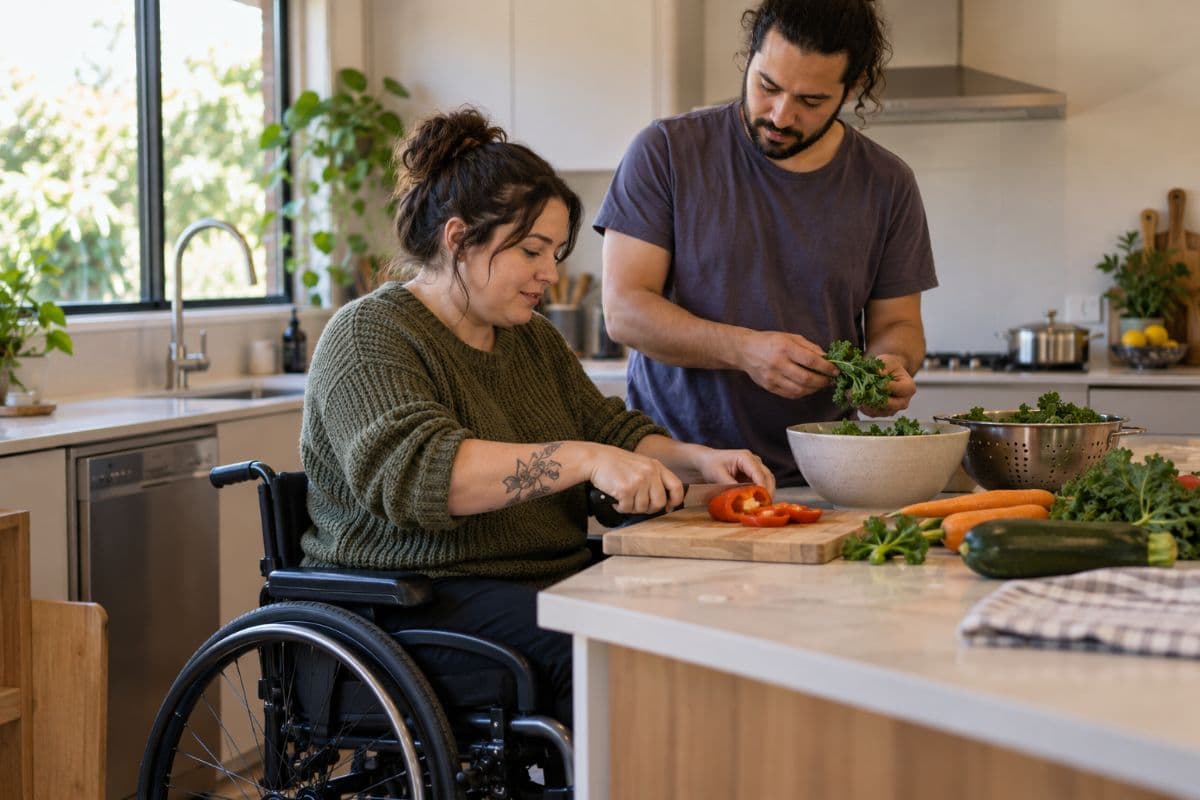
Help should be shaped around your preferences. If you are making lunch, you might want help organising ingredients while you do other parts yourself. Ask whether the worker is comfortable supporting the level of involvement you choose.
Responding to concerns
What happens if something does not feel right? Ask who to contact, how to raise a concern and what happens after you give feedback. Clear answers matter most when support happens in your home.
Match training to the type of support you need
A good starting point is to describe the activity before you talk about a worker's experience. Valencea's services include Assistance with Daily Life, Community Participation and Life Skills Development. These involve different everyday situations.
For help at home, you could ask about following your routine and respecting household preferences. For community activities, talk about the places you want to go, how you like to communicate and how support should work outside the home. For life skills, say which parts you want to practise on your own and where help would be useful.
Valencea also offers Support Worker Services, with one-to-one support and a minimum two-hour shift.
Questions to ask before agreeing to support
A first conversation should give you room to explain your needs and ask direct questions. You can use this checklist.
- What training has the proposed support worker completed?
- How does that learning relate to the help I need?
- What practical experience do they have with these tasks?
- What happens if a worker is unsure how to do something?
- How will my communication and personal preferences be respected?
- Who should I contact if I have a concern?
- Can I explain my routine before support begins?
- What happens if the worker is not a good match?
You do not need technical language. You can describe an ordinary day and ask how the person would support you. For example: "I want someone who will help me get organised in the morning, but I still want to make my own decisions." A clear conversation is more useful than a long list of course names with no explanation of how they relate to your life.
How the way your plan is managed relates to choosing a worker
Whether a particular activity can be funded depends on your plan and the current NDIS rules. Your planner or support coordinator can explain how your own plan applies.
How your plan is managed also affects which providers you can use. Valencea works with self-managed and plan-managed participants.
Valencea offers a free, plain-language chat about what a plan can be used for. This is general information, not financial or legal advice.
Choosing support in Western Sydney
Western Sydney communities have different routines, travel needs and ways of communicating. These examples show what a first conversation might focus on. They are not statements that any worker has particular training or experience.
If you live in Northmead, you might talk about support at home, preparing meals or organising everyday activities. In Parramatta, the focus might be community participation or help with planned outings. In Blacktown, it might be shopping assistance or building confidence with familiar routines.
Valencea also has location pages for Castle Hill, Carlingford, Epping, Ryde, Chatswood, Toongabbie and North Rocks. What matters most is explaining your activities, preferences and boundaries before you decide whether a provider suits you.
Local proof: what you can know about Valencea
Valencea (VALENCEA PTY LTD) is a small, founder-led support provider based in Northmead. Its founders are Arash Hasanzadeh, Co-Founder and Director, and Sunny Ria, Co-Founder and Managing Director. Both speak Persian and English.
We offer a free Meet and Greet with no obligation, and we match support workers to a person's preferences. It works with self-managed and plan-managed participants.
Ask any provider, including Valencea, for details about a worker's training and checks directly before you agree to support.
Talk to Valencea about your support needs
If you are looking for everyday disability support in Western Sydney, a conversation can help clarify the activities, preferences and practical skills that matter to you. You can call or WhatsApp Valencea on 0494 798 710, email hello@valencea.com.au, or use the Request Support form. Contact hours are Monday to Sunday, 7:00am to 8:00pm, and Valencea is available 24/7 for existing participants. You can also book a free consultation on the website.
This article gives general information about support worker training and choosing support. It is not individual NDIS funding, clinical, legal or financial advice. Contact your planner or support coordinator about your own circumstances.
FAQ
What training should an NDIS support worker have?
Training should be relevant to the tasks a worker will do. Ask about learning in safety, communication, participant rights and the activities you need help with. Also ask how practical skills are checked. Finishing a course does not, on its own, show a worker suits every person or every support task.
Is the NDIS Worker Orientation Module mandatory?
The NDIS Commission offers the module free online, and who must complete it can depend on the type of provider. Check the Commission's website for the current rules. You can ask any provider whether a worker has completed it and what other learning supports their role.
Does a support worker need a formal qualification?
What knowledge and preparation is needed depends on the work involved. A qualification and demonstrated practical skills are not the same thing. Ask what the worker can do safely, what learning they have completed and whether any specialised preparation is needed. Check current NDIS Commission guidance for specific requirements.
How can I check whether a worker is suitable?
Start by describing your routine and the help you want. Ask about training, relevant experience, communication preferences and what happens if you have concerns. A free Meet and Greet can help you talk through expectations. Do not rely on a course name alone when deciding whether a worker suits you.
Can I ask for a support worker who understands my preferences?
Yes. You can explain your preferences when you talk with Valencea. Our process includes matching support workers to the person's preferences, starting with a free Meet and Greet with no obligation. Whether a particular worker is available should be checked directly with us before arrangements are made.
Can Valencea support self-managed or plan-managed participants?
Yes. Valencea works with self-managed and plan-managed participants. Whether an activity can be funded depends on your plan, so ask your planner or support coordinator about individual funding questions.
How can I arrange a first conversation with Valencea?
You can phone or WhatsApp Valencea on 0494 798 710, use the Request Support form or book a free consultation. Contact hours are Monday to Sunday, 7:00am to 8:00pm. Valencea is also available 24/7 for existing participants. You can talk about the support you need before you decide anything.
इस पर बात करने के लिए तैयार हैं?
संपर्क करें और हमारी टीम आपकी योजना के लिए वास्तव में क्या संभव है यह समझने में आपकी मदद करेगी।
सहायता के लिए अनुरोध करेंसंबंधित लेख
Valencea के बारे में
हमेशा लोग पहले।
Valencea एक NDIS सहायता प्रदाता है जो एक सरल विश्वास पर आधारित है: हर व्यक्ति पसंद, गरिमा और जुड़ाव से भरा जीवन जीने का हकदार है। हमारी टीम प्रतिभागियों, परिवारों और देखभालकर्ताओं के साथ मिलकर ऐसी सहायता प्रदान करती है जो वास्तविक जीवन के अनुरूप हो - न कि इसके विपरीत।
मुफ़्त परामर्श बुक करें
