
Community Participation
What does a support worker do on a community outing?
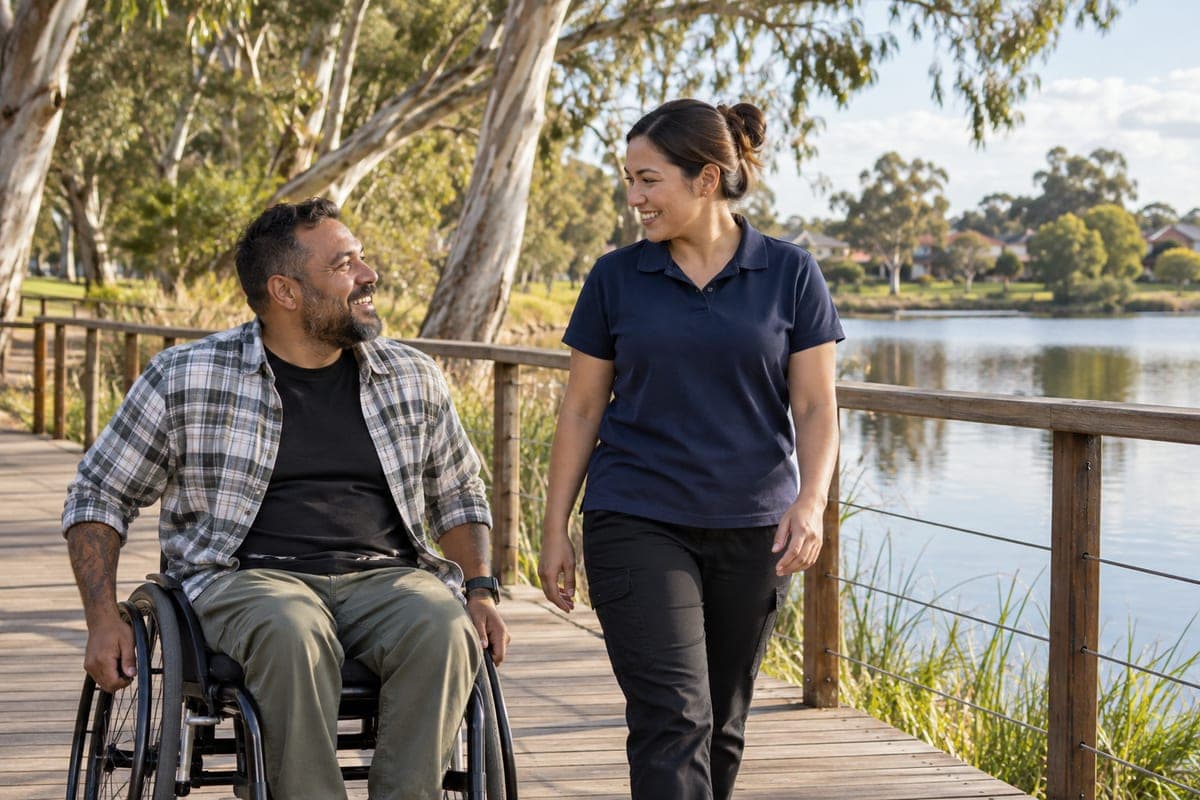
A support worker on a community outing helps a person take part in an activity they choose. This can include planning, getting ready, travelling where agreed, finding accessible entrances, communicating with others and managing practical tasks. The person should remain in control of decisions, with support suited to their needs and agreed arrangements.
मुफ़्त परामर्श बुक करें
Key takeaways
- A community outing should start with the person’s interests and choices, rather than a fixed programme.
- The support worker’s role may cover preparation, practical access, social participation and helping the person return home.
- Help should be agreed in advance. It does not automatically include clinical care, therapy or every cost of the activity.
- Check the participant’s plan, funding category and service agreement before assuming an outing can be charged to NDIS funding.
What counts as a community outing?
A community outing is time spent participating in everyday life outside the home. It could mean going to a local library, meeting someone for a coffee, attending a community group, visiting a market, shopping for essentials or joining a social activity. There is no single outing that suits everybody. The important question is what the person wants to do and what assistance would make participation more manageable. Some people want support to navigate an unfamiliar place. Others want help following a plan, approaching a group or organising the trip home. Activities should reflect the individual’s goals and preferences.
Before leaving: planning around the person
A helpful outing starts with a conversation. The person can choose the destination, what they hope to do, when to leave and how much help they want. A worker can talk through the steps, the expected setting, access needs, breaks and a way to get home. It may help to agree who will bring essential items, who will pay for purchases, how to contact someone if plans change and whether the person wishes to practise a particular skill. The worker should not take over decisions just because it seems faster. A simple plan can reduce uncertainty. The person can change their mind during the outing. Discuss practical or safety limits openly.
During the outing: practical assistance and participation
At the venue, a support worker might help find the entrance, check the activity schedule, locate a quiet place or work through a purchase. The aim is to support participation, not to direct the person’s social life.
For a café visit, assistance might involve reading a menu, communicating an order or managing the steps of payment. At a community event, it could mean finding a meeting point, introducing the person when requested or allowing space for independent conversations. Some people ask for reassurance in crowded or unfamiliar environments. Others prefer the worker to stay nearby but not join every interaction. Respecting privacy, consent and personal boundaries is part of thoughtful support. Personal care or mobility-related assistance must be discussed in advance and be within the worker’s role and competence.
Travelling to and from the activity
Transport arrangements are an important part of the discussion. The person and provider can agree whether the outing involves walking, public transport or another suitable transport arrangement. Do not assume that a worker will drive or that a particular vehicle is available. Ask before booking. The person may also want to plan travel steps and what to do if a service is delayed. For more detail on the type of service offered locally, see the Transport service information and the NDIS transport assistance guide.
Helping the person build confidence without taking over
On some outings, a person may wish to practise reading signs, handling money, ordering independently or starting a conversation. The worker can offer prompts, break a task into steps or step back when assistance is not needed. The right level of support can change from day to day. Participation is not a test, and there is no requirement to become more independent after every outing. What matters is that assistance respects the person’s preferences and supports meaningful participation.
What a community support worker does not automatically do
A worker is not automatically a therapist, clinician, plan manager or support coordinator. Medical procedures, specialised behaviour support or clinical decisions require an appropriately qualified professional. If these needs are part of an outing, discuss them with the person’s relevant professional and planner or support coordinator. Attendance support also does not mean a provider covers entry fees, food, shopping or other personal purchases. The worker and participant should agree on spending arrangements before leaving, including who pays which costs. If there is an immediate emergency, call 000.
How NDIS funding may relate to an outing
NDIS funding is not a general allowance for leisure spending. Eligibility for a particular support depends on the individual plan, the support being delivered and current NDIS requirements. A participant may have relevant core supports or capacity building funding, but those labels are not interchangeable. The appropriate category and claiming rules for community participation, support time and travel need to be checked against the current NDIS Pricing Arrangements and Price Limits. NDIA-managed funding has different provider restrictions. Do not assume ticket costs, meals or worker travel are funded simply because a worker is present. For a question about a specific budget or line item, speak with the participant’s planner or support coordinator. A general guide cannot approve a claim or decide how a particular plan should be spent.
Questions to ask before booking an outing
First, describe the activity and what meaningful participation would look like for the person. Ask exactly what help the worker could provide before, during and after the outing. Discuss access, sensory preferences, communication, breaks and the need for privacy. Ask how the worker will follow the person’s lead if plans change.
About Valencea in Western Sydney
Valencea is a small, founder-led NDIS support provider based in Western Sydney. Its local coverage includes Parramatta, Northmead, Blacktown, Castle Hill, Carlingford, Epping, Ryde, Chatswood, Toongabbie and North Rocks. Valencea offers one-to-one support and a free Meet and Greet with no obligation. Support workers are matched to personal preferences. The minimum shift is two hours. Its listed services include Community Participation, Social & Recreational Activities and Transport. It works with self-managed and plan-managed participants. The co-founders are Arash Hasanzadeh and Sunny Ria, who both speak Persian and English. Our team speaks Persian (Farsi) and English.
FAQ
Can I choose where I go with a support worker?
Yes, the outing should be planned around what you want to do, subject to practical arrangements and agreed support. You might prefer a familiar place, an activity with friends or something new. Discuss access, timings and your preferred level of assistance before booking. Your support worker should listen to your decisions rather than choose the activity for you.
Will the support worker stay with me the whole time?
That depends on the assistance you need and what is agreed before the outing. You may want a worker beside you during an activity or prefer some space for independent conversations. Talk about privacy, meeting points and how to ask for help. Any changes should be discussed so everyone understands the arrangements.
Can a support worker drive me to the outing?
Driving should never be assumed. Walking or public transport may also be options depending on your preferences and needs. Check the arrangement before agreeing to the booking.
Does NDIS funding pay for tickets and meals?
Do not assume it does. Support-worker assistance and personal spending are different types of expense. Whether an item can be claimed depends on the participant’s plan and current NDIS rules. Check with your planner or support coordinator before committing money to tickets, food or other outing costs.
Can an outing help me practise social skills?
An outing may give you opportunities to practise the things you want to try, such as ordering at a café, joining a group or following travel steps. You can ask for prompts or more space to act independently. This is everyday practical support, not a promise of progress or a substitute for therapy.
What should I bring on a community outing?
Think about what you usually need for the activity, such as a phone, money for personal purchases, a water bottle or an item that helps you feel comfortable. Discuss access needs and any agreed support items beforehand. Your worker can help you prepare a simple checklist, while you stay involved in deciding what to take.
What if I become tired or want to go home early?
Tell the support worker how you are feeling and what you would like to do. A sensible plan can include rest breaks, a quieter place or an agreed way to return home. Ask beforehand how changes affect booking time or transport. The outing should respect your choices, within any safety and service-agreement limits.
Can an NDIA-managed participant book this provider?
Not at present. Valencea currently supports self-managed and plan-managed participants. If your plan is NDIA-managed, speak with your planner or support coordinator about providers available to you and the rules that apply.
इस पर बात करने के लिए तैयार हैं?
संपर्क करें और हमारी टीम आपकी योजना के लिए वास्तव में क्या संभव है यह समझने में आपकी मदद करेगी।
सहायता के लिए अनुरोध करेंसंबंधित सेवाएं
Valencea के बारे में
हमेशा लोग पहले।
Valencea एक NDIS सहायता प्रदाता है जो एक सरल विश्वास पर आधारित है: हर व्यक्ति पसंद, गरिमा और जुड़ाव से भरा जीवन जीने का हकदार है। हमारी टीम प्रतिभागियों, परिवारों और देखभालकर्ताओं के साथ मिलकर ऐसी सहायता प्रदान करती है जो वास्तविक जीवन के अनुरूप हो - न कि इसके विपरीत।
मुफ़्त परामर्श बुक करें
