
Community Participation
Can I Use NDIS Funding for Volunteering?
Answer first
Yes, NDIS funding may help pay for disability-related support to take part in volunteering, rather than paying you to volunteer or covering every activity cost. Whether a particular support is funded depends on your plan, goals and the NDIS rules. Check with your planner or support coordinator before making arrangements.
Prenota una Consulenza Gratuita
Key takeaways
Volunteering can mean helping at a community garden, organising donations or contributing to a local group. The activity itself may be unpaid, but you might need practical support to participate. NDIS funding and volunteering expenses are not the same thing. Ask separately about support worker time, transport and any charges made by the organisation. A suitable support arrangement is individual. The relevant budget, purpose and availability must be checked.
What does volunteering mean for an NDIS participant?
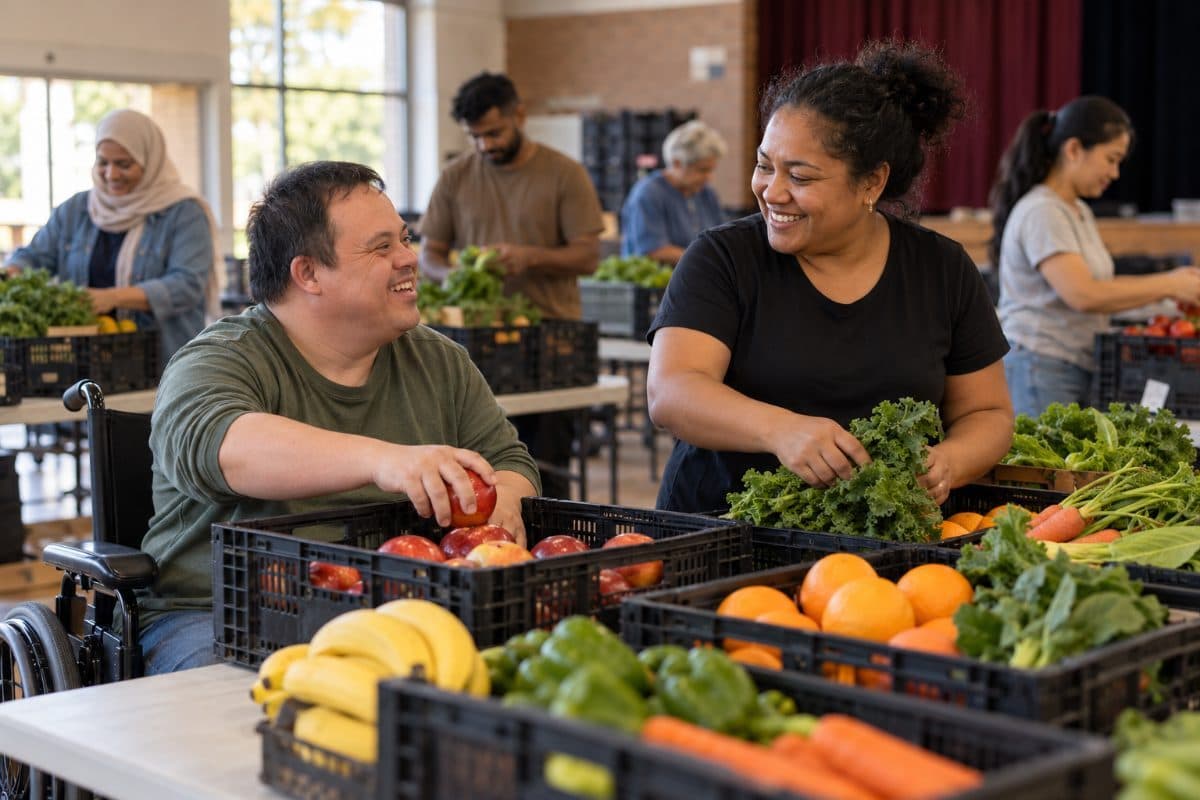
Volunteering is unpaid work that contributes to a cause, organisation or community project. You might help sort items, welcome visitors, prepare resources or assist with a shared garden. There is no single “right” volunteer role. The useful starting point is what you would like to do, what interests you and which parts of the activity you can manage independently. The support you need might be different when you are travelling, following unfamiliar instructions or working in a busy setting. A volunteer organisation can explain its tasks, expectations, accessibility and own requirements. That conversation is separate from checking whether an NDIS-funded support is appropriate for your plan.
Can NDIS funding pay for a support worker while I volunteer?
It may be possible to use an appropriate NDIS support to help you participate in a volunteering activity when the support relates to your disability and is consistent with the plan and applicable rules. This is not a blanket approval for every shift or expense. For example, a person might want assistance travelling to the site, getting oriented, communicating with others or following a sequence of tasks. These are examples of possible support needs, not a statement that a specific item will be funded. Before booking support, explain the proposed role, location, expected time, what the worker would do and how it relates to your goals. Ask your planner or support coordinator to help you check the relevant funding and any conditions.
Core supports and capacity building: what is the difference?
Core supports and capacity building are different kinds of NDIS support funding. In general terms, core supports are associated with help in everyday activities, while capacity building is associated with developing skills and independence. Exactly which support item is available for a volunteering activity requires a plan-specific check. Do not assume that “community participation” means every volunteering expense can be charged to the same budget. A support worker helping you attend and a structured activity designed to build skills may raise different funding questions. Keep the discussion practical.
What costs should I check before joining?
Separate the costs into clear parts: help from a support worker, getting to and from the location, any activity materials, meals and other personal expenses. An organisation might also have its own conditions.
NDIS funding may not cover general everyday costs or fees simply because they arise during volunteering. Do not assume that donations, clothing, food or membership expenses are funded. Ask for an explanation of any proposed charge before committing. If transport is important, ask what travel support is required and how it would be arranged. The existence of a transport service does not establish that a particular journey or charge is covered by your plan.
How to plan a volunteering opportunity
1. Choose a cause that matters to you. Think about gardening, organising supplies, community events or another activity that interests you. Ask the organisation about actual opportunities rather than assuming a vacancy exists. 2. Discuss access and duties. Ask whether the location and tasks work for you, who will supervise volunteers, what preparation is needed and whether breaks or adjustments can be considered. 3. Write down the support required. Explain whether you need one-to-one help with travel, participation or a new routine. Be specific about timing and what would happen during the shift. 4. Check funding before starting. Take the proposed arrangement to your planner or support coordinator. Agree on responsibilities. The volunteering organisation directs its volunteering program. A support worker has a different role: providing the agreed disability-related assistance. Clarify who handles instructions, safety information and changes to the schedule. 6. Review the arrangement. After attending, consider what felt useful, tiring or difficult. You may want to change the length of time, the tasks or the support you request, without assuming a particular result.
What about self-managed and plan-managed funding?
People with self-managed and plan-managed NDIS plans can discuss support arrangements with a provider that works with those management types. If you are self-managed, check the record-keeping and claiming requirements that apply to you. If you are plan-managed, discuss the proposed support and invoicing with your plan manager. Refer funding decisions and individual plan questions to your planner or support coordinator. People with NDIA-managed plans need to find a provider able to support that arrangement.
Questions to ask a potential volunteering organisation
Ask what a normal shift looks like, whether an introductory visit is possible, what physical or communication demands exist and whether an accompanying support worker can attend. Also ask who would contact you about changes. You can ask these questions without sharing more personal information than you choose. Focus on what helps you participate and what the organisation needs to know to plan a workable volunteer role. A clear arrangement can help everyone understand the volunteer tasks, the worker’s role and the difference between your community contribution and the support you receive.
About Valencea in Western Sydney
Valencea is a small, founder-led NDIS support provider based in Western Sydney. Its service-area wording is “Sydney and surrounding regions”, with Western Sydney as its base. Valencea offers Community Participation, Social & Recreational Activities and Transport among its listed services. It offers a free, no-obligation Meet and Greet and matches support workers to participants’ preferences. It works with self-managed and plan-managed participants. Support is one-to-one, with a minimum two-hour shift.
FAQ
Can I volunteer if I have an NDIS plan?
Yes. Having an NDIS plan does not stop you from exploring volunteering. You can contact a community organisation to ask about roles that interest you. If disability-related assistance is needed, discuss the proposed support with your planner or support coordinator before assuming NDIS funding will apply.
Does the NDIS pay me for volunteer hours?
Volunteering is generally unpaid, and NDIS support funding should not be treated as wages for your contribution. The relevant question is whether a separate disability-related support can be funded while you take part. Ask the volunteering organisation about its terms, and your planner about plan funding.
Can a support worker come with me to volunteer?
An accompanying support worker may be worth discussing if you need disability-related help to participate. Explain the worker’s proposed tasks, the shift length and why the help is needed. Whether it can be claimed depends on the plan and current rules. Check first with your planner or support coordinator.
Can NDIS funding cover travel to a volunteering role?
Transport support may be relevant, but do not assume every trip or travel charge is funded. Explain where you need to go and whether the assistance is related to your disability. The correct arrangements and funding rules need checking against your plan. A planner or support coordinator can help clarify.
Is volunteering funded under core supports or capacity building?
That depends on what assistance is being proposed and what funding is available in the individual plan. Core supports and capacity building serve different purposes, so the activity name alone is not enough to decide. Describe the exact help required and ask your planner or support coordinator to identify the appropriate category.
Do I need to find a volunteering organisation myself?
You can start by contacting an organisation whose purpose interests you. Ask about current opportunities, access, tasks, orientation and whether you can attend with a support worker. No vacancy or placement is assumed. If you need help thinking through possible support arrangements, discuss that need separately before making any funding commitments.
Can I use a plan-managed or self-managed plan for volunteering support?
Both management types can be considered when arranging support, subject to your plan and the relevant funding rules. A plan-managed or self-managed plan does not automatically make every volunteering-related cost claimable. Review the proposed assistance with your planner or support coordinator and, where relevant, your plan manager.
What if I have an NDIA-managed plan?
Check with your planner or support coordinator about providers who can work with your management arrangement. The local provider discussed here works with self-managed and plan-managed participants.
Pronto a parlarne?
Contattaci e il nostro team ti aiuterà a capire cosa è davvero possibile per il tuo piano.
Richiedi SupportoServizi correlati
Chi è Valencea
Le Persone al Primo Posto. Sempre.
Valencea è un fornitore di supporto NDIS costruito su una convinzione semplice: ogni persona merita di vivere una vita fatta di scelta, dignità e connessione. Il nostro team lavora insieme a partecipanti, famiglie e caregiver per offrire un supporto che si adatta alla vita reale, non il contrario.
Prenota una Consulenza Gratuita
