
Language and Culture
Can a Family Member Be Paid as an NDIS Support Worker?
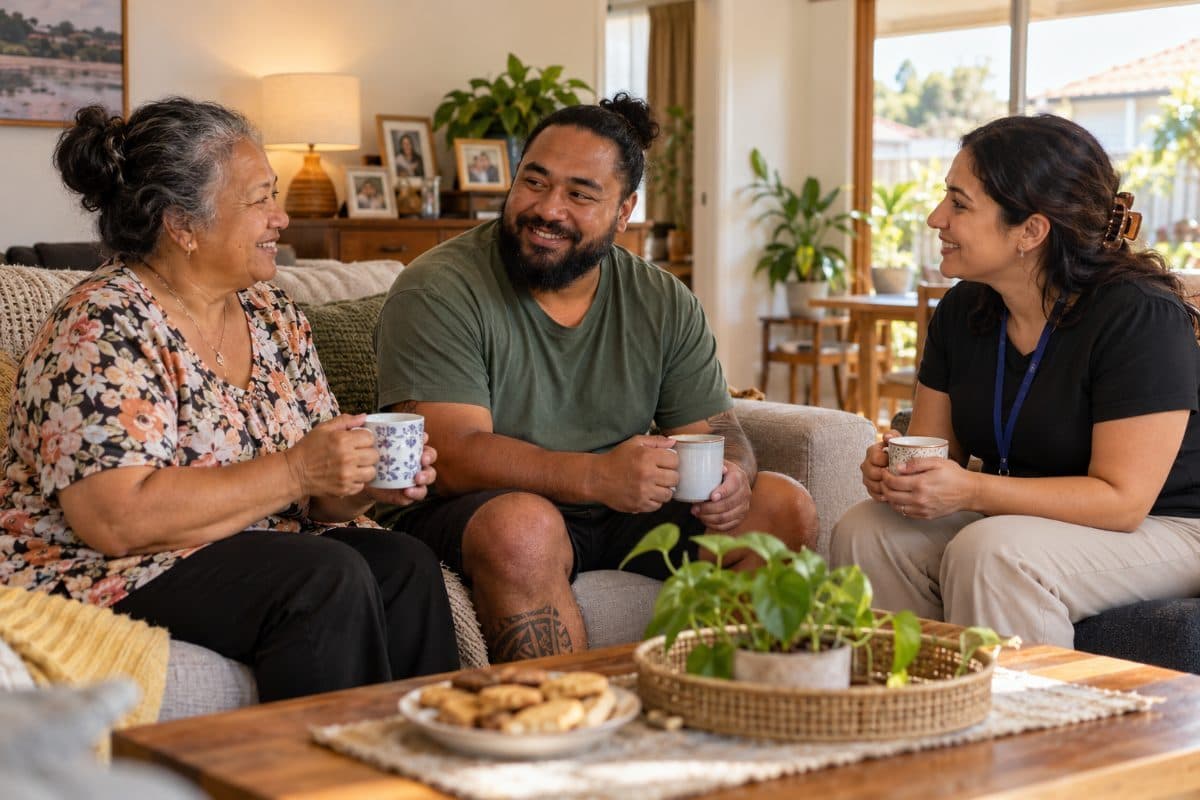
Usually, no. The NDIS generally does not fund family members to provide paid supports. Exceptional circumstances may be considered, including some cultural, safety or privacy concerns. Do not assume self-management makes family payments automatically eligible. Ask your planner or support coordinator about your circumstances.
Mag-book ng Libreng Konsultasyon
Key takeaways
Family help and paid support are not always treated the same way under the NDIS. Payment to a family member is usually not funded. Exceptional cases need individual consideration. Being self-managed or plan-managed does not, on its own, establish that a family member can be paid. Your preferences, culture, safety and privacy matter. Explain these clearly when discussing support options.
Why is paying family different from choosing a worker?
Family members may already help with daily routines, communication, appointments or community activities. This is often called informal support: help given through an existing relationship rather than a paid support arrangement. An NDIS support worker has a different role. Paid supports must be appropriate to the person’s needs and the way their plan can be used. The question is not simply whether a relative has the right skills. It is whether the proposed family arrangement meets the relevant NDIS requirements. A person may feel safer with a relative who knows their routines. They may also want more privacy, independence or time apart from family. Neither preference should be dismissed. The participant’s own voice should lead the discussion.
When might an exception be considered?
NDIS guidance describes limited exceptional circumstances. These can include a risk of harm or neglect, cultural or religious reasons, or significant privacy and dignity concerns that cannot otherwise be managed. Other suitable support options are also relevant to the decision. These are examples for discussion, not an automatic approval checklist. A cultural preference, by itself, should not be described as a guarantee that funding will be granted. Explain what support is needed, why the family member is proposed and what alternatives have been explored. For example, someone may want support delivered in a way that respects their home routines, faith or personal boundaries. A clear explanation can help their planner understand why a particular arrangement matters. It does not replace an individual funding decision.
Does the answer change for self-managed or plan-managed plans?
A self-managed participant manages their own use of funding, while a plan-managed participant has a plan manager helping with provider invoices and claims. NDIA-managed is another management option. Management type should not be confused with permission to pay a family member. Even where someone has flexibility in choosing a provider, family payments remain a separate question under NDIS guidance. Before any paid family arrangement begins, check the applicable requirements with the participant’s planner or support coordinator. A plan manager can explain how claims are processed, but that is not the same as deciding whether the arrangement is funded.
What should you ask before making an arrangement?
Start with the support itself. Describe the daily task, the participant’s goal, when support is needed and the risks of going without it. Then explain why the proposed family arrangement is different from ordinary family help. Get the position clarified before treating any payment as claimable. Consider how the participant will express preferences, raise concerns and change arrangements. Family relationships can involve competing expectations. Keeping the person’s choice and control central can make a difficult conversation clearer.
Culture, language and personal choice
Culture can shape how someone wants personal boundaries, food, social activities and family contact handled. Language may also affect whether they feel comfortable explaining their choices. A useful conversation asks the person what matters rather than assuming that all members of a community want the same arrangement. An adult might want a family member nearby without wanting that person as a paid worker. Another person might value a worker who is outside the family. Both preferences deserve respectful attention. If communication support is important, ask the prospective provider which languages its actual support workers use and how communication needs can be met. Do not assume a particular language or interpreter option is available.
What if a family member cannot be paid?
Explore support from an unrelated support worker and discuss the person’s preferences before choosing. Depending on the plan and the support being sought, areas for discussion can include daily life, participation in the community or developing everyday skills. Whether a particular item is funded must be checked against the individual plan. A person can ask for a Meet and Greet before deciding whether a support arrangement feels right. They can also make a list of preferred routines, communication approaches, privacy needs and activities to share during the conversation. For detailed eligibility or funding decisions, speak with the planner or support coordinator. For legal, employment or tax questions about employing someone, seek the relevant qualified professional rather than relying on a general support article.
About Valencea in Western Sydney
Valencea is a small, founder-led NDIS support provider based in Western Sydney. Its co-founders, Arash Hasanzadeh and Sunny Ria, speak Persian and English. Valencea offers one-to-one support, a free, no-obligation Meet and Greet and worker matching based on a person’s preferences. It works with self-managed and plan-managed participants. Its service area is described as Sydney and surrounding regions, based in Western Sydney. It has pages for Parramatta, Northmead, Blacktown, Castle Hill and other listed suburbs.
Where to read more
Explore Support Worker Services, the How it works page and the New to NDIS guide. Further reading includes Plan-managed vs self-managed NDIS, Find an NDIS support worker in Sydney, and Finding a support worker who speaks your language. Links are listed in the SEO pack.
FAQ
Can my parent be paid to support me through the NDIS?
Generally, the NDIS does not fund payments to family members, including parents, for supports they provide. Exceptional circumstances may be considered, but no particular relationship automatically qualifies. Ask your planner or support coordinator to consider the details before arranging payment.
Can I pay my partner or sibling from my NDIS plan?
The same general distinction applies to partners and siblings: being related is not, by itself, a basis for paid NDIS support. Exceptional situations may be reviewed individually. Discuss the support needed, possible alternatives and any cultural, safety or dignity concerns with your planner.
Does self-management mean I can employ a family member?
No. Self-management concerns how funding is administered; it does not automatically make payments to relatives allowable. Before making an arrangement, ask your planner or support coordinator about the applicable funding decision and seek specialist employment advice if you are considering employing someone directly.
What if I need a relative because of cultural reasons?
Cultural or religious needs may be relevant when exceptional family-support arrangements are considered, but they do not guarantee approval. Explain the person’s actual preferences, privacy needs and alternatives explored. Ask their planner or support coordinator how those details should be considered.
Can my plan manager approve paying a family member?
A plan manager deals with the financial administration of plan-managed supports. Do not assume this role gives them authority to determine whether a family member can be funded. Speak with the planner or support coordinator before treating the arrangement as payable.
Could a family member help without being paid?
Yes, family members can remain part of a person’s informal support network when the person wants that involvement. Informal help is different from a paid NDIS support arrangement. Discuss how the arrangement respects the participant’s preferences and the family’s ability to keep helping.
What if no suitable support worker is available?
Explain the barriers to the planner or support coordinator. Describe the support needed, the workers or arrangements considered, and any relevant safety, cultural or privacy concerns. Exceptional funding is not automatic. You can also ask providers about their matching process and discuss preferences before choosing.
Can an NDIA-managed participant use this provider?
No. This provider works with self-managed and plan-managed participants. If you have an NDIA-managed plan, ask your planner or support coordinator to help identify an appropriate provider for your support needs.
Handa nang pag-usapan ito?
Makipag-ugnayan sa amin at tutulungan ka ng aming team na alamin kung ano talaga ang posible para sa iyong plan.
Humiling ng SuportaKaugnay na serbisyo
Tungkol sa Valencea
Tao Muna. Palagi.
Ang Valencea ay isang tagapagbigay ng suportang NDIS na itinayo sa simpleng paniniwala: karapat-dapat ang bawat tao na mamuhay nang may kalayaan sa pagpili, dignidad, at koneksyon. Nagtutulungan ang aming team kasama ang mga participant, pamilya, at tagapag-alaga upang maghatid ng suportang akma sa totoong buhay — hindi sa kabaligtaran.
Mag-book ng Libreng Konsultasyon
