
NDIS Transport
Can I use NDIS funding for a taxi or rideshare?
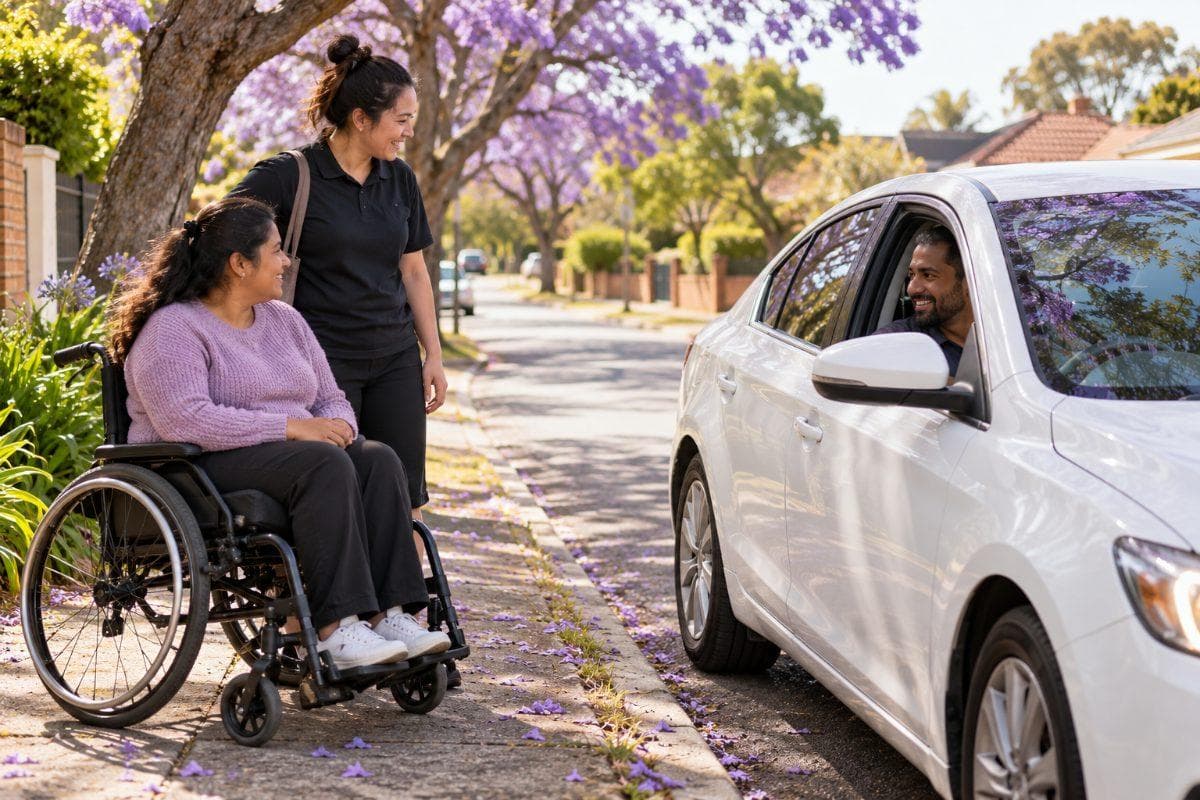
You may be able to use NDIS funding for a taxi or rideshare when the trip meets the rules for your plan and disability-related transport needs. It is not automatic. Check your plan and any booking or claiming requirements with your planner or support coordinator before travelling.
Mag-book ng Libreng Konsultasyon
Key takeaways
A taxi or rideshare is not automatically an NDIS-funded expense. The purpose of the journey, your plan and the way payment is arranged matter. Transport fares and time with a support worker are different costs. Ask for clear records and check the relevant plan details before paying.
What does NDIS transport funding mean?
Transport can mean different things in everyday conversation. You might mean a taxi fare, a rideshare trip, a worker helping you travel, or a journey booked as part of another support. These should not be treated as interchangeable. NDIS funding arrangements can distinguish participant transport from the delivery of a support and related travel costs. The exact rules depend on the support and the plan. The easiest starting point is to name the journey and who is providing what. If you are unsure, your planner or support coordinator can help you identify the correct type of support to discuss.
When might a taxi or rideshare be relevant?
A participant might consider a taxi or rideshare to get to an appointment, visit a community activity, do shopping or travel to another planned destination. These are examples of journeys, not promises that the fare is funded. The question is whether the particular journey and claimed cost meet the applicable NDIS rules. Write down your reason for travelling and the assistance you need. This gives you a clear question to take to your planner or support coordinator. It also helps avoid confusing the activity itself with the cost of getting there.
Does the NDIS cover every taxi or rideshare trip?
No trip should be assumed to be covered simply because a participant takes it. Eligibility and claiming depend on the relevant NDIS rules and individual plan. A normal personal expense and an NDIS-funded support are not necessarily the same. Check before booking rather than relying on a verbal assumption. If the journey changes, revisit the details. This article cannot decide what is claimable under your own plan and should not be used instead of plan-specific guidance.
Transport fares and support worker transport are different
The taxi or rideshare operator provides the journey. A support worker may provide assistance associated with preparing for travel, accessing the community or taking part in an activity. These are separate roles even when they occur on the same day. NDIS pricing rules may distinguish direct support time, participant transport and other provider travel arrangements. Ask which part of the proposed arrangement is a fare and which part is support worker time. Keep the explanation clear on any service agreement, booking record and invoice. Do not assume the same funding category applies to both.
Self-managed and plan-managed participants
If you are self-managed, ask how the proposed transport cost needs to be recorded and checked against your plan. If you are plan-managed, ask your plan manager about the invoice and claiming process and speak to your planner or support coordinator about whether the journey fits your supports. The claimable items and evidence requirements must be checked against current NDIS guidance. Neither type of management makes every journey eligible. Keep the journey purpose, provider details, date and receipt available where relevant. A plan manager handles plan management; a transport or support provider does not automatically do that job.
What if my plan is NDIA-managed?
An NDIA-managed plan involves different provider requirements. Provider eligibility to supply support to participants with NDIA-managed funding must be checked against applicable NDIS arrangements. If you have an NDIA-managed plan, speak with your planner or support coordinator about suitable providers and transport options. Do not assume a business that works with self-managed or plan-managed participants can deliver the same service to you. This distinction matters before you arrange support, sign an agreement or expect an invoice to be paid.
What to check before booking a trip
Start with the purpose of the trip. Next, identify whether you need just the vehicle journey or help from a support worker as well. Check your available funding and the applicable claiming rules with your planner or support coordinator. Ask how the fare will be charged, whether a receipt will be available, and whether any assistance is separately invoiced. Check accessibility requirements with the transport operator directly; vehicle availability, accessible boarding and suitable equipment must never be assumed. Keep contact details and the pick-up plan clear.
A practical example: travelling to a community activity
Imagine you want to go from Parramatta to an activity in Western Sydney. You might travel independently in a taxi, or you might want one-to-one support around the outing. Those are two possible arrangements, not two automatic entitlements. A conversation about the plan should identify what assistance is being requested and what each part might cost or involve. Check the current NDIS rules for the planned arrangement.
About Valencea in Western Sydney
Valencea is a small, founder-led NDIS support provider based in Western Sydney. Its co-founders are Arash Hasanzadeh and Sunny Ria. Valencea offers a free, no-obligation Meet and Greet and a free plain-language conversation about what a plan may be used for, not financial or legal advice. It works with self-managed and plan-managed participants. It offers one-to-one support with a minimum two-hour shift.
Where to learn more
For service context, see the Transport page (/en/services/transport). The guide at /en/blog/ndis-transport-assistance-sydney covers the general transport assistance topic. The guide /en/blog/plan-managed-vs-self-managed-ndis addresses plan management types. You can also read /en/new-to-ndis and /en/how-it-works. These resources are starting points, not a determination that a specific fare is payable.
FAQ
Can I pay for a rideshare with my NDIS plan?
Possibly, but the booking itself does not prove eligibility. Whether a rideshare fare can be funded depends on the applicable NDIS rules and your plan. Before booking, ask your planner or support coordinator what applies to your journey, and keep appropriate booking and payment records.
Are taxi fares always covered for medical appointments?
No. A medical appointment does not automatically make every taxi fare an NDIS expense. What may be funded needs to be considered against the applicable transport rules and the individual plan. Describe the travel need clearly and ask your planner or support coordinator before relying on funding.
Can I use a taxi for shopping or social activities?
You can consider a taxi for these journeys, but whether NDIS funding applies is a separate question. Explain the activity, the travel support needed and the proposed fare to your planner or support coordinator. Also check whether you need assistance during the outing rather than transport alone.
Is a support worker the same as a taxi driver?
No. A taxi or rideshare trip is a transport service. A support worker may provide assistance before, during or after a journey, depending on the agreed support. These services can involve different billing and funding arrangements. Ask for each component to be explained separately before agreeing to charges.
Do self-managed and plan-managed participants use the same payment process?
Not necessarily. The record keeping, invoice processing and claiming steps can differ by management arrangement. A self-managed participant should check their own claiming obligations. A plan-managed participant can ask their plan manager about payment procedures and their planner or support coordinator about whether a proposed journey fits the plan.
Can an NDIA-managed participant choose any transport provider?
Do not assume so. Provider requirements and funding arrangements can differ for NDIA-managed supports. Ask your planner or support coordinator about suitable transport services before booking. A provider working with self-managed and plan-managed participants may not be able to deliver services for NDIA-managed funding, even if it offers related support.
What records should I keep after a taxi or rideshare trip?
As a practical precaution, keep the date, journey purpose, fare receipt and any relevant booking details. Your planner, support coordinator or plan manager can help clarify the process appropriate to your management arrangement.
Can I arrange a support worker to go with me?
Discuss your travel needs, accessibility requirements and plan with your planner or support coordinator before arranging a journey.
Handa nang pag-usapan ito?
Makipag-ugnayan sa amin at tutulungan ka ng aming team na alamin kung ano talaga ang posible para sa iyong plan.
Humiling ng SuportaKaugnay na serbisyo
Tungkol sa Valencea
Tao Muna. Palagi.
Ang Valencea ay isang tagapagbigay ng suportang NDIS na itinayo sa simpleng paniniwala: karapat-dapat ang bawat tao na mamuhay nang may kalayaan sa pagpili, dignidad, at koneksyon. Nagtutulungan ang aming team kasama ang mga participant, pamilya, at tagapag-alaga upang maghatid ng suportang akma sa totoong buhay — hindi sa kabaligtaran.
Mag-book ng Libreng Konsultasyon
