
Daily Living Support
Can an NDIS support worker help with showering and dressing?
Answer first
Yes. An NDIS support worker may help a person with showering and dressing when that help is appropriate to their needs and NDIS plan. This is often discussed as personal care or assistance with daily life. The exact tasks, funding and safety arrangements depend on the person.
Mag-book ng Libreng Konsultasyon
Key takeaways
Showering and dressing are personal daily activities. Support may involve prompts, preparation or physical assistance, but people should remain in control of their choices. Ask about privacy, consent and safe ways of working before a shift starts. NDIS funding is individual, and the relevant support must be checked against the participant’s plan.
What might showering support involve?
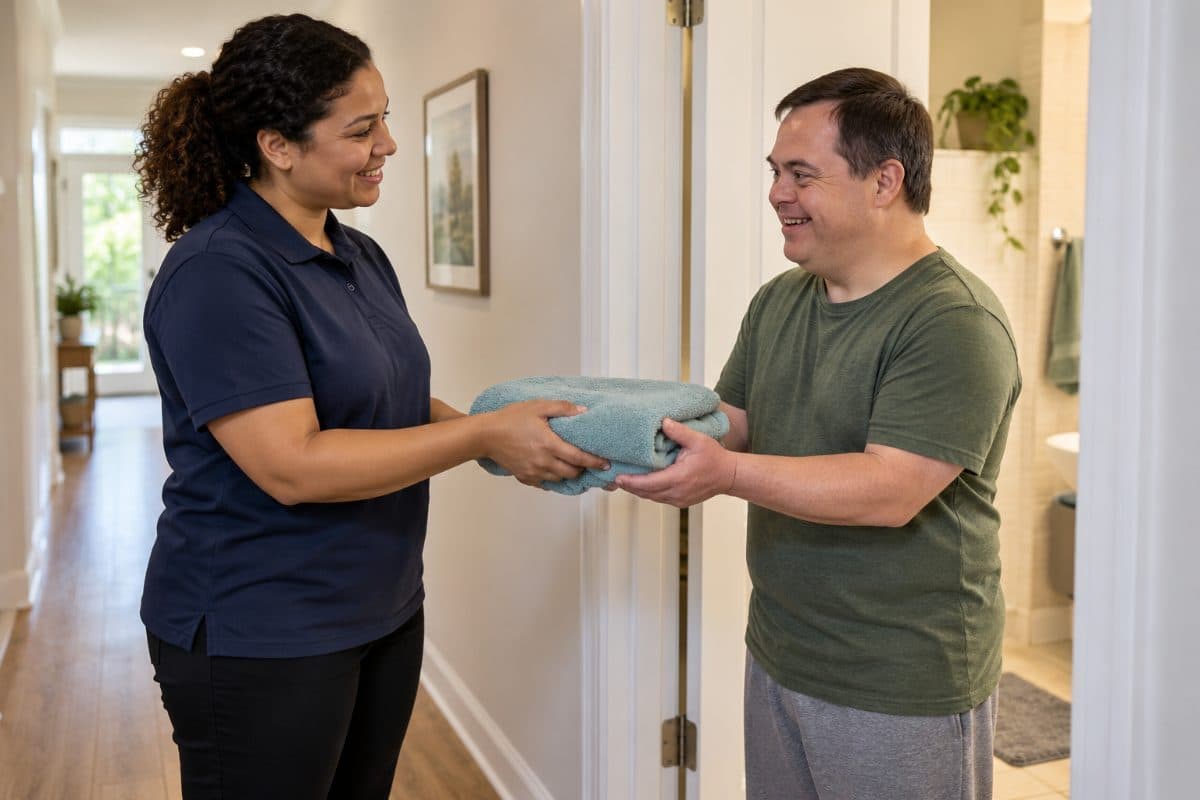
Showering can include more than standing under running water. Someone might want a support worker to lay out clean towels, get toiletries ready, help them follow their routine or assist with parts they cannot manage independently.
Ask whether reminders, step-by-step help or physical support is preferred. Ask who will be present, how privacy will be maintained and what should happen if something feels uncomfortable. Share only personal details relevant to arranging safe support.
What might dressing support involve?
Dressing support may be as simple as choosing clothing, setting items within reach, following a familiar sequence or managing a difficult fastening. Some people may need help getting into or out of garments. Others want a clear prompt so they can do most steps themselves.
Discuss what assistance is wanted, safe and independence-supporting. The participant can request pauses.
Consent, dignity and personal choice
Personal care is private. A participant should be asked how they want to be supported, rather than being treated as a set of tasks to finish. Discuss timing, modesty, physical contact and privacy. A support worker should explain what they are about to do and check that the person agrees.
It is helpful to record clear preferences in the support arrangements. If an activity needs two workers, specialised equipment, clinical decisions or a complex manual-handling plan, the provider should assess whether that is within its scope. Do not assume it is included in an ordinary personal care booking.
Is showering and dressing support covered by the NDIS?
Assistance with everyday personal activities may sit within NDIS core supports when it meets the relevant rules and the participant’s funding arrangements. A core support generally helps with an everyday need. Capacity building is different: it concerns supports intended to develop skills or independence, rather than automatically paying for every daily personal care task.
The type of help, plan budget, service agreement and any applicable rules matter. A planner or support coordinator can help clarify the categories shown in a particular plan. This article is general information, not advice about anyone’s personal funding.
What changes for self-managed and plan-managed participants?
Self-managed participants manage their funding; plan-managed participants use a plan manager for payments. The exact provider and claiming requirements should be checked against the participant’s arrangements.
Before agreeing to personal care, discuss the proposed activities, how much time is needed and which budget may apply. Keep a written account of the support being requested. The minimum shift should also be checked before booking; different providers can have different arrangements. The stated minimum shift is two hours.
When might a different professional be needed?
Some needs are not ordinary one-to-one personal care. For high clinical needs, therapy or complex behaviours, ask a planner or support coordinator about appropriate qualified professionals. Clinical advice should come from a suitably qualified clinician.
If showering raises concerns about falls, skin health, moving and handling or medical equipment, do not assume an ordinary support worker can safely carry out every step. Ask what assessment or training is needed. For emergencies, call 000. Help with showering and dressing should be clearly separated from nursing tasks and therapy.
A practical checklist before the first visit
Describe a morning or evening, not just saying that you need 'personal care'. Explain which steps you do yourself, which steps are difficult and whether your needs change from day to day. Share relevant safety information.
Ask how your consent and privacy will be respected. Discuss whether the same routine matters to you and how a worker will respond if you want to stop. Ask how to raise concerns. Finally, check the support arrangement against your NDIS plan with your planner or support coordinator.
What support looks like in Western Sydney
People looking in Western Sydney may prefer support that fits local routines rather than a one-size-fits-all timetable. In Parramatta, Northmead and Blacktown, a useful question is how support could fit the participant’s ordinary home routine.
For broader area information, see the Western Sydney locations page. Keep the conversation centred on the participant’s goals, daily needs and comfort.
About Valencea in Western Sydney
Valencea is a small, founder-led NDIS support provider based in Western Sydney. Its co-founders are Arash Hasanzadeh and Sunny Ria. It offers one-to-one support, a free Meet and Greet with no obligation and matching to a participant’s preferences.
It works with self-managed and plan-managed participants.
How to start a conversation
Make a short list of the personal care steps you want to discuss. Include your preferred routine, any equipment involved and anything that would help you feel comfortable. Ask which activities the provider can actually deliver, and request a clear explanation before making arrangements.
A free plain-language conversation is available, but it is not financial or legal advice. For plan-specific questions, speak with your planner or support coordinator. Related service pages and guides are linked in the SEO pack.
FAQ
Can a support worker wash my hair or help me dry off?
Those activities may form part of everyday personal care, depending on what the participant needs and what the worker is able to do safely. Ask about the exact tasks rather than assuming they are included. Discuss funding with your planner or support coordinator.
Can I ask for help with dressing without help showering?
Yes, a person can ask about particular parts of their routine rather than requesting every personal care task. For example, they may only want clothes prepared, prompts or help with fastenings.
Will a worker respect my privacy during personal care?
Privacy and consent should be central to any discussion about intimate care. Tell the provider what you are comfortable with, how you want assistance explained and when you want to do steps yourself. Ask how those preferences are recorded. If you need a specific arrangement, discuss it before accepting a shift rather than assuming it will happen.
Does NDIS funding automatically pay for showering?
No automatic entitlement should be assumed. A person's plan, funded supports and the rules that apply to the activity need to be checked. Ask your planner or support coordinator which budget may be relevant. An individual plan must be checked before claiming.
Can I use a plan-managed or self-managed plan?
The provider works with self-managed and plan-managed participants. Whether any personal care task can be claimed depends on the individual plan and applicable rules. Check these details with your plan manager, planner or support coordinator before arranging services.
What if I need nursing care as well as showering support?
Some personal care routines may also involve clinical or nursing needs. Talk with an appropriate health professional and your planner or support coordinator about the type of provider required. Do not assume a non-clinical support worker can carry out health procedures or specialised clinical care.
How long is the minimum visit?
The minimum shift is two hours. If your desired routine is shorter, ask how the minimum shift applies and whether the arrangement suits your circumstances.
How do I ask for a worker who suits my preferences?
Describe what would help you feel comfortable with personal care. This might include how you want support explained, the routine you prefer and any specific worker preferences. The provider says it matches support workers to participant preferences and offers a free Meet and Greet. Ask directly about availability and suitability before agreeing to a service; no particular match is promised.
Handa nang pag-usapan ito?
Makipag-ugnayan sa amin at tutulungan ka ng aming team na alamin kung ano talaga ang posible para sa iyong plan.
Humiling ng SuportaKaugnay na serbisyo
Tungkol sa Valencea
Tao Muna. Palagi.
Ang Valencea ay isang tagapagbigay ng suportang NDIS na itinayo sa simpleng paniniwala: karapat-dapat ang bawat tao na mamuhay nang may kalayaan sa pagpili, dignidad, at koneksyon. Nagtutulungan ang aming team kasama ang mga participant, pamilya, at tagapag-alaga upang maghatid ng suportang akma sa totoong buhay — hindi sa kabaligtaran.
Mag-book ng Libreng Konsultasyon
