
Daily Life Support
NDIS Fatigue Management: Practical Ways to Manage Everyday Energy
Answer first
Fatigue can make everyday activities harder, even when those activities look simple to someone else. NDIS fatigue management is about understanding how tiredness affects your day and finding practical ways to make activities more manageable. A support worker may help with tasks such as meal preparation, shopping, personal care and getting out into the community. At Valencea, we offer one-to-one, non-clinical support for self-managed and plan-managed participants in Western Sydney.
Key takeaways
Here are the main points in this article.
- Fatigue is different from ordinary tiredness. It can affect physical energy, concentration and the ability to finish daily tasks.
- Pacing means planning activities and breaks around your own needs, rather than trying to do everything at once.
- Support workers can help with everyday activities while respecting your choices and independence.
- A support worker does not diagnose or treat the causes of fatigue.
- Whether a particular support can be funded depends on your individual NDIS plan and circumstances.
- Valencea offers a free, no-obligation Meet and Greet to talk about your support preferences.
What is fatigue, and why can it affect daily life?
Fatigue is a feeling of reduced physical or mental energy. It can affect how someone moves, thinks, concentrates or completes everyday activities.
People experience fatigue differently. Some find mornings easier. Others have more energy later in the day, or notice that certain activities leave them needing extra rest. A task that feels manageable one day can feel difficult the next.
This does not mean someone lacks motivation or independence. Their energy and support needs may simply vary.
Fatigue can also have different causes. If fatigue is new, persistent or getting worse, talk to a healthcare professional. Do not assume it is just part of a disability.
Practical approaches to managing fatigue
There is no single routine that works for everyone. A good starting point is to notice which activities take the most energy and how a typical day feels.
First, work out what uses your energy. Showering, preparing food, travelling, household tasks or busy places can all be tiring. Simple notes about when you feel more energetic and when you need a break can help. The aim is not to measure how much you achieve. It is to understand your own patterns.
Second, break big tasks into smaller steps. Cooking dinner, for example, can involve deciding what to eat, checking ingredients, shopping, preparing food and cleaning up. Doing every step in one go can feel overwhelming. You might plan meals on one day, organise ingredients another day and cook when you feel ready.
Third, build breaks into your plans. Pacing means balancing activities with rest. For some people, shorter activities with breaks feel more manageable than one long session. You can talk to your support worker about the timing, length and order of activities.
Fourth, decide what matters most. You might want to focus on a medical appointment, meeting a friend or a favourite activity. Other household tasks may be able to wait.
Finally, make space for things you enjoy. Fatigue management is not only about chores. Social connection, hobbies and community activities matter too. You may prefer a quieter setting, a shorter outing or an activity with less preparation. You stay in control of what you choose.
How can a support worker help with fatigue?
Support workers give practical help with everyday activities. They are not a replacement for a doctor, occupational therapist or other qualified health professional. The help depends on the person's needs, preferences and agreed support arrangements. Here are some examples of non-clinical support.
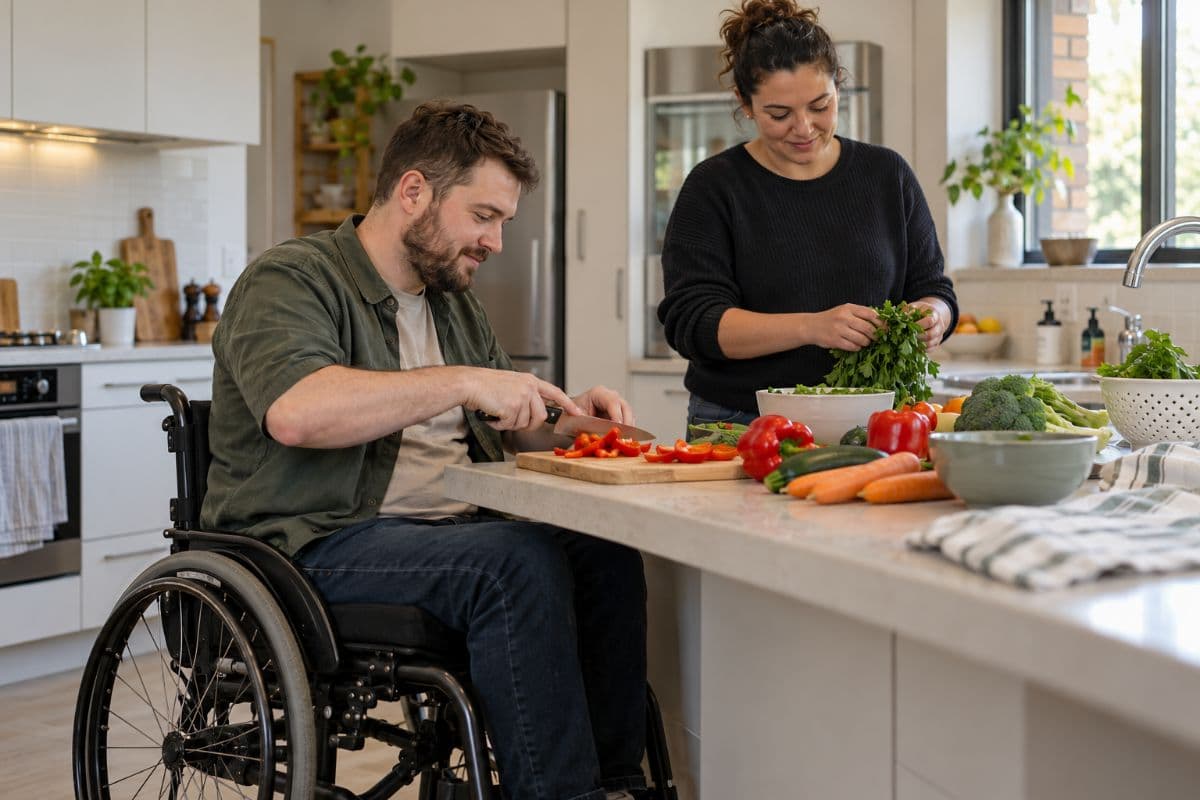
Meal preparation: cooking can involve standing, organising ingredients, concentrating and cleaning up afterwards. Someone with fatigue may like help preparing ingredients, cooking or tidying the kitchen. Valencea offers Meal Preparation, and the aim is practical help that respects how much the person wants to do themselves.
Shopping and household tasks: shopping can mean making a list, travelling, moving through a busy store and carrying bags. A support worker can help with shopping and other agreed daily tasks. Valencea offers Shopping Assistance and Assistance with Daily Life. You can decide whether to do tasks together or get help with only some parts.
Personal care and daily routines: fatigue can make getting ready for the day more demanding. Valencea offers Personal Care and other everyday help, and what is appropriate is discussed with each person.
Transport and community activities: planning an outing involves more than the activity. Travel, preparation and getting home also use energy. Valencea offers Transport and Community Participation. An outing does not have to be long or busy to be meaningful.
What might a low-energy day look like?
This is a made-up example, not a Valencea participant story, and not a promise that any routine will improve fatigue.
Imagine someone has planned to make lunch, buy groceries, tidy up and meet a friend. On the day, they feel more tired than expected. Rather than treating the schedule as fixed, they decide what matters most. They choose to make a simple meal with some help and leave the housework for another day. They may also move shopping or change their social plans.
A support worker can listen, talk through practical options and help with the tasks that have been agreed. The key point is that the person makes the choices about their day.
How to talk with a support worker about your energy
Clear communication makes support easier to understand. Before support starts, you might think about the following.
- Which activities you find particularly tiring.
- Times of day when you prefer to have help.
- Tasks you want to do on your own.
- Tasks where you would welcome practical help.
- Whether you prefer quiet places or shorter outings.
- How you would like to talk when plans need to change.
You do not need to have every detail worked out before the first conversation. You can start by describing what a hard day looks like and which activities matter most. Valencea matches support workers to a person's preferences, and the free Meet and Greet is a chance to talk about them with no obligation to go ahead.
Can NDIS funding cover help with fatigue-related daily tasks?
It helps to separate the experience of fatigue from the support someone needs for a particular activity. A person might want help with cooking, shopping, personal care or community participation because fatigue makes those things hard. Those are practical support needs that can be discussed.
However, having fatigue does not automatically mean a particular activity or service can be funded under an NDIS plan. Your plan, your circumstances and the current NDIS rules all matter. To understand how your own plan applies, speak with your NDIS planner or support coordinator.
Valencea offers a free, plain-language chat about what a plan can be used for. This is general information, not financial, legal or individual plan advice.
Self-managed, plan-managed and NDIA-managed funding
Valencea works with self-managed and plan-managed participants. Before arranging support, we can talk about the help you are asking for and whether it fits the services we offer.
Local proof: practical support in Western Sydney
Valencea is a small, founder-led disability support business based in Northmead. It was started by Arash Hasanzadeh, Co-Founder and Director, and Sunny Ria, Co-Founder and Managing Director. Both speak Persian and English, and the Valencea website is available in 11 languages.
We offer a free Meet and Greet with no obligation, so you can describe your needs, ask questions and talk about your support worker preferences. Our support is one-to-one, with a minimum two-hour shift. It works with self-managed and plan-managed participants.
Questions to ask before arranging support
A first conversation is a chance to understand how a service works. You might ask which everyday activities are included, how worker preferences are discussed, and what happens when your energy changes and you want to adjust an activity. If you need medical or clinical help, say so early, so the provider can be clear about what is outside its scope.
Talk with Valencea about everyday support
If fatigue makes parts of your routine difficult, you can talk with Valencea about the practical help you are looking for. We can explain our services and arrange a free, no-obligation Meet and Greet. You can call or WhatsApp Valencea on 0494 798 710, email hello@valencea.com.au, or use the Request Support form. Contact hours are Monday to Sunday, 7:00am to 8:00pm, and Valencea is available 24/7 for existing participants. You can also book a free consultation on the website.
This article gives general information only. It is not medical, legal, financial or individual NDIS plan advice. Talk to a qualified health professional about health concerns, and to your NDIS planner or support coordinator about funding.
FAQ
Can an NDIS support worker help someone who experiences fatigue?
A support worker may help with everyday activities that feel difficult because of fatigue, such as meal preparation, shopping or getting out into the community. The help depends on the person's needs and agreed arrangements. Support workers do not diagnose or treat fatigue. Speak with your healthcare professional about medical concerns.
Does having fatigue automatically mean I can use NDIS funding for support?
No. Having fatigue does not, by itself, confirm that a particular support can be paid for through an NDIS plan. Your individual circumstances and plan need to be considered. Speak with your NDIS planner or support coordinator about your funding. Valencea can have a free, general conversation about the services we offer.
What can I do if my energy levels change from day to day?
You can talk about your preferences and daily priorities with your support worker. For example, on a difficult day you may prefer to focus on making a meal rather than doing several household tasks. Any changes to agreed support should be discussed with the provider. Seek healthcare advice if fatigue is new, worsening or concerning.
Can Valencea help with shopping, meals and community activities?
Yes. Valencea offers Shopping Assistance, Meal Preparation, Community Participation and other everyday support services. We talk about what help suits each person and whether it fits our services. Support is one-to-one, with a minimum two-hour shift. You can explain your energy levels and preferences at a free Meet and Greet.
Can I use Valencea if my NDIS plan is plan-managed?
Valencea works with plan-managed and self-managed participants. Before starting, contact us to talk about the support you want. For funding questions, ask your planner or support coordinator.
How can I arrange a free Meet and Greet in Western Sydney?
You can call or WhatsApp Valencea on 0494 798 710, or use the Request Support form on the website. Contact hours are Monday to Sunday, 7:00am to 8:00pm. The Meet and Greet is free and has no obligation. It is a chance to talk about your needs and your support worker preferences.
