
Home Support
Can an NDIS support worker cook meals for me at home?
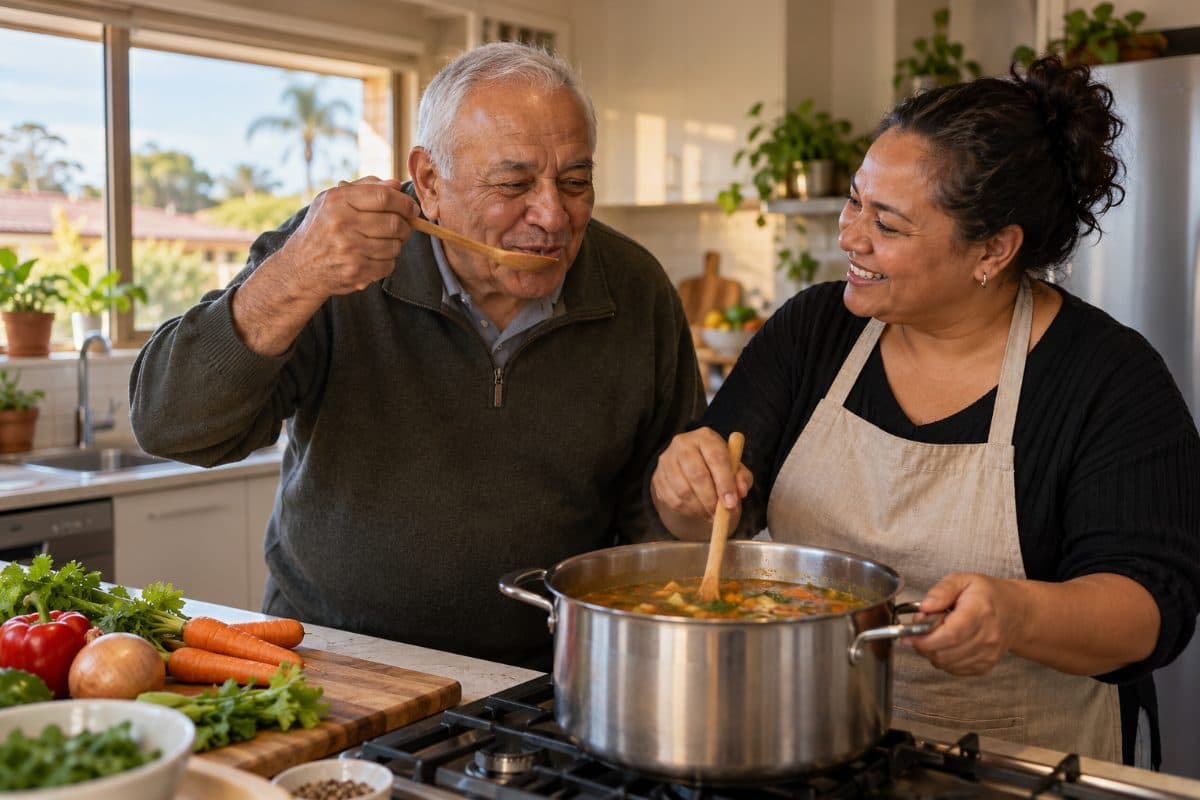
Yes, an NDIS support worker may help you prepare and cook meals at home when the support is appropriate to your needs and funding. Help could involve preparing ingredients, using kitchen equipment or cooking alongside you. What can be funded depends on your individual plan and the applicable NDIS rules.
Κλείστε δωρεάν ραντεβού
Key takeaways
- Meal preparation support can mean doing a task with you or helping with steps you cannot manage safely or independently.
- Your preferences matter: you can discuss ingredients, cooking routines, cultural food preferences and the amount of help you want.
- NDIS funding decisions depend on your circumstances and plan. Check with your planner or support coordinator rather than assuming every cooking-related expense is covered.
- A service agreement should explain the tasks, visit duration and any costs before support begins.
What can a support worker help with in the kitchen?
Cooking at home includes much more than standing at a stove. Depending on the arrangement, practical assistance might involve planning a simple meal, setting up utensils, washing produce, following a recipe, chopping ingredients, cooking or putting meals into containers. The person receiving support can stay involved in the decisions and the tasks they want to do. For example, you might choose the menu and prepare ingredients while a support worker helps with harder steps. On another day you might need greater practical help to make a meal. The right approach starts with a discussion of what you can do, what you prefer and what needs extra care. An example of support is not a promise that every provider offers every task.
Can the support worker cook while I do something else?
Some people need hands-on help to complete everyday household activities. Others prefer to take part in cooking and practise skills. Whether a worker can prepare a meal while you are occupied elsewhere depends on the agreed support, what you need and the provider’s scope. Describe your usual routine before the first visit. Explain if standing for long periods is difficult, if you want to practise a recipe, or if preparing food takes you much longer than expected. A clear description helps everyone agree on practical tasks without making assumptions about independence. If meal preparation is a goal for skill development, ask how you can remain involved in ways that suit you. Capacity building means support aimed at developing skills; its funding treatment should be checked against your individual plan.
How does NDIS funding for cooking support work?
The NDIS uses terms such as core supports for assistance with everyday activities. Meal preparation assistance may fall within relevant support arrangements, but the correct funding category, claims and exclusions should be checked against the current NDIS Pricing Arrangements and Price Limits. Being self-managed means you manage the relevant support payments and records yourself. With a plan-managed arrangement, a plan manager handles payments within the plan. These arrangements do not automatically mean every requested purchase or task can be charged to the NDIS.
Ask the provider to describe the worker’s time separately from other costs. Do not assume groceries, meal delivery, takeaway food or kitchen equipment are included. Your planner or support coordinator can help you understand your own plan, and the current NDIS rules need checking before a claim is made.
What should you discuss before the first cooking visit?
Start with the meals you actually enjoy eating. Mention food allergies, preferences, cultural practices and any household routines. Clarify which ingredients or utensils will be available, how long the visit will last, and whether you want help with one meal or a simple preparation routine for later. Talk about food handling, heat, sharp tools and cleaning up. A support worker’s ordinary meal preparation assistance is different from clinical dietetic advice, swallowing assessments or a specialised feeding plan. Write down the agreed tasks in plain language. You might list preparing vegetables, cooking a chosen meal, putting away ingredients and wiping work surfaces. That makes it easier to review what worked and what you want to change.
Cooking help, shopping and other home tasks
Meal preparation, shopping and household cleaning are related, but they are not the same activity. You might want help choosing ingredients and shopping on one day, then assistance cooking at home on another. It is useful to ask how each task will be described in the service agreement. For information about the kinds of assistance offered, see the Meal Preparation, Shopping Assistance and Assistance with Daily Life service pages. There are also guides on meal preparation support under the NDIS and NDIS household tasks in Western Sydney. It is sensible to explain what matters most to you before you commit to a regular schedule. A few well-defined priorities are easier to discuss than a long list of assumptions about what any support worker must do.
Support in Western Sydney: local proof
Its published service area is Sydney and surrounding regions, with Western Sydney as its base. Its listed location pages include Parramatta, Northmead, Blacktown, Castle Hill, Carlingford, Epping, Ryde, Chatswood, Toongabbie and North Rocks. Valencea lists Meal Preparation and one-to-one support, with a minimum two-hour shift. It offers a free, no-obligation Meet and Greet and matching based on the person’s preferences. It works with self-managed and plan-managed participants.
Making a practical plan for a meal preparation visit
Before you contact a provider, write down two or three meals you would like help with. Note the preparation steps that are easy, the steps that are difficult and any changes that would make your kitchen more comfortable to use. You do not need to have a perfect plan before asking questions. During an initial conversation, ask who decides the menu, what the support worker can do, what you will supply, and how the visit is recorded. Check the minimum booking length and the terms for changing an agreed visit. Your needs can change. You may want more involvement as your confidence grows, or different assistance when a task becomes difficult. A straightforward review of the support arrangement helps ensure the everyday routine still reflects your preferences.
FAQ
Can an NDIS support worker prepare an entire meal for me?
A worker may be able to help prepare a full meal where this fits your needs, the agreed service and your funding. It is important to describe what you need, rather than assume the same arrangement applies to everyone. Check the agreed tasks with your provider and your plan with your planner or support coordinator.
Can someone cook with me instead of cooking for me?
Yes, cooking alongside a support worker is a possible way to approach meal preparation. You could choose a recipe, help prepare ingredients and take part in the steps that suit you. Discuss your goals and any kitchen safety concerns before beginning.
Does NDIS funding cover groceries or ingredients?
Do not assume that ordinary groceries or ingredients can be claimed simply because a support worker helps you cook. Support worker time and food purchases are different expenses. Whether a particular item is allowed depends on current NDIS rules and your plan. Ask your planner or support coordinator before making a claim.
Can my plan manager pay for meal preparation support?
Plan-managed participants can discuss meal preparation support with providers who work with plan-managed arrangements. A plan manager handles eligible payments, but this does not decide whether every task is covered. Ask for a clear service agreement before starting.
Can a support worker help prepare food for the week?
Preparing food in advance may be a useful household routine for some people. The appropriate amount of help, storage arrangements and tasks should be discussed ahead of time. You can also discuss what fits your NDIS plan with your planner or support coordinator before arranging regular visits.
Can I choose meals that match my culture or food preferences?
You can explain the foods you prefer, what ingredients you use and any important household routines when discussing support. This makes the proposed tasks easier to understand. Do not assume any particular worker language, specialist dietary training or interpreter service is available.
What if I need a special diet or swallowing support?
Ordinary cooking help should not be confused with clinical nutrition advice, swallowing assessment or high-level nursing care. If you require specialised guidance, speak with an appropriately qualified health professional and your planner or support coordinator.
How do I get started with help cooking at home?
Write down the meals you want to make and the tasks you need help with. Ask the provider about its service scope, visit length, agreement and funding arrangements. For your own NDIS plan, speak with your planner or support coordinator. A free, no-obligation Meet and Greet may help clarify your preferences before you decide whether to proceed.
Έτοιμοι να το συζητήσετε;
Επικοινωνήστε μαζί μας και η ομάδα μας θα σας βοηθήσει να διαπιστώσετε τι είναι πραγματικά εφικτό για το πλάνο σας.
Αίτημα ΥποστήριξηςΣχετικές υπηρεσίες
Σχετικά άρθρα
Σχετικά με τη Valencea
Οι Άνθρωποι Πρώτα. Πάντα.
Η Valencea είναι πάροχος υποστήριξης NDIS, χτισμένος πάνω σε μια απλή πεποίθηση: κάθε άνθρωπος αξίζει να ζει μια ζωή επιλογής, αξιοπρέπειας και σύνδεσης. Η ομάδα μας συνεργάζεται με συμμετέχοντες, οικογένειες και φροντιστές για να προσφέρει υποστήριξη που ταιριάζει στην πραγματική ζωή — όχι το αντίστροφο.
Κλείστε δωρεάν ραντεβού
