
Language and Culture
Why Does Culturally Appropriate Disability Support Matter?
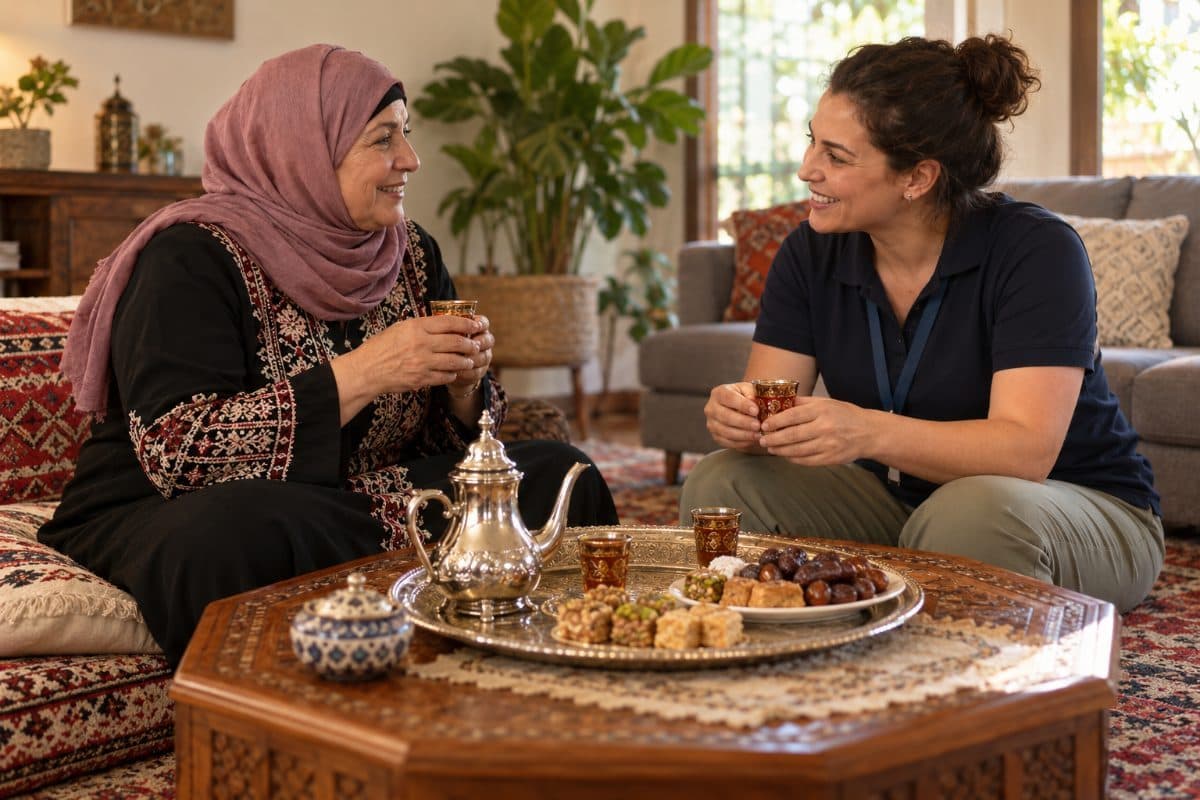
Culturally appropriate disability support matters because a person’s language, food, beliefs, family relationships and daily routines can shape how they want to receive support. Respecting those preferences can make conversations clearer and decisions more comfortable. Good support starts by asking the person what matters to them, rather than assuming everyone from the same background wants the same things.
Κλείστε δωρεάν ραντεβού
Key takeaways
Cultural respect is about individual choice, not a checklist of traditions. Ask how a worker will listen, communicate and respect your routines. Consider whether a free meeting gives you enough space to discuss preferences. Language availability and any special arrangements must be checked directly. The participant remains at the centre of planning their daily support.
What does culturally appropriate support look like?
It begins with listening. One person may want help preparing familiar meals. Another may value quiet time, privacy, particular forms of address, or attending a community activity. Some people want family involved in discussions. Others prefer to make decisions independently. A respectful support worker asks, checks consent and avoids making assumptions. This matters during everyday support as much as during important conversations. Respect also means being willing to adapt when a person's preferences change.
Language is important, but it is not the whole story
Being understood involves more than speaking the same language. People may use different words for disability, support, independence or family roles. A good discussion allows time for questions and checks whether the person is comfortable with the explanation. Do not assume that people from a shared language group share the same customs or beliefs.
Everyday activities are part of cultural identity
Food, celebrations and social life can make an ordinary week feel familiar. If meal preparation is part of the support being discussed, the participant can explain preferred dishes, shopping routines and who should take part. During community participation, they might want to join a local group, visit familiar places or try something new. These are examples of preferences to discuss, not promises about any particular activity. Support should follow the person's own goals and choices, within the agreed scope of assistance.
Respecting choice, privacy and family involvement
Family members can help explain routines, but their views should not replace the participant's choices. Ask the person who they would like in a meeting, what information may be shared and which decisions they want to make on their own. People can hold different beliefs even within the same household. A practical conversation can cover privacy in the home, food preferences, gender-related comfort, religious or cultural occasions, and the best way to raise a concern. Not every subject will matter to every person.
Cultural respect is different for every person
Two people who speak the same language may want very different types of support. One may want help keeping a long-standing routine, while another may be building a new one. Some people celebrate cultural events; others do not. Ask open questions such as 'What does a comfortable day look like?' and 'Are there things a worker should know before visiting?' Leave space for the participant to say that a topic is not relevant. This avoids turning culture into a set of assumptions.
Practical examples to talk through
A participant might explain how they organise meals during a busy week, which community settings they enjoy, or whether they want to invite relatives to an activity. They might also explain a preference for a particular greeting, a quiet area to rest, or privacy around personal matters. These examples can guide a discussion about daily life support, transport or community participation. They are not a fixed menu of services, and the actual tasks must be agreed before support begins.
What to do when something does not feel right
If a worker misunderstands a preference, it may help to explain the issue with a specific example, if the participant feels comfortable doing so. They can ask how a different approach would work next time. A trusted person can assist with explaining a concern if invited by the participant. Respectful support includes taking concerns seriously without treating any one person's cultural experience as universal.
Planning a useful first conversation
Before meeting a provider, note three things: the activities you want help with, the routines you value and the way you prefer to communicate. You can bring written questions, take notes or invite a person you trust. Ask what a typical shift would involve and whether there are activities outside the provider's scope. Make room to discuss practical boundaries, not just cultural background. The aim is a clear, shared understanding of the person’s preferences and proposed support, rather than a promise that every request can be met.
How can you discuss cultural preferences with a support worker?
Start with a few concrete examples from your week. You might explain when you usually eat, what makes outings comfortable, or how you prefer a worker to speak with you. Ask how a worker handles unfamiliar customs and what happens when a routine changes. Take your time to describe what you do not want as well as what you do want. A free Meet and Greet can be a useful place to ask these questions before deciding whether support feels suitable.
What should you ask before agreeing to support?
Ask who will provide one-to-one support and how your preferences will be discussed. For health, nursing or therapy needs, speak with the appropriate qualified professional.
How does this connect to NDIS funding?
NDIS plans are individual. A participant may have core supports or capacity building funding, but the funded supports and conditions depend on their own plan. Whether a particular culturally preferred activity or support arrangement can be paid for should be checked against that plan. Ask your planner or support coordinator if you are unsure. Plan-managed and self-managed participants should also check invoices and service agreements against their own arrangements.
About Valencea in Western Sydney
Valencea is a small, founder-led NDIS support provider based in Western Sydney. Its co-founders, Arash Hasanzadeh and Sunny Ria, speak Persian and English. The website is offered in 11 languages. Valencea offers one-to-one support and a free, no-obligation Meet and Greet, with matching guided by the person's preferences. It currently supports self-managed and plan-managed participants.
Support options and clear boundaries
Services listed include Support Worker Services, Community Participation, Meal Preparation, Assistance with Daily Life and Companionship. One-to-one shifts have a two-hour minimum. For specialised needs, ask your planner or support coordinator about the right provider or qualified professional.
How to take the next step
Write down the routines and preferences most important to you, including anything you want a worker to avoid. Compare them with the support tasks you are considering. A free Meet and Greet can help you ask practical questions without any obligation to proceed. For background reading, see the guide to finding a support worker who speaks your language, and the separate guides about Persian-speaking and Arabic-speaking families in Sydney. Those guides are starting points for questions, not proof of worker-language availability.
FAQ
Is cultural support only about speaking the same language?
No. Shared language may help communication, but culture can also involve food, family preferences, faith, privacy and daily routines. A person may not identify with every custom associated with their background.
Can I ask for a support worker who understands my customs?
Yes, you can explain your preferences and ask how they will be considered during matching. A useful discussion includes daily routines, communication style and any boundaries at home. Do not assume a particular worker background, skill or language is available.
Does culturally appropriate support mean my family must be involved?
No. Some participants value family involvement; others prefer private conversations and independent decisions. The important step is to ask the participant who they want included and what information they are comfortable sharing. A meeting can cover these preferences before support starts, and they can be revisited if circumstances change.
Can NDIS funding pay for culturally preferred activities?
It depends on the participant’s plan, the support being delivered and relevant NDIS pricing conditions. A cultural preference on its own does not establish that an expense can be claimed. Check with your planner or support coordinator before making commitments. This is general information, not advice about your individual funding.
Can I request someone who speaks Persian or another language?
You can ask about language preferences.
What if I have an NDIA-managed plan?
The provider described here works with self-managed and plan-managed participants. Talk with your planner or support coordinator about provider options that fit your funding management arrangements.
What happens at a free Meet and Greet?
A free, no-obligation Meet and Greet gives you a chance to explain your needs, preferences and the kind of one-to-one support you are looking for. You can ask how matching works and whether the proposed tasks fit the provider’s scope. It is also a chance to decide whether to continue without pressure.
Where can I ask about support around Western Sydney?
Ask directly whether your address and requested support are covered.
Έτοιμοι να το συζητήσετε;
Επικοινωνήστε μαζί μας και η ομάδα μας θα σας βοηθήσει να διαπιστώσετε τι είναι πραγματικά εφικτό για το πλάνο σας.
Αίτημα ΥποστήριξηςΣχετικά με τη Valencea
Οι Άνθρωποι Πρώτα. Πάντα.
Η Valencea είναι πάροχος υποστήριξης NDIS, χτισμένος πάνω σε μια απλή πεποίθηση: κάθε άνθρωπος αξίζει να ζει μια ζωή επιλογής, αξιοπρέπειας και σύνδεσης. Η ομάδα μας συνεργάζεται με συμμετέχοντες, οικογένειες και φροντιστές για να προσφέρει υποστήριξη που ταιριάζει στην πραγματική ζωή — όχι το αντίστροφο.
Κλείστε δωρεάν ραντεβού
