
Social Connection
NDIS Companionship Support in Sydney: What It Means in Everyday Life
Answer first
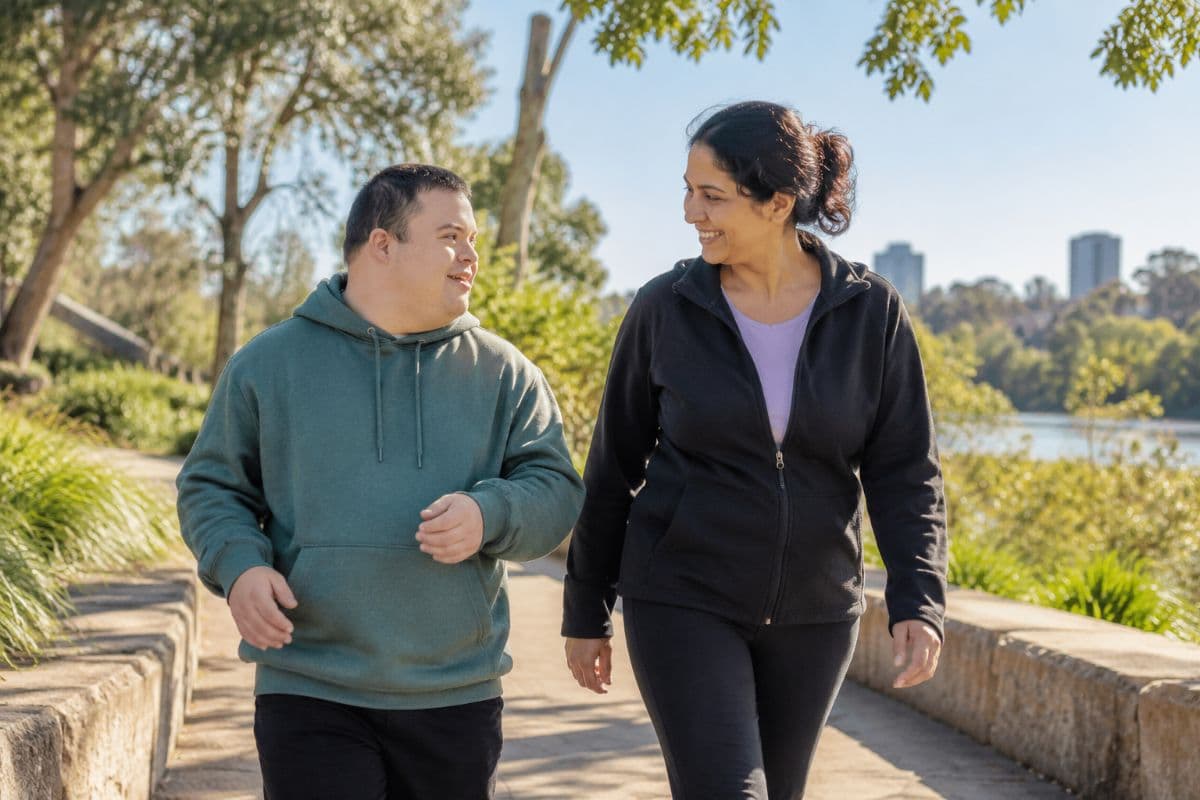
Companionship support in Sydney can involve spending time with a support worker, sharing everyday activities and having opportunities for social connection. It might mean having company while enjoying a hobby, talking over a cup of tea or getting support to take part in an activity. Companionship is not the same as personal care, therapy or community participation, although some activities can overlap. The right approach depends on your preferences, your goals and your individual NDIS plan.
Κλείστε δωρεάν ραντεβού
Key takeaways
Here are the main points in this article.
- Companionship is about respectful company and meaningful everyday interaction, not simply keeping someone occupied.
- Support can involve quiet activities at home or shared activities in the community.
- Community participation usually has a clearer focus on joining activities outside the home.
- Personal care is help with personal daily activities and has a different purpose.
- Your choices, boundaries and preferred activities should guide conversations with a support worker.
- NDIS funding has to be considered against your own plan, goals and the funding rules.
What is companionship support?
Companionship support is about having someone to spend time with while doing activities that matter to you. For one person, that might be sitting together and talking about music. For another, it could mean getting ready for a regular social outing, or sharing an interest such as gardening.
Companionship is not necessarily about being busy. A comfortable conversation or a familiar routine may be worth more than an afternoon packed with activities.
A support worker should respect how you want to spend your time. That includes listening when you want company, and recognising when you need quiet or personal space. Valencea offers Companionship as part of its one-to-one support.
Why everyday social connection matters
Social connection takes many forms. Some people enjoy large gatherings, group activities and meeting new people. Others prefer one-to-one conversations, familiar places or a small circle of trusted people. There is no single correct way to be social.
Living with disability does not automatically mean someone feels lonely. Equally, a person can have family, neighbours and community contacts and still want more chances for meaningful interaction. Companionship support should not make assumptions about someone's social life.
The conversation can start with simple questions.
- What do you enjoy doing with another person?
- When do you prefer to spend time alone?
- Are there activities you would like to try?
- Do you prefer quiet settings or lively places?
- What helps you feel comfortable around someone new?
These questions let the person receiving support decide what social connection means to them.
What can companionship support look like?
Companionship does not have to follow a fixed program. Everyday activities can be a natural setting for conversation and shared interests.
Sharing interests at home: a person might enjoy reading, talking about a television show, listening to music or working on a hobby. The support worker's role is to follow the person's interests, not to choose activities for them. Someone who loves indoor plants, for example, may want company while looking after their collection.
Spending time in familiar places: some people prefer familiar surroundings when they spend time with someone new, such as a local cafe, a park or another comfortable community setting. The key questions are whether the activity is suitable, wanted and consistent with the person's support arrangements.
Exploring new activities: companionship can also include talking about new interests. A person might want to learn about local activities without committing straight away. They could look at the options, think about accessibility and decide whether an activity feels right. There should be no pressure to take part just because an opportunity exists.
Companionship and community participation: what is the difference?
The two ideas can overlap, but they are not identical. Companionship emphasises shared time, conversation and social connection. Community participation focuses on taking part in activities, events and everyday community life.
Spending time talking with a support worker about a favourite hobby may have a companionship focus. Going to a community activity with help to take part may have a community participation focus. The same outing can include both. What matters is the purpose of the support, what happens during the activity and the person's goals.
Valencea also provides Community Participation and Social & Recreational Activities. These should be discussed according to the person's needs, not treated as interchangeable labels.
How is companionship different from personal care?
Personal care is help with personal daily activities. Companionship focuses on shared activities and social interaction. Someone might want a support worker to help with a personal routine and also spend time talking or enjoying an activity. That does not mean the two supports are automatically described, delivered or funded in the same way. If you need help with personal daily tasks, talk about this separately. Valencea offers Personal Care as a listed service.
Companionship is also not clinical care, counselling or therapy. A support worker providing company does not replace qualified health professionals or mental health services.
How to talk about loneliness without feeling labelled
Loneliness can be a sensitive topic. Someone may want more company but dislike being described as isolated. Another person may value independence and only want occasional social interaction. A respectful conversation avoids assumptions.
Rather than asking someone to prove they are lonely, it is more helpful to talk about what they want from their week. For example: "I enjoy my own space, but I would like company when doing certain activities." Or: "I want someone who is happy to talk, but I do not want every visit to feel like a planned outing."
Preferences like these give a support worker useful guidance. They also keep the focus on the person's decisions, not someone else's idea of how social their life should be.
Choosing activities that feel comfortable
Activities should reflect interests, energy levels, accessibility needs and personal boundaries. A person may prefer a quiet activity at home one week and an outing the next. It helps to talk about practical points before making plans.
- Whether the place is accessible.
- Whether the person prefers conversation or a shared activity.
- How much notice they want before plans change.
- Whether they would like a familiar routine or more variety.
- What they want the support worker to do if an activity becomes uncomfortable.
These are not minor details. They can decide whether support feels respectful and useful.
How to discuss your preferences with a support worker
A good starting point is to describe what you enjoy and what you would rather avoid. You do not need a long list of goals before your first conversation. Think about the activities that already form part of your week, and which ones you would like to share with someone.
You might say that you enjoy talking about sport, prefer quiet cafes or want to try a new interest gradually. It is also fine to talk about boundaries. You can explain how you like to communicate, whether you want help making decisions or just someone to come along, and what would make you feel comfortable.
Valencea matches support workers to people's preferences and offers a free Meet and Greet with no obligation. It is a chance to talk about expectations before you arrange ongoing support.
Can NDIS funding cover companionship support?
It depends on what support is being delivered, why it is needed and how it relates to your NDIS plan. A companionship activity should not automatically be placed in a funding category just because of its name. Check the right support item, funding category and claiming conditions in the current NDIS Pricing Arrangements and Price Limits, and ask your planner or support coordinator how they apply to you.
Valencea works with self-managed and plan-managed participants. If you are unsure whether an activity fits your plan, speak with your planner or support coordinator before you commit funding.
Valencea offers a free, plain-language chat about what a plan can be used for. This is general information, not legal or financial advice.
Local companionship support in Western Sydney
Valencea is a small, founder-led support provider based in Northmead. It is led by co-founders Arash Hasanzadeh and Sunny Ria, who both speak English and Persian. Support is one-to-one, with a minimum two-hour shift.
Our location pages cover Northmead, Parramatta, Blacktown, Castle Hill, Carlingford, Epping, Ryde, Chatswood, Toongabbie and North Rocks. For example, someone in Parramatta may want to talk about companionship around familiar daily activities, and a person in Northmead might prefer to start with quiet activities before thinking about outings. These are examples of preferences, not promises of particular activities or immediate worker availability. You can explore support in Western Sydney and talk about your needs with the team.
Local proof: what Valencea can tell you
Valencea offers a free, no-obligation Meet and Greet. It works with self-managed and plan-managed participants.
Ask any provider, including Valencea, about worker checks and insurance directly before support begins.
Ready to talk about companionship support?
You can tell Valencea what kind of company, shared activities or social connection you would find helpful. There is no obligation to begin support after the free Meet and Greet. You can call or WhatsApp Valencea on 0494 798 710, email hello@valencea.com.au, or use the Request Support form. Contact hours are Monday to Sunday, 7:00am to 8:00pm, and Valencea is available 24/7 for existing participants. You can also book a free consultation on the website.
This article gives general information only. Talk about individual NDIS funding decisions with your planner or support coordinator.
FAQ
What does an NDIS companionship support worker do?
A companionship support worker spends time with a person during activities that reflect their interests and preferences. This might involve conversation, hobbies or shared everyday experiences. The purpose is to support meaningful interaction while respecting the person's choices, privacy and independence. The exact tasks should be agreed before support begins.
Is companionship the same as community participation?
No. Companionship generally focuses on spending time together and social connection. Community participation focuses more directly on taking part in community activities and events. The two may overlap during an outing, but their purpose can differ. Talk about the actual activity and your NDIS plan before deciding how support should be arranged.
Can companionship support happen at home?
Yes, companionship can involve activities at home, depending on the person's needs and agreed support arrangements. Someone may prefer talking, enjoying a hobby or sharing a familiar activity in a comfortable setting. Home-based companionship should still have a clear purpose and reflect the person's choices, rather than simply filling time.
Can I choose activities with my support worker?
Your preferences should guide conversations about activities. You can talk about what you enjoy, what you dislike and whether you prefer a familiar routine or something new. Valencea matches support workers to personal preferences. Activities also need to suit the agreed service and any relevant NDIS funding requirements.
Can I use a plan-managed NDIS plan for companionship?
Valencea works with plan-managed and self-managed participants. However, that does not mean every companionship activity is automatically covered. Funding depends on the activity, your plan and the current rules. Speak with your planner or support coordinator about your circumstances before arranging funded support.
How do I know whether a support worker is the right match?
Start by talking about communication style, interests, routines and boundaries. Think about the activities you enjoy and what would make you comfortable with someone new. Valencea offers a free Meet and Greet with no obligation and matches support workers to preferences. Use the meeting to ask practical questions and decide whether it feels right.
Έτοιμοι να το συζητήσετε;
Επικοινωνήστε μαζί μας και η ομάδα μας θα σας βοηθήσει να διαπιστώσετε τι είναι πραγματικά εφικτό για το πλάνο σας.
Αίτημα ΥποστήριξηςΣχετικές υπηρεσίες
Σχετικά με τη Valencea
Οι Άνθρωποι Πρώτα. Πάντα.
Η Valencea είναι πάροχος υποστήριξης NDIS, χτισμένος πάνω σε μια απλή πεποίθηση: κάθε άνθρωπος αξίζει να ζει μια ζωή επιλογής, αξιοπρέπειας και σύνδεσης. Η ομάδα μας συνεργάζεται με συμμετέχοντες, οικογένειες και φροντιστές για να προσφέρει υποστήριξη που ταιριάζει στην πραγματική ζωή — όχι το αντίστροφο.
Κλείστε δωρεάν ραντεβού
