
Home Support
NDIS Meal Preparation: What the NDIS Can Fund
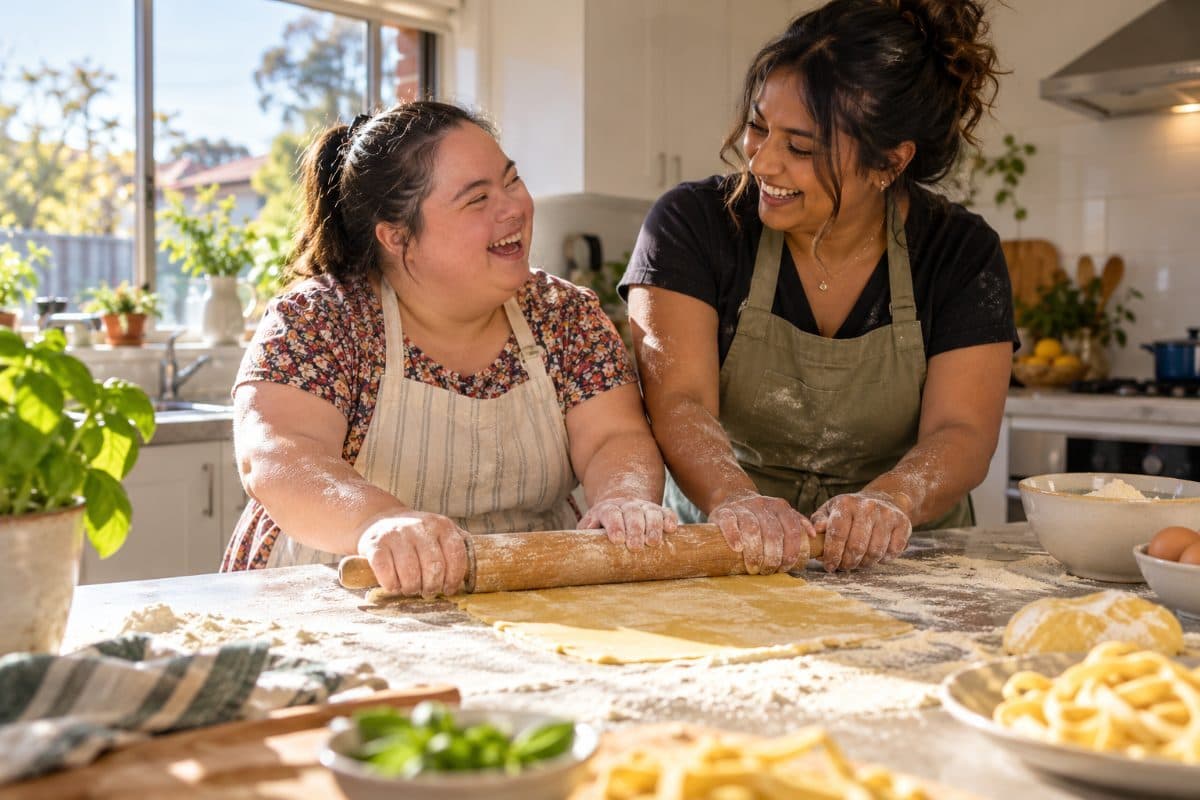
The NDIS may fund help with meal preparation when it relates to a participant’s disability support needs and is included in their plan. This may mean support with planning, preparing or cooking meals. It does not automatically mean the NDIS pays for groceries. Check your plan and ask your planner or support coordinator before booking.
Κλείστε δωρεάν ραντεβού
Does the NDIS Cover Meal Preparation and Food Costs?
NDIS meal preparation funding can cover help with planning, shopping and preparing meals when you cannot complete these activities independently because of your disability and family or friends cannot help. The NDIS does not pay for food or ingredients because these are everyday living costs. Groceries and takeaway food are not funded. Whether meal preparation assistance is funded depends on your individual NDIS plan.
There is also an important distinction between the cost of a meal and the cost of preparing or delivering it. Where a prepared-meal delivery service is funded, invoices must separate food costs from preparation and delivery costs. This guide explains these funding distinctions so you can better understand your support options. To discuss practical assistance at home, visit Valencea's NDIS meal preparation service page.
Key takeaways
Meal preparation support is about assistance with an everyday activity, rather than a promise that all meal-related costs are covered. Funding depends on the person’s plan and the support being claimed. The participant can discuss how they want to be involved, whether that means choosing recipes, doing some steps or having a support worker do more of the preparation. A clear starting point is to separate three things: the support worker’s time, the ingredients used, and any separate meal product or delivery fee. Do not assume these costs are treated the same way.
What does meal preparation support mean?
Meal preparation is a practical part of daily life. It may involve deciding what to eat, collecting ingredients, safely preparing food, following a recipe, cooking, serving a meal and tidying the immediate work area. Different people need different types of help. One person may do most steps independently. Another may prefer hands-on assistance for tasks that are difficult because of disability. A support worker can work alongside the participant, follow their preferences and agree which steps the person wants to do. Support should respect the person’s choice, routines, culture and preferred foods. It should not treat disability as a reason to take over tasks the person wishes to do. The practical tasks and any safety requirements should be discussed before the visit.
What kind of help can be discussed?
Think about a usual week, rather than only one meal. Questions might include whether assistance is needed with chopping ingredients, using kitchen equipment, preparing food in batches, organising items within reach or cleaning up after cooking. The participant may want the same routine each week, or flexibility around appointments and changes in energy.
What is the difference between cooking support and paying for food?
Assistance from a support worker and the price of groceries are not the same item. The NDIS generally distinguishes disability-related supports from ordinary day-to-day living costs such as food. A person should not assume that buying ingredients, paying for takeaway or ordering prepared meals can be claimed simply because meal preparation assistance is discussed in their plan. There can be separate rules for different meal-related products or services. Those rules should be checked against current NDIS guidance, the funding category and the person’s individual plan. This article does not decide whether a particular food purchase or service is claimable.
Which part of an NDIS plan might be relevant?
Some assistance with everyday activities may be considered under core supports. Capacity building is a different NDIS funding category and should not be treated as interchangeable with core supports. The category, available funding and purpose matter. A support worker visit cannot be billed to a category simply because a related activity occurred. Read the exact wording of the plan and check how its funding is managed. For a question about line items, invoicing or whether a support is covered, ask the plan manager where applicable and seek guidance from the participant’s planner or support coordinator. A provider can explain its own services, but it cannot approve a participant’s NDIS funding.
What if the plan is self-managed or plan-managed?
People who self-manage their NDIS funding and people with plan-managed funding may have different ways of arranging payment and keeping records. In either case, the participant needs to check that the support is appropriate for their plan, agree on the service before it begins, and understand what will appear on an invoice. A practical discussion should cover the activities expected during the visit, the planned duration, any separate expenses, cancellation arrangements and the way invoices will be handled. Ask for clear wording in the service agreement. Nothing in this guide should be read as an individual funding decision or a guarantee that an invoice will be accepted.
How to prepare for a meal preparation support visit
Start with the meals and routines that matter to the participant. Choose a manageable goal for the visit, such as preparing lunch together or arranging ingredients for a later meal. Talk about food preferences, allergies, safe food handling, mobility or equipment needs and who will supply groceries. If the task requires specialist clinical assessment or treatment, speak to the appropriate qualified professional. Before a first visit, it helps to write down what the person wants to do independently and where support may be useful. Check whether the kitchen can be used safely and which tools are available. Agree on the start and end of the session. The participant should be able to raise concerns or request changes to the routine.
Choosing support that fits your routine
When discussing a service, ask whether it covers help preparing food, what the worker is expected to do and how the participant remains involved in decisions. A service agreement should describe the support clearly enough that both sides have the same understanding. If the participant needs dietetic therapy, swallowing assessment or high nursing or clinical support, seek advice from a suitably qualified health professional. Meal preparation assistance is not a substitute for therapy or clinical care. People with complex behaviours or high nursing or clinical needs should discuss their requirements openly so they can be directed to appropriate services.
Meal preparation support in Western Sydney
Meal routines differ across households in Parramatta, Northmead, Blacktown, Castle Hill and Carlingford. For someone in Parramatta, a useful question might be whether support can fit around community activities. In Northmead, the discussion may focus on a consistent home cooking routine. In Blacktown, a participant might want help organising ingredients before a meal. These are examples of questions to ask, not claims about particular local residents or service outcomes.
About Valencea in Western Sydney
Valencea is a small, founder-led NDIS support provider based in Western Sydney. It offers Meal Preparation, Domestic Assistance, Shopping Assistance and Assistance with Daily Life, with one-to-one support and a minimum two-hour shift. Its free Meet and Greet has no obligation, and support workers are matched to a person’s preferences. It currently supports self-managed and plan-managed participants.
FAQ
Does NDIS meal preparation funding include groceries?
No. Food and ingredients are everyday living costs, so groceries and takeaway food are not funded by the NDIS. Depending on your individual plan, the NDIS may fund disability-related assistance with shopping, meal planning or preparing meals.
Can the NDIS pay for prepared-meal delivery?
Prepared-meal delivery services may be funded depending on your NDIS plan. Where this support is funded, the invoice must separate the cost of food from preparation and delivery costs. Food itself remains an everyday living cost.
Does the NDIS pay for someone to cook for me?
It may fund disability-related assistance with preparing meals if that support fits the participant’s plan and applicable rules. That is different from paying for the food itself. Discuss the tasks you need help with, review your plan and check any uncertainty with your planner or support coordinator before arranging visits.
Are groceries included in NDIS meal preparation funding?
Do not assume groceries are included. The cost of everyday food is generally treated differently from disability-related support worker assistance. Separate meal products can raise different questions. Keep food purchases and support worker charges clearly identified, and ask your planner or support coordinator which costs are relevant to your plan.
Can a support worker help me plan meals and make a shopping list?
Meal planning and writing a shopping list are practical activities you can discuss when arranging help at home. Whether the particular assistance can be funded depends on your plan and the applicable support rules. Agree on the tasks first, including which decisions you want to make yourself and what help you prefer.
Can I learn cooking skills instead of having someone cook for me?
You can ask about taking an active part in meal preparation, such as choosing ingredients, following steps or practising a kitchen routine. Core supports and capacity building are different funding categories, so do not assume the same billing approach applies. Check your goals and funding with your planner or support coordinator.
Does it matter if my NDIS plan is self-managed or plan-managed?
The management method can affect payment and invoicing, but it does not remove the need to check whether the support is appropriate for your plan. A self-managed participant should keep suitable records. A plan-managed participant can discuss invoice handling with their plan manager. Ask your planner or support coordinator about uncertain claims.
Can meal preparation support include cleaning up the kitchen?
Tidying the immediate cooking area and putting away the items used are sensible tasks to discuss when agreeing on a meal preparation routine. Do not assume wider household cleaning is part of the same booking or funding item.
Can I book meal preparation support if I have an NDIA-managed plan?
Not with Valencea at present. Valencea works with self-managed and plan-managed participants. If your funding is NDIA-managed, speak with your planner or support coordinator about finding a provider suitable for your plan. You can also ask what would need to change before making a booking.
What should I ask before my first meal preparation visit?
Ask which cooking tasks are included, who buys the ingredients, whether the worker can follow your food preferences, and how long the session will be. Discuss access to your kitchen, safety needs and any dietary instructions. Clarify invoices, cancellation terms and minimum shifts. If clinical nutrition or swallowing support is required, consult an appropriate qualified health professional.
Έτοιμοι να το συζητήσετε;
Επικοινωνήστε μαζί μας και η ομάδα μας θα σας βοηθήσει να διαπιστώσετε τι είναι πραγματικά εφικτό για το πλάνο σας.
Αίτημα ΥποστήριξηςΣχετικές υπηρεσίες
Σχετικά άρθρα
Σχετικά με τη Valencea
Οι Άνθρωποι Πρώτα. Πάντα.
Η Valencea είναι πάροχος υποστήριξης NDIS, χτισμένος πάνω σε μια απλή πεποίθηση: κάθε άνθρωπος αξίζει να ζει μια ζωή επιλογής, αξιοπρέπειας και σύνδεσης. Η ομάδα μας συνεργάζεται με συμμετέχοντες, οικογένειες και φροντιστές για να προσφέρει υποστήριξη που ταιριάζει στην πραγματική ζωή — όχι το αντίστροφο.
Κλείστε δωρεάν ραντεβού
