
Daily Living Support
Can an NDIS support worker give me my medication?
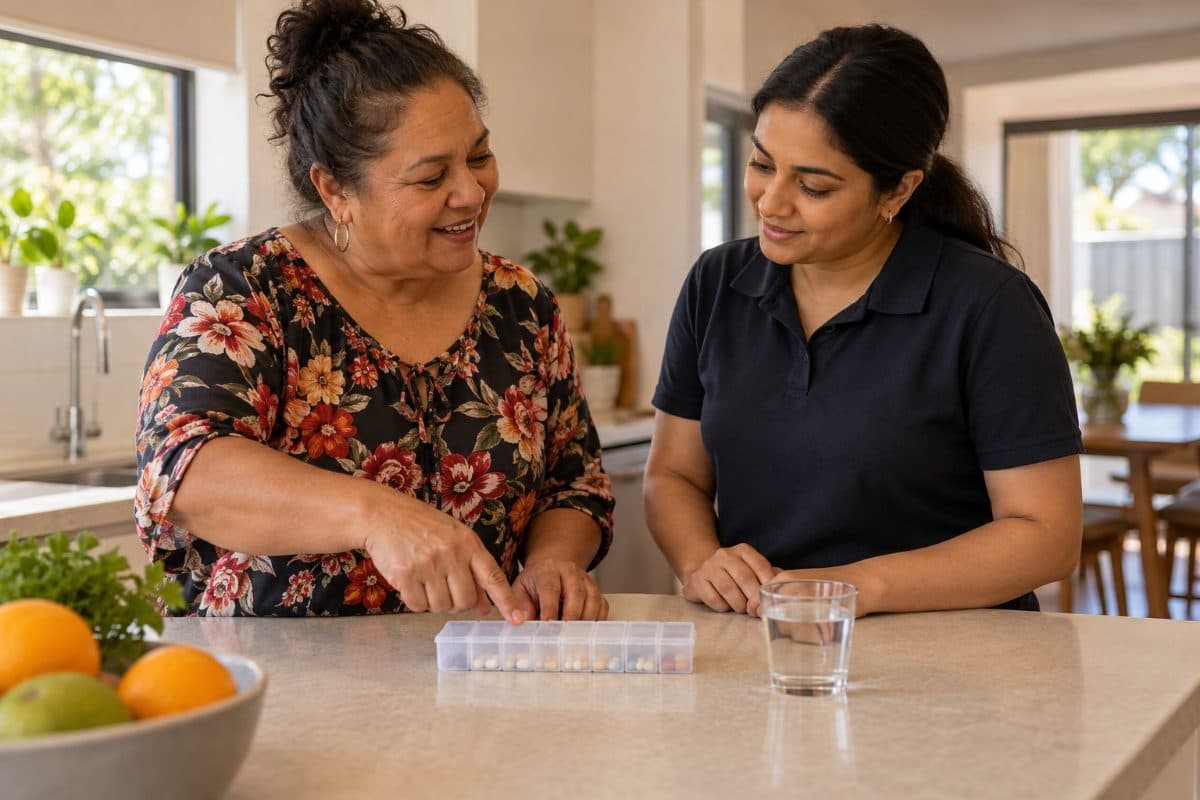
An NDIS support worker may be able to help with parts of your medication routine, but giving or administering medication is not automatically part of every support worker’s role. What is safe depends on the task, the worker’s training and your support arrangements. Check the provider’s scope first.
Key takeaways
Medication reminders, practical assistance and administering a dose are different tasks. Do not assume a worker can do all three. The right approach depends on your needs, the medication and the arrangements in place. A qualified health professional should answer clinical questions. A planner or support coordinator can help you understand how proposed disability-related supports fit your individual NDIS plan. This article is general information, not medical advice or advice about your funding.
What does “give me my medication” mean?
People use this phrase to describe several kinds of help. You might want someone to remind you that it is time to take medicine. You might need help getting water, opening a container or following a routine. Or you might mean that another person prepares and administers a dose. These are different responsibilities and should not be treated as interchangeable.
Medication reminders
A reminder may be a prompt at an agreed time or a check that you have the information you need to manage your own routine. It is not a decision about what medicine you should take.
Practical medication assistance
Some people need practical help around a routine, such as locating their usual supplies or making a drink. Tasks that involve touching medication, opening dose packaging, measuring medication or handing over a prepared dose may carry different risks. The exact boundary between assistance and administration must be assessed, rather than assumed.
Medication administration
Administration means taking responsibility for giving a medication dose. This can involve important checks, records, instructions and staff capability. It is not something to add casually to a general domestic or personal care shift. Ask the relevant health professional and provider which tasks require specific training, assessment or clinical oversight.
Can a support worker administer medication under the NDIS?
There is no safe blanket yes or no for an individual participant. The kind of medicine, route, risks, instructions and worker competence all matter. Requirements for safe support and relevant high-intensity support arrangements should be checked against current NDIS Commission guidance. A worker should not be asked to guess a dose, decide whether to skip one, change a prescription, or work outside their agreed and assessed role. If your request needs clinical judgement, ask a pharmacist, prescriber or appropriately qualified nurse. This article does not establish which medication-related activities any particular provider or worker can undertake.
What should be agreed before support begins?
Start with a clear description of what you actually need. “Help with my tablets” can mean very different things to different people. Describe the routine step by step in plain language. Include whether you manage the medication yourself, need a prompt, need physical help, or need someone else to administer it. Ask how the provider assesses the task, what training and instructions workers need, what is written down, and what happens if something changes. A safe conversation should also cover who to contact about uncertainty, a missed dose or a medication error.
Questions to ask a prospective provider
Ask: Which exact medication tasks will you accept? Who checks the instructions? What competency checks are required? Can I review the written support arrangement? How are changes communicated? Who handles a mistake or a concern? A clear answer is more useful than a general promise that a worker can “help with medications”.
What if my medication needs specialist care?
Some medicines and routes of administration need closer clinical assessment or more specialised skills. Do not assume that a general support worker can provide complex medication support. Discuss these needs with your treating clinician and, where appropriate, a qualified nurse. Check the current NDIS Commission guidance for any relevant practice requirements. If you need high nursing or clinical support, seek an appropriately qualified clinical provider. It is important to distinguish everyday disability support from professional healthcare tasks. A personal care service page alone does not establish that a provider delivers medication administration.
Can NDIS funding pay for medication-related assistance?
Some disability-related assistance may fall within a participant’s funded daily life supports, but coverage depends on the person’s plan, the type of support and current rules. Do not treat this article as approval for a particular expense. Check the NDIS Pricing Arrangements and Price Limits and discuss your circumstances with your planner or support coordinator. Core supports generally relate to help with everyday activities, while capacity building supports relate to developing skills and independence. These are funding terms, not clinical permissions. A funded support item does not by itself tell you whether an individual worker is competent or authorised to administer medication.
How do I prepare for a conversation about medication support?
Bring a simple description of your daily routine, the tasks you want help with and the questions you want answered. If your medication has changed recently, contact your pharmacist or prescriber for appropriate clinical advice. Do not ask a support worker to interpret a prescription or decide which dose is correct.
About Valencea in Western Sydney
Valencea is a small, founder-led NDIS support provider based in Western Sydney. Co-founders Arash Hasanzadeh and Sunny Ria speak Persian and English. The business offers one-to-one support and a free, no-obligation Meet and Greet so people can discuss their preferences. It works with self-managed and plan-managed participants.
FAQ
Can an NDIS support worker remind me to take medication?
Ask how the task is recorded and whether the worker has appropriate instructions. Never rely on a reminder arrangement for an urgent clinical need without guidance from a healthcare professional.
Can a support worker take tablets out of a packet for me?
Handling tablets or opening a dose pack may involve more responsibility than a spoken reminder. The answer depends on the precise task, risk assessment and safe work arrangements. Check the provider’s scope and the relevant NDIS Commission guidance. Ask a pharmacist or prescriber about medication-specific questions rather than expecting a worker to make a clinical decision.
Can a support worker decide whether I should skip a dose?
No support arrangement should rely on a general support worker independently making prescribing decisions. If you are unsure about a dose, speak with a pharmacist or prescriber and follow the advice given for your situation. Ask the provider what its process is for recording and escalating medication concerns.
Do I need a nurse for medication support?
Not every reminder or practical routine necessarily requires nursing care. However, some tasks can involve clinical judgement or specialist skills. The appropriate professional depends on your needs and the medicine involved. Ask your treating clinician about clinical requirements and ask the provider to describe the tasks it is equipped to undertake.
Does NDIS core supports funding cover medication help?
Do not assume that a core supports budget automatically covers every medication task. Eligibility depends on the funded support, your circumstances and current pricing and claiming rules. Ask your planner or support coordinator to review the proposed assistance with you. For current provider claiming requirements, check the NDIS Pricing Arrangements and Price Limits.
Can I use a plan-managed or self-managed NDIS plan?
Both plan-managed and self-managed participants can discuss suitable support arrangements with a provider that accepts those management types. The task still has to be appropriate and within the provider’s scope. A plan-management arrangement does not replace worker competency, clinical advice or safe medication processes. Check your individual plan with your planner or support coordinator.
What should I do if the wrong medication is given?
If a medication mistake occurs or you suspect immediate harm, seek urgent medical advice. In an emergency in Australia, call 000. Do not try to correct a dose based on a general article. Ask the provider for its incident and escalation process and speak with your treating health professional about next steps.
Can I arrange medication help with this provider in Western Sydney?
If your request requires clinical care, speak with an appropriately qualified health professional. You can contact the team to explain the task and ask whether it is within scope.
