
Community Participation
NDIS Community Participation: Core Supports vs Capacity Building Explained
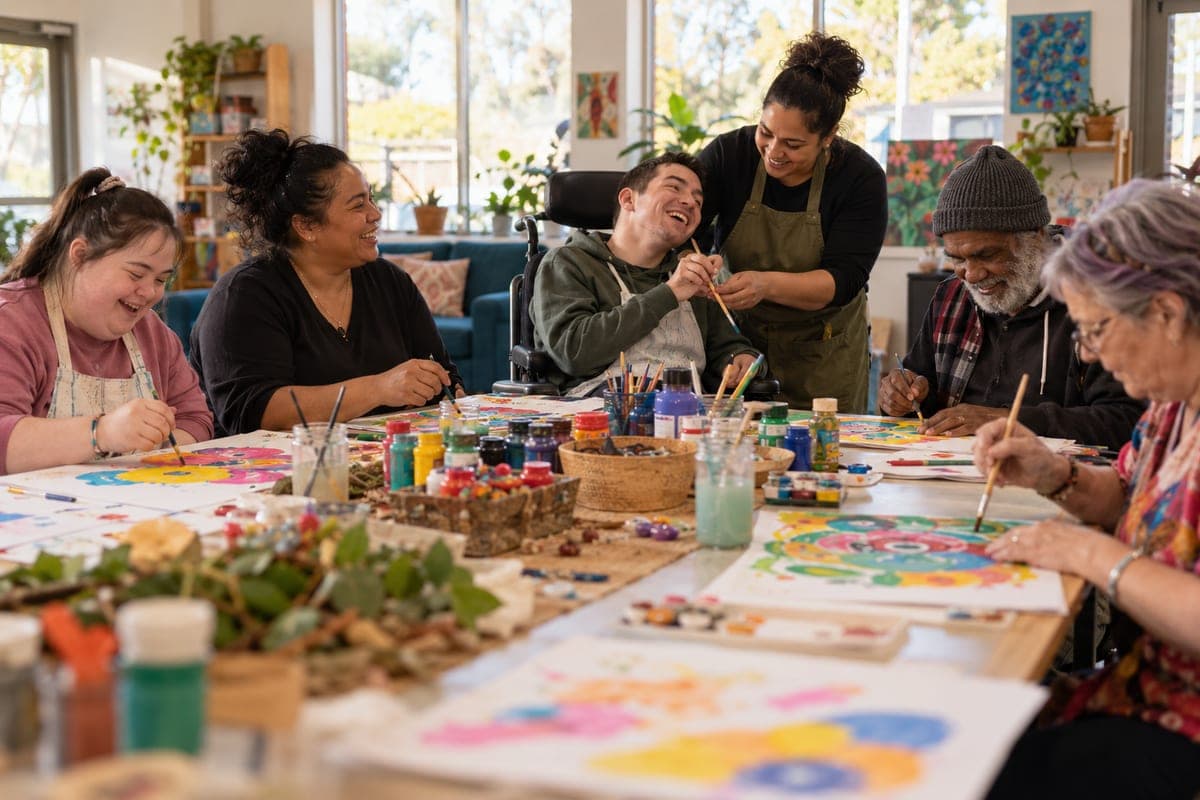
NDIS community participation can be funded through two different parts of an NDIS plan: Core Supports and Capacity Building. Both can help you connect with people, enjoy activities and take part in your community. The main difference is the purpose of the funded support. Core Supports generally help you participate in everyday activities, while Capacity Building focuses on developing skills and independence.
This distinction can be confusing because the same activity, such as attending an art class or joining a community group, may involve different kinds of assistance. What matters is not simply where you go, but what support you need, why you need it and how that support fits your plan.
Whether you live in Northmead, Parramatta, Blacktown, Castle Hill or elsewhere in Western Sydney, understanding these funding categories can help you ask clearer questions, organise suitable services and make informed decisions about your community participation.
Quick answer: NDIS community participation under Core Supports vs Capacity Building
Core Supports generally fund practical assistance to participate in everyday community and social activities, such as having a support worker accompany you to a group, class or outing. Capacity Building, particularly Increased Social and Community Participation, focuses on developing skills, confidence and independence so you can participate more effectively over time.
You may have funding for both purposes in the same plan. However, the funding categories are not interchangeable, and an activity must be an eligible NDIS support consistent with your plan before it can be claimed.
- Core Supports: assistance to access and participate in community activities.
- Capacity Building: support to develop skills, connections and greater independence.
- Core example: a support worker accompanies you to a weekly community group.
- Capacity Building example: structured assistance to develop skills for joining and participating in a new group.
- Both categories may appear in one plan when the participant has eligible needs for both.
- Core funding is generally more flexible, while Capacity Building funding is tied to its stated support category or funding component.
- Check with the NDIA, your plan or your plan manager before using funding for an activity.
1. Why NDIS community participation has two funding categories
Community participation is about being involved in activities, relationships and experiences that matter to you. This might mean visiting a local library, attending a social group, participating in a recreational activity, spending time with friends or becoming involved in a community organisation.
For people with disability, participating in these activities may involve practical barriers. Someone might need physical assistance, support with communication, help following a routine or assistance travelling to an activity. Another person may want to develop the skills needed to participate more independently.
The NDIS recognises that immediate participation and longer-term skill development are different support purposes. This is why community participation can appear under Core Supports and Capacity Building.
Neither category is more important or more legitimate than the other. Both can contribute to a meaningful everyday life, depending on a participant's disability-related needs and goals.
Importantly, the distinction is not always as simple as saying Core Supports are for participation and Capacity Building is for learning. Core-funded support workers can also help participants practise everyday skills while participating in the community. Capacity Building supports, meanwhile, may involve practical participation as part of a structured skill-development activity.
The correct funding category depends on the actual support being delivered, its purpose, the relevant NDIS support description and the participant's plan.
Some participants use both categories at different stages of their lives. Others may have both at the same time: ongoing assistance for regular activities alongside separate support to build new skills or connections.
Understanding the difference helps you discuss your needs more clearly during planning and when arranging services.
- Think about the activities you want to participate in.
- Identify the practical barriers you experience because of your disability.
- Consider whether you need ongoing assistance, structured skill development or both.
- Review your plan to see which community participation supports are funded.
- Ask questions when an activity could appear to fit more than one category.
- Confirm the correct funding arrangement before booking services.
2. Community participation under Core Supports: everyday access and assistance
Core Supports help people with everyday activities and disability-related assistance. Community participation within this budget is commonly described as Assistance with Social and Community Participation, or Assistance with Social, Economic and Community Participation in some NDIS support documentation.
This category can fund eligible support worker assistance that helps a participant access social, recreational and community activities. The emphasis is generally on the assistance needed to participate in activities that matter to the person.
For example, a participant in Parramatta might want to attend a weekly social group but require a support worker to help them travel to the venue, navigate the environment and participate in the activity.
Another participant in Blacktown might need support to visit a community centre, join a recreational outing or take part in a regular hobby. The support worker's role could involve practical assistance, communication support or helping the participant follow their preferred routine.
Core community participation is not limited to people who expect to become fully independent. Some participants will continue to need assistance with community activities over time. Ongoing support can still be meaningful and appropriate when it meets their assessed needs.
A regular activity might also create opportunities to practise everyday skills, meet new people and build confidence. These benefits do not automatically change the funding category from Core to Capacity Building.
Core funding is generally flexible across eligible support categories, subject to the way the plan is written and managed. However, flexibility does not mean that every activity or expense is covered.
Before using Core funding, check whether the proposed support meets the current NDIS rules and is consistent with the participant's plan.
- A support worker accompanies a participant to a local social group.
- Assistance is provided during a community outing or recreational activity.
- A participant receives support to attend a regular art or hobby group.
- A support worker helps someone navigate a community environment.
- Assistance is provided to participate in an eligible sporting or recreational activity.
- A participant receives disability-related support when attending a local event.
- A support worker assists with communication, participation or everyday choices during an outing.
3. Community participation under Capacity Building: developing skills and independence
Capacity Building supports are designed to help participants develop skills and increase independence. Within this budget, Increased Social and Community Participation can support eligible activities that help participants find and join community groups, build social connections and develop greater confidence in participating.
This may include structured support to develop social skills, learn how to participate in an unfamiliar activity, build a social network or become more comfortable engaging in community environments.
For example, a participant in Castle Hill might want to join a local hobby group but find it difficult to understand how the group operates or introduce themselves to others. A capacity-building support might focus on developing practical participation skills and helping the person become more familiar with the activity.
Another participant might want to develop skills for navigating community activities, planning participation or building relationships with people who share similar interests.
These supports generally have an identifiable skill-development or independence-building purpose. Progress may be reviewed against the participant's goals and the purpose of the funded support.
Capacity Building does not necessarily mean that a participant must eventually participate without any assistance. Independence can involve making more choices, developing confidence, improving communication or managing more parts of an activity while continuing to receive support.
It is also important to distinguish ordinary support worker assistance from specialist services. Some Capacity Building activities may require particular professional expertise, assessment or training services. Valencea does not provide therapy or specialist clinical services.
Capacity Building funding is generally stated against particular support categories or funding components. Unlike flexible Core funding, it cannot simply be transferred to an unrelated category because money remains available.
If your plan includes Increased Social and Community Participation, check the support description, intended purpose and applicable funding rules before arranging services.
- Developing practical skills for joining a new community group.
- Building confidence when interacting with people in social settings.
- Learning routines involved in participating in community activities.
- Developing skills to make and maintain social connections.
- Practising ways to communicate preferences during group activities.
- Building skills for participating in recreational or community environments.
- Working towards a defined participation goal with appropriate support.
4. Core Supports vs Capacity Building: practical community participation examples
The easiest way to understand the difference is to look at the purpose of the assistance, rather than the activity alone.
Imagine two participants attending the same community art class. The first participant needs ongoing support to travel to the class, manage practical barriers and participate comfortably. This may be an example of Core-funded community participation assistance.
The second participant wants to develop specific skills for joining community activities. They may receive structured support to understand the group's routine, practise communication and develop confidence. Depending on the service being delivered and their plan, this may fit a Capacity Building purpose.
The art class itself does not determine the funding category. The distinction concerns the disability-related support purchased and why it is being provided.
A similar situation can arise with sporting activities. A participant who requires regular practical assistance to attend a suitable sports session may use eligible Core support. A separate, structured activity aimed at developing community participation skills may fall under Capacity Building when the plan and applicable rules allow it.
Transport is another important consideration. A support worker accompanying someone during travel, a participant's transport funding and the ordinary cost of travelling are not necessarily treated the same way. Always check the applicable NDIS transport and support worker rules.
The costs of an activity, such as ordinary admission fees, tickets, meals or membership expenses, are also different from the costs of disability-related assistance. These ordinary participation expenses are generally not automatically funded by the NDIS.
When an activity has both participation and skill-development elements, the correct funding category should be determined by the actual support purpose and relevant rules. Do not claim the same service twice or select a category solely because it has more remaining funding.
- Art class — Core: assistance to attend and take part in the class.
- Art class — Capacity Building: eligible structured support to develop participation skills.
- Social group — Core: ongoing assistance during regular group activities.
- Social group — Capacity Building: support to develop skills for joining and interacting within a group.
- Community outing — Core: disability-related assistance during the outing.
- Community outing — Capacity Building: an eligible structured activity focused on developing community participation skills.
- The determining factors are the support delivered, its purpose, your plan and the current NDIS rules.
5. Which NDIS community participation funding category is right for your goals?
Choosing the appropriate category starts with understanding what you want to achieve and what assistance you need. Your personal goals are important, but they are not the only factor in determining which supports the NDIS can fund.
If your main need is ongoing, regular assistance to take part in activities, Core Supports may be relevant. Examples include attending a weekly community group, participating in a standing recreational activity or accessing the community with a support worker as part of your routine.
If your main goal is to develop skills, confidence and connections that support increasing independence, Capacity Building may be relevant. This could include structured assistance towards joining a new group or developing social participation skills.
Many participants benefit from both. Someone might continue receiving assistance to attend a regular group while working towards participating in another activity with greater independence.
You do not have to choose between receiving help today and developing skills for tomorrow. The NDIA may fund different eligible supports when they meet different assessed needs and are consistent with the participant's plan.
However, the fact that two categories exist does not mean every participant automatically receives funding for both. Funding decisions depend on individual circumstances, relevant evidence and applicable NDIS criteria.
If you have a support coordinator, they may help you understand your plan and explore appropriate supports. You can also ask your my NDIS contact or plan manager questions about the relevant categories.
When preparing for a planning conversation, describe the actual barriers you experience and the changes you want to make. Clear examples are more useful than simply requesting a category by name.
- Do I need ongoing assistance to participate in activities I already enjoy?
- Am I trying to join a new group or develop a new routine?
- Which parts of community participation can I currently manage independently?
- What disability-related barriers make participation difficult?
- Would structured skill-development support address a particular need?
- Do I need different forms of support for different activities?
- What funding is included in my plan and what restrictions apply?
- Who can clarify the correct category before I arrange services?
6. Can you have Core and Capacity Building community participation in the same NDIS plan?
Yes. A participant may have both Core-funded community participation assistance and Capacity Building funding for increased social and community participation when the NDIA determines that both are appropriate.
These supports can complement each other. Core assistance may help someone continue participating in activities they already enjoy, while Capacity Building support addresses particular skills or barriers that affect their ability to join additional activities.
For example, a participant in Western Sydney might use eligible Core funding for support during a weekly recreational outing. Separately, they may have Capacity Building funding for a structured programme that develops social participation skills.
The two purposes are different, even though both relate to community involvement. Each service should be delivered and claimed according to the relevant funding rules.
It is important not to assume that any support worker visit can be charged to either category. The correct claim depends on the actual service, the participant's plan and the applicable NDIS support and pricing arrangements.
Capacity Building funding is generally tied to its specific support category or funding component. It cannot be moved into Core Supports simply because the participant would prefer additional accompanied outings.
Core Supports are generally more flexible, but stated items, funding periods, management arrangements and other conditions may limit how funding can be used. Current plans may also describe funding through individual components rather than the older broad budget headings.
If your plan does not clearly identify the relevant funding arrangement, ask the NDIA or your plan manager to explain it before using the money.
- Both categories can appear in the same plan.
- Each category must be used for its eligible support purpose.
- Capacity Building funding cannot generally be transferred into Core Supports.
- Core funding flexibility depends on the plan and applicable restrictions.
- The same support must not be claimed twice.
- Your plan manager or the NDIA can help clarify funding questions.
- Review the funding arrangements whenever your plan changes.
7. What does NDIS community participation funding actually pay for?
A common misunderstanding is that NDIS community participation funding automatically pays for the activities themselves. In many situations, the NDIS funds the disability-related assistance a participant needs to access or participate in an activity, rather than the ordinary personal cost of attending.
For example, a participant may need a support worker to accompany them to a community event, assist with communication or help them participate safely. The support worker assistance may be eligible when it meets the NDIS funding rules.
However, ordinary expenses such as meals, cinema tickets, standard event admission or general club membership fees are not automatically covered simply because a participant has community participation funding.
Some specialised or disability-related programme costs may be treated differently under the applicable rules. Eligibility must be checked for the particular support rather than assumed from the programme's name.
Transport can also involve separate funding arrangements. Depending on the circumstances, a participant might have transport funding, support worker assistance during travel or other relevant approved supports.
A support worker's travel-related charges and the participant's own transport expenses should not be confused. Whether particular charges apply depends on the service, provider agreement, funding arrangements and current NDIS pricing rules.
Before agreeing to an activity, ask for a clear explanation of what the NDIS-funded support includes and which expenses you may need to pay personally.
This is particularly important for group outings, recreational activities and events that involve several types of costs.
- Potentially eligible: support worker assistance during community participation.
- Potentially eligible: disability-related assistance to access an activity.
- Potentially eligible: approved skill-development support under the relevant funding category.
- Check separately: transport and travel-related charges.
- Generally personal expenses: ordinary meals, refreshments and shopping purchases.
- Generally personal expenses: standard entry tickets, entertainment costs and ordinary memberships.
- Always confirm the purpose and eligibility of the support before claiming it.
8. How to check your NDIS plan and request community participation support
If you're unsure whether your community participation funding comes from Core Supports or Capacity Building, begin by reading your current plan. Look for the section describing your funded supports, budget categories and any specific conditions.
Under Core Supports, you may see Assistance with Social and Community Participation or similar wording. Under Capacity Building, look for Increased Social and Community Participation.
Your plan may use updated budget descriptions or funding components. The names and presentation can vary depending on the plan and the NDIA's current systems.
Read beyond the category title. The support description, funding arrangement, stated or flexible conditions and any funding periods can affect how the money may be used.
Next, write down what you want to do in the community and what assistance you need. This could include attending a social group, participating in an activity, developing a new routine or increasing confidence in a community setting.
If your current plan already includes appropriate funding, you may be able to organise eligible support directly with a suitable provider. Check the support's eligibility and your provider arrangements before committing.
If your plan does not address your current disability-related participation needs, discuss the issue with your my NDIS contact. Depending on your circumstances, a plan check-in, variation or reassessment may be appropriate.
A support coordinator, where you have one, may help you explore options and understand your plan. However, you do not need a support coordinator simply to read your plan, ask the NDIA a question or contact a provider.
Valencea offers community participation and support worker services for self-managed and plan-managed participants. You can discuss the practical assistance you're looking for, although Valencea cannot make funding decisions or confirm approval on the NDIA's behalf.
- Step 1: Find your current NDIS plan.
- Step 2: Identify the relevant Core Supports or Capacity Building category.
- Step 3: Check whether the support is stated or flexible.
- Step 4: Review available funding, management arrangements and funding periods.
- Step 5: Write down your preferred activities and the assistance you need.
- Step 6: Confirm which types of support are eligible under your plan.
- Step 7: Discuss suitable services with a provider.
- Step 8: Review the service agreement and any applicable charges.
- Step 9: Ask the NDIA about a plan change if your current support needs are not adequately addressed.
9. How Valencea supports community participation in Western Sydney
Valencea supports NDIS participants to take part in everyday community activities, maintain social connections and work towards greater independence in ways that reflect their individual needs and preferences.
Based in Northmead, NSW 2152, Valencea provides community participation, companionship, social and recreational activities, support worker services and transport assistance. Participants can discuss the activities they enjoy, the barriers they experience and the practical support they would like to receive.
For someone attending a regular community group, support may involve being accompanied to the activity and receiving assistance during participation. Another participant might want a support worker to help them practise everyday routines or develop greater confidence while engaging in community activities.
Valencea can discuss practical support arrangements that may contribute to independence and community involvement. However, not every skill-development activity qualifies under Capacity Building, and Valencea does not provide therapy, specialist clinical assessments or support coordination.
If you're considering using Increased Social and Community Participation funding, the specific activity, relevant service requirements and Valencea's ability to deliver an eligible support must be confirmed before services begin. Valencea does not automatically claim all community participation services under both funding categories.
The business is founder-led, with Arash and Sunny personally overseeing care. Both speak English and Persian, which may be helpful for participants and families who prefer to discuss their needs in either language.
Valencea supports self-managed and plan-managed NDIS participants. Its NDIS provider registration is in progress, so it cannot currently deliver NDIS-funded services under NDIA-managed funding arrangements.
The first Meet and Greet is free and comes with no obligation. This provides an opportunity to discuss your goals, preferred activities and support requirements before deciding whether to proceed.
- Support to access eligible community and social activities.
- Practical assistance during outings and recreational activities.
- Companionship and support with social participation.
- Assistance with everyday participation routines and personal choices.
- Transport assistance where appropriate and consistent with the plan.
- Discussion of individual preferences and suitable support arrangements.
- A free, no-obligation first Meet and Greet.
Your action checklist
Use this checklist to make sense of your community participation funding and prepare for conversations with your my NDIS contact, plan manager or support provider.
You do not need to understand every NDIS funding term before asking for help. Start with the activities that matter to you, the barriers you experience and the supports already included in your plan.
- Find my current NDIS plan.
- Check whether I have community participation funding under Core Supports.
- Check whether I have Increased Social and Community Participation funding under Capacity Building.
- Read any stated support conditions and funding restrictions.
- Identify the social, recreational or community activities I want to participate in.
- Write down where I need ongoing practical assistance.
- Identify skills or routines I would like to develop.
- Consider whether my needs involve ongoing support, structured skill development or both.
- Check which activity expenses I must pay personally.
- Ask about transport and travel-related funding separately.
- Confirm the eligibility and funding category of each proposed support.
- Check that my provider can deliver supports under my funding management arrangement.
- Review service agreements, schedules and applicable charges.
- Contact the NDIA or my plan manager if anything is unclear.
- Review my support arrangements when my needs or plan change.
Talk to Valencea about NDIS community participation
If you'd like practical assistance to participate in social, recreational or community activities around Northmead, Parramatta, Blacktown, Castle Hill or Western Sydney, Valencea can discuss its available support services with you.
Valencea supports self-managed and plan-managed NDIS participants. Its registration is in progress, so NDIA-managed funding cannot currently be accepted for its services. Valencea can discuss everyday participation and independence-related assistance, but does not provide therapy, support coordination or NDIS funding approvals.
Your first Meet and Greet is free, with no obligation. Call or WhatsApp 0494 798 710, or email hello@valencea.com.au. Opening hours are Monday to Sunday, 7:00am to 8:00pm.
Official Australian sources
For current information about community participation, Core Supports, Capacity Building and funding rules, refer to these official Australian sources. NDIS guidance and funding arrangements may change, so check the latest information directly.
- National Disability Insurance Scheme — official website (ndis.gov.au)
- NDIS — What are Core Supports (ndis.gov.au/participants/using-your-funding/different-budget-types/what-are-core-supports)
- NDIS — What are Capacity Building Supports (ndis.gov.au/participants/using-your-funding/different-budget-types/what-are-capacity-building-supports)
- NDIS — Guide to using your funding (ndis.gov.au/participants/using-your-funding/understanding-your-ndis-funding/guide-using-your-funding)
- NDIS — Support catalogue and support categories (ndis.gov.au)
- NDIS Quality and Safeguards Commission — participant rights and provider requirements (ndiscommission.gov.au)
- myGov — Australian Government online services (my.gov.au)
About this guide
This Valencea guide provides general information about NDIS community participation under Core Supports and Capacity Building. It is not individual NDIS planning, medical, legal or financial advice. Your funding eligibility depends on your circumstances, the supports described in your plan and current NDIS rules. Check with the NDIA, your plan or your plan manager before making funding decisions. Last reviewed: 30 October 2026.
FAQ
Is NDIS community participation funded from Core Supports or Capacity Building?
It can be funded through either category, depending on the support's purpose. Core Supports generally fund practical assistance to access and participate in everyday community activities. Capacity Building, particularly Increased Social and Community Participation, funds eligible support focused on developing participation skills, connections and independence.
What is the difference between Core and Capacity Building community participation?
Core community participation generally helps you take part in activities you want to do now, with suitable disability-related assistance. Capacity Building focuses on developing skills and independence that support your participation over time. Some activities may involve elements of both, so the correct category depends on the actual support and your plan.
Can I have community participation funding in both categories at once?
Yes, a participant may have both Core and Capacity Building community participation funding when the NDIA determines that both types of support are appropriate. The categories can complement each other by addressing ongoing participation needs and separate skill-development goals. Each support must be eligible and claimed under the correct funding arrangement.
Can Capacity Building community participation funding be moved to Core Supports?
No, Capacity Building funding is generally stated and cannot be transferred between support categories or into Core Supports. Core funding may offer more flexibility, depending on the plan. If you need different funding arrangements, discuss your circumstances with the NDIA rather than moving money between categories yourself.
How do I know which community participation category is right for my goals?
Consider whether you mainly need ongoing assistance to participate in activities or structured support to develop particular skills and greater independence. Both may be relevant in different circumstances. Your my NDIS contact, support coordinator if you have one, or plan manager can help clarify the funding arrangements.
Does Core community participation funding only pay for support workers?
Core community participation commonly funds disability-related support worker assistance, but the types of eligible supports depend on the NDIS rules and your plan. Do not assume that all activities, programmes or related expenses are covered. Check the support description and funding eligibility before arranging services.
Can I use NDIS community participation funding to attend a gym or sports club?
Eligible disability-related assistance to access a gym, sporting activity or recreational group may be funded when it meets the applicable rules. Ordinary gym memberships, sporting fees and other personal activity expenses are generally not automatically covered. Check with the NDIA or your plan manager before using funding.
Does the NDIS pay for social outings and recreational activities?
The NDIS may fund eligible support worker assistance needed for social outings and recreational activities. However, ordinary costs such as entertainment tickets, meals and standard entry fees are not automatically funded. The distinction is between the disability-related support and the participant's personal activity expenses.
Can I use community participation funding for transport?
Transport and community participation assistance can involve different NDIS funding arrangements. A support worker accompanying you during travel is not necessarily funded in the same way as your own transport costs. Check the relevant transport rules, service agreement and plan before claiming travel-related expenses.
Can Core Supports help me become more independent?
Yes. Core-funded assistance can support independence by helping you make choices, participate in activities and practise everyday routines. However, the primary purpose and applicable funding description still matter when determining whether the service belongs under Core or Capacity Building.
Do I need to become fully independent to use Capacity Building funding?
No. Capacity Building is about developing skills and increasing independence in ways that are meaningful and appropriate for your circumstances. Some participants may continue to require assistance while making progress towards their goals. The support should still have an eligible capacity-building purpose under the plan.
Can I attend the same community activity using Core and Capacity Building supports?
Different eligible supports related to the same activity may fall under different categories when they have distinct purposes. However, the same service cannot be claimed twice or charged to a category simply because funding is available. Confirm the correct arrangement with the NDIA or your plan manager.
What if my plan does not include Increased Social and Community Participation?
You cannot assume you can use another Capacity Building category to purchase supports that belong under Increased Social and Community Participation. Review your current plan and discuss your needs with your my NDIS contact. Depending on your circumstances, a check-in, variation or reassessment may be appropriate.
Do I need a support coordinator to arrange community participation?
No, having a support coordinator is not a general requirement for arranging community participation services. You can review your plan, contact suitable providers and ask the NDIA questions directly. If your plan funds support coordination, that service may help you understand and organise your supports.
Can a self-managed participant use an unregistered community participation provider?
Self-managed and plan-managed participants can generally use registered or unregistered providers for eligible community participation supports, subject to applicable requirements. NDIA-managed funding generally requires a registered provider. Always check the specific support and management arrangements before booking.
Can Valencea provide Core and Capacity Building community participation support?
Valencea offers practical community participation, social and recreational activities, companionship and support worker services. It can discuss everyday assistance and support that helps participants work towards independence, but eligibility under a particular funding category must be confirmed before services begin. Valencea does not provide therapy, specialist clinical services or support coordination, and works with self-managed and plan-managed participants while registration is in progress.
Where can I find NDIS community participation support in Western Sydney?
You can look for providers offering eligible support worker and community participation services in areas such as Parramatta, Northmead, Blacktown and Castle Hill. Valencea is based in Northmead and offers a free first Meet and Greet to discuss suitable practical support options. Before arranging services, confirm your funding management type and the eligibility of the proposed support.
