
Building Independence and Everyday Living Skills
Building Independence Through Small, Everyday Steps
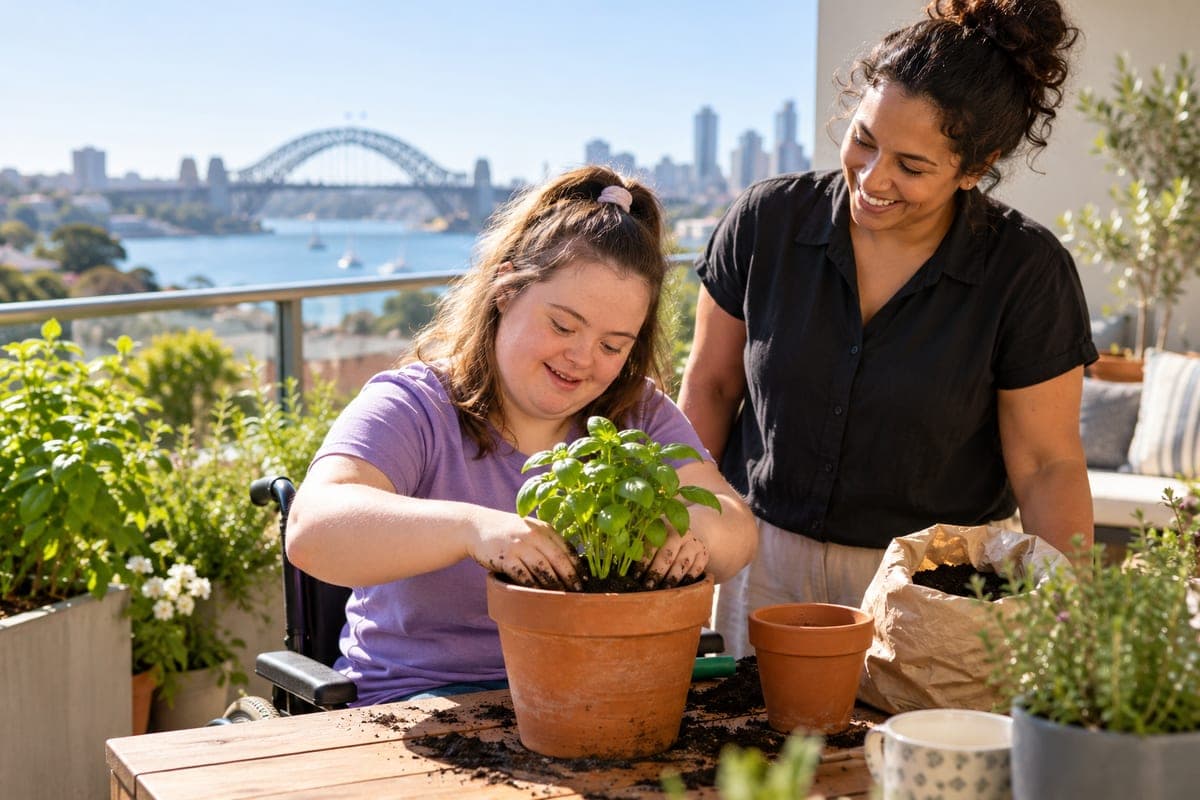
Building independence starts with small, meaningful steps that fit your life. For one person, independence might mean preparing a simple meal. For another, it could mean choosing their own activities, managing a shopping list or learning to use public transport with greater confidence. The goal is not necessarily to do everything alone, but to have more choice and control over everyday life.
Progress rarely happens overnight. Breaking larger goals into manageable activities, practising consistently and recognising achievements along the way can make learning feel more achievable. A few minutes of regular practice may be more useful than attempting too much at once, although everyone learns differently.
If you receive NDIS support in Northmead, Parramatta, Blacktown, Castle Hill or elsewhere in Western Sydney, your everyday support arrangements may offer opportunities to practise skills that matter to you. This guide explains how to set personal goals, work with a support worker and develop independence at a pace that respects your abilities, preferences and support needs.
Book a Free Consultation
Quick answer: How can small steps help with building independence?
Building independence means developing greater choice, confidence and practical ability in everyday life. Start by choosing one activity that matters to you, breaking it into manageable steps and practising with the level of assistance you need. Review what works, adjust the approach when necessary and recognise progress rather than focusing only on the final goal.
Independence does not mean giving up support. You can become more independent in some activities while continuing to need assistance with others.
- Choose one meaningful goal, such as preparing breakfast or planning an outing.
- Break the activity into smaller, manageable steps.
- Identify which parts you can do independently and where assistance is useful.
- Practise regularly at a pace that suits your needs.
- Use prompts, demonstrations or practical support when appropriate.
- Recognise progress, including partial achievements.
- Review your goals and adjust support as your needs change.
1. What does building independence really mean?
Independence looks different for everyone. It is not a single destination or a fixed measure of success. Your version of independence should reflect the activities, relationships, choices and routines that matter to you.
For some people, independence involves developing practical skills such as preparing meals, organising household tasks or shopping. For others, it means participating in community activities, communicating preferences or making more decisions about their daily schedule.
Someone may become more independent by learning to complete an activity without physical assistance. Another person may achieve greater independence by directing a support worker to complete a task according to their preferences.
Both are meaningful forms of independence. Having control over decisions can be just as important as physically performing an activity.
For example, a participant who uses a wheelchair may need assistance with certain household tasks but independently decide how their home is organised and which activities they want to pursue.
Another participant might require support when travelling but gradually become more confident choosing destinations, preparing for outings and communicating what they need.
There is no requirement to achieve the same goals as someone else. Comparing progress with other participants can overlook the differences in individual circumstances and support needs.
A useful starting question is: what would make my everyday life easier, more enjoyable or more connected to my own choices?
The answer may help you identify practical goals worth exploring with your support worker, family or other trusted people.
- Making more decisions about your daily routine.
- Participating in household activities in ways that suit your abilities.
- Developing practical skills for shopping and meal preparation.
- Choosing how and when to participate in community activities.
- Communicating preferences and asking for assistance.
- Managing parts of an activity with less prompting when appropriate.
- Directing the support you receive rather than having decisions made for you.
2. How to set small, achievable independence goals
Large goals can feel overwhelming when they involve several unfamiliar activities. Breaking them into smaller steps can make it easier to understand where to begin and what kind of support may help.
Imagine that your goal is to prepare your own lunch. You might begin by choosing a meal, identifying the ingredients and helping organise the preparation area. Later, you might practise individual parts of the routine with appropriate support.
The goal does not need to be completed independently from the beginning. You can practise one part while receiving assistance with another.
Small steps also make it easier to notice progress. Successfully choosing ingredients, following part of a familiar routine or remembering what comes next may be worthwhile achievements.
Another example is developing confidence with shopping. Rather than beginning with a complicated shopping trip, you could start by creating a short list, identifying a few items and visiting a familiar shop with a support worker.
As the routine becomes more familiar, you can decide whether to practise additional steps. The pace should reflect your preferences, abilities and circumstances.
A helpful goal describes an activity you want to do, why it matters and what assistance may be required. It does not need to be complicated or written in technical language.
For instance, 'I want to take a more active role in choosing and preparing my meals' gives a clearer direction than simply saying 'I want to be independent'.
The important point is that the goal belongs to you. Your support worker can help discuss practical steps, but your choices should guide the process.
- Step 1: Identify an everyday activity you want to do or influence more independently.
- Step 2: Explain why that activity matters to you.
- Step 3: Break it into individual tasks or decisions.
- Step 4: Identify which steps you already manage.
- Step 5: Discuss where assistance, prompts or demonstrations may help.
- Step 6: Choose a manageable starting activity.
- Step 7: Practise and recognise what you achieve.
- Step 8: Adjust the next step based on your experience.
3. Building independence through meal preparation and cooking
Meal preparation is an everyday activity that can provide opportunities to practise planning, decision-making, organisation and practical household routines.
You do not need to prepare a complete meal independently to participate meaningfully. Choosing what to eat, organising ingredients or completing a familiar preparation step can all contribute to greater involvement.
For example, someone might begin by deciding what they would like for breakfast and identifying the items needed. With suitable support, they could practise preparing part of the meal and organising the kitchen afterwards.
Another person may enjoy preparing a simple salad, assembling a sandwich or helping organise ingredients for a family meal.
Some kitchen activities involve sharp utensils, hot surfaces or other risks. The appropriate level of assistance and supervision depends on the person's needs and the activity. A support worker should not encourage someone to attempt a task that cannot be carried out appropriately and safely.
Independence may also mean being able to explain how you want a meal prepared, even when someone else needs to complete parts of the task.
Consistency can be useful. Practising a familiar routine regularly may help you become more comfortable with the steps involved, although progress will vary between individuals.
Valencea offers meal preparation and daily life assistance. Participants can discuss how practical support might help them take part in meal-related routines, subject to their needs and NDIS plan.
Valencea does not provide occupational therapy, dietetic services or other clinical therapy. Where specialist assessment or advice is needed, an appropriately qualified professional should be consulted.
- Choosing a meal or snack.
- Making a short ingredients list.
- Identifying items needed for preparation.
- Organising a suitable workspace.
- Completing manageable preparation steps with appropriate support.
- Practising familiar kitchen routines.
- Cleaning up or organising items afterwards.
- Communicating preferences about how meals are prepared.
4. Developing everyday living skills at home
Home is often a practical place to explore everyday independence because many household activities are familiar and part of regular routines.
Skills may include sorting laundry, organising belongings, preparing for shopping, maintaining a personal schedule or taking part in household cleaning.
A participant in Northmead might want to take more responsibility for organising their bedroom. Someone in Blacktown might prefer to practise parts of the laundry routine, while another participant may want help managing a weekly household checklist.
The aim is not to turn every household activity into a lesson. Support should remain respectful of the person's preferences, comfort and energy.
For example, someone who finds laundry difficult might begin by sorting clothes into groups. They may continue to need assistance with carrying laundry, operating equipment or completing other parts of the task.
Another person might be able to complete a familiar cleaning activity with verbal prompts but need direct assistance with tasks involving bending, lifting or reaching.
A support worker can discuss which parts of the routine the participant wants to manage and where practical assistance is still required.
Simple visual reminders, written lists or familiar sequences may be useful for some people. Others may prefer verbal explanations or completing the activity alongside someone.
The approach should be adjusted to the participant rather than expecting everyone to use the same learning method.
Valencea provides domestic assistance, gardening, meal preparation, shopping assistance and daily life support. Where appropriate, these services can involve participants in manageable parts of everyday routines.
However, participation in household tasks does not automatically make a service eligible for Capacity Building funding. The correct funding category depends on the actual support and the participant's plan.
- Sorting and organising laundry.
- Participating in suitable household cleaning tasks.
- Making a shopping list.
- Organising personal belongings.
- Preparing items needed for the following day.
- Following a preferred household routine.
- Taking part in suitable gardening activities.
- Using reminders or checklists where helpful.
5. Building confidence with shopping, transport and community activities
Community participation can provide opportunities to develop confidence, make choices and practise everyday skills beyond the home.
For some participants, the goal might be choosing items at a supermarket. For others, it could involve planning an outing, attending a hobby group or becoming more familiar with a local community setting.
Someone in Parramatta might want to participate more actively in planning a shopping trip. A participant in Castle Hill may wish to develop confidence attending a regular recreational activity.
A useful approach is to begin with a familiar activity and identify which parts the participant would like to manage.
For example, during a shopping trip, the participant could choose the items they want to purchase, help locate products or communicate preferences to the support worker.
Over time, they may decide to take on additional tasks, such as checking a list or helping plan the order of activities.
Transport independence can also involve several small steps. These might include choosing a destination, understanding an outing schedule, identifying a preferred route or becoming familiar with a transport routine.
Learning to use public transport may require disability-related assistance, and the appropriate approach depends on individual circumstances. Some participants may work towards travelling with less support, while others may continue to need accompanied travel.
There is no single correct outcome. Feeling more confident making choices during a journey can be meaningful even when physical assistance remains necessary.
Valencea offers community participation, shopping assistance, social and recreational activities, support worker services and transport. Participants can discuss suitable practical assistance for everyday community activities.
Always check the relevant NDIS funding rules before arranging transport or community activities. Ordinary activity expenses and disability-related support costs are not necessarily funded in the same way.
- Choosing a destination or community activity.
- Helping plan a shopping trip.
- Creating and using a shopping list.
- Practising communication during everyday purchases.
- Becoming familiar with community locations.
- Participating in a recreational or social group.
- Learning parts of a transport routine with appropriate support.
- Making more choices about how an outing is organised.
6. Why consistency, patience and recognising progress matter
Independence rarely develops through one large effort. For many people, repeating manageable activities over time provides opportunities to become familiar with routines and build confidence.
Short, regular practice may be more manageable than attempting a complicated activity all at once. For example, practising one part of a routine in short, regular sessions may suit some participants better than an occasional lengthy session. Ask your support worker or allied health professional how often and how long suits you.
However, there is no universal practice schedule that works for everyone. The appropriate duration and frequency depend on the person's preferences, abilities, circumstances and the activity itself.
Consistency does not mean rigidly repeating the same task regardless of how someone feels. Support should allow for changes in energy, concentration, interests and daily circumstances.
Some days an activity may feel straightforward. On other days, the participant may need more assistance or prefer not to practise. That does not automatically mean they have lost progress.
Recognising small achievements can help keep the focus on what is meaningful. Completing one additional step, making a decision more confidently or communicating a preference can all be worth acknowledging.
Celebrating progress should be respectful and appropriate to the person. Adults should not be spoken to as children because they are learning or practising a skill.
It is also important not to treat every difficulty as something that must be overcome through greater effort. Some tasks may continue to require assistance, adaptations or specialist input.
The purpose of support is to improve quality of life and personal choice, not to create pressure to become independent in every activity.
If a particular approach is not working, the next step may be to change the task, adjust the assistance or reconsider the goal rather than simply increase the amount of practice.
- Choose a practice schedule that fits your routine.
- Keep individual steps manageable.
- Allow time for familiarity and repetition.
- Recognise partial progress and personal achievements.
- Adjust activities when circumstances change.
- Avoid comparing progress with other people.
- Respect the participant's decision to pause or change a goal.
- Focus on meaningful choice and participation, not perfection.
7. How an NDIS support worker can help you build independence
An NDIS support worker can provide practical assistance with everyday activities while respecting the participant's choices and opportunities to participate.
The appropriate approach depends on what the participant wants to achieve, the tasks involved and the support worker's role.
For example, a participant may want to practise preparing a shopping list. The worker could provide suitable prompts or assistance rather than automatically making every decision for them.
During meal preparation, the participant might complete manageable steps while the support worker assists with other tasks. During a community outing, the participant might choose the destination and preferred activity while receiving practical support with access and participation.
This approach is sometimes described as supporting someone to do what they can rather than automatically doing everything for them.
However, it must not be used to withhold necessary assistance. Some participants need ongoing direct support, and that support can be an important part of living independently.
Support workers should respect individual preferences, communicate clearly and avoid assuming what a participant can or cannot do.
Before beginning a new routine, discuss what the participant wants to try, which tasks require assistance and whether the activity is appropriate for the support being delivered.
It can also be useful to review how the arrangement is working. A participant might discover that they enjoy an activity, want a different approach or prefer to focus on another goal.
Support worker assistance is different from clinical therapy or specialist skills assessment. Some activities may require professional input outside the support worker's role.
Valencea offers practical support worker services and daily living assistance. It does not provide therapy, support coordination or plan management.
Talk with your support worker about what independence means to you so that everyday assistance can reflect your preferences and goals, within the scope of the agreed service and NDIS funding.
- Discuss your goals and preferred activities.
- Identify which tasks you want to complete yourself.
- Agree on where direct assistance is necessary.
- Use suitable prompts or practical help when appropriate.
- Support your choices during everyday activities.
- Respect your preferred pace and communication style.
- Review what is working and what needs to change.
- Maintain necessary assistance rather than reducing support automatically.
8. How NDIS funding can support everyday independence
The NDIS may fund eligible supports that help participants with everyday activities and the development of skills and independence. However, the correct funding category depends on the support being delivered and the participant's individual plan.
Core Supports generally help with everyday disability-related assistance, such as personal care, domestic tasks, shopping assistance and community participation.
Capacity Building Supports focus on eligible activities intended to develop skills, independence and participation over time. These may include specialist assessments, structured training or other supports identified in the participant's plan.
A practical activity can contribute to independence without automatically being classified as Capacity Building. For example, preparing a meal with a support worker may provide opportunities to practise everyday skills while remaining a Core-funded daily living support.
Likewise, receiving assistance during a community outing may help someone become more confident. That benefit alone does not mean the service can automatically be claimed under Increased Social and Community Participation.
The distinction is important because Capacity Building funding is generally allocated for particular purposes, while some Core funding can be used more flexibly within the applicable rules.
Your plan may also include funding periods, stated supports or other restrictions. These conditions can affect which services you can arrange and how funding is used.
Valencea supports self-managed and plan-managed participants. Its NDIS provider registration is in progress, so it cannot currently provide NDIS-funded services under NDIA-managed funding arrangements.
If you want to use NDIS funding for practical independence-related support, check the relevant category, service eligibility and management arrangement before booking.
For uncertain funding questions, check with the NDIA, your plan or your plan manager.
- Core Supports: eligible everyday assistance with daily living and community participation.
- Capacity Building: eligible support focused on developing skills and independence.
- Capital Supports: certain eligible assistive technology and modifications that may assist independence.
- Check whether the proposed activity is an eligible NDIS support.
- Review funding categories, stated conditions and available amounts.
- Confirm which funding management arrangement applies.
- Ask the NDIA or your plan manager before making uncertain claims.
9. Building independence with Valencea in Western Sydney
Valencea provides practical everyday disability support services that can help participants take part in activities, make choices and work towards personal independence goals.
Based in Northmead, NSW 2152, Valencea offers daily life assistance, personal care, meal preparation, domestic assistance, shopping assistance, gardening, companionship, community participation, social and recreational activities, support worker services and transport.
For a participant who wants to become more involved in meal preparation, support may involve discussing preferred routines and identifying suitable tasks they would like to participate in.
Someone who wants greater involvement in household activities may discuss domestic assistance that allows them to complete manageable parts of a routine while receiving help where needed.
A participant interested in social activities may discuss practical assistance to attend community groups, take part in recreational activities or make choices about outings.
The appropriate support depends on the participant's individual needs, preferences, eligible funding and the arrangements Valencea can provide.
Valencea is founder-led, with Arash and Sunny personally overseeing care. Both speak Persian and English, which may help participants and families who prefer to discuss their support needs in either language.
Valencea does not provide therapy, Supported Independent Living, support coordination or plan management. Where specialist assessment or clinical services are required, these must be sought from appropriately qualified professionals.
Valencea currently supports self-managed and plan-managed participants. Its NDIS registration is in progress, so NDIA-managed funding cannot currently be used for Valencea's services.
Your first Meet and Greet is free and comes with no obligation. You can use the conversation to explain what independence means to you, discuss the everyday activities you want assistance with and explore suitable practical support arrangements.
- Practical assistance with everyday activities.
- Support with meal preparation and shopping.
- Domestic assistance and household routines.
- Community participation and recreational activities.
- Companionship and social participation support.
- Transport assistance where suitable and eligible.
- Discussion of personal choices, goals and preferred routines.
- A free first Meet and Greet with no obligation.
Your action checklist
Building independence is an individual process. Use this checklist to identify one meaningful goal and think about how everyday assistance could support your next steps.
You do not need to complete every item immediately. Start with what matters to you, and adjust the approach as you learn what works.
- Choose one everyday activity I would like to manage or influence more independently.
- Write down why this goal matters to me.
- Identify the parts of the activity I already manage.
- Break the remaining activity into smaller steps.
- Decide which step I want to practise first.
- Discuss any necessary assistance with my support worker.
- Choose a suitable routine for practising the activity.
- Use reminders, demonstrations or other practical support where appropriate.
- Recognise achievements without comparing myself with others.
- Adjust the goal if the activity is too difficult or no longer important to me.
- Keep receiving assistance where I need it.
- Review how my everyday support arrangements fit my goals.
- Check my NDIS funding before arranging a new service.
- Discuss my next goal when I feel ready.
Talk to Valencea about building everyday independence
If you want practical assistance with everyday living skills, household routines, shopping, meal preparation or community participation in Northmead, Parramatta, Blacktown, Castle Hill or surrounding Western Sydney areas, Valencea can discuss its support services with you.
Valencea works with self-managed and plan-managed NDIS participants and offers a free first Meet and Greet with no obligation. Its provider registration is in progress, so it cannot currently provide NDIS-funded services under NDIA-managed arrangements. Valencea offers practical disability support rather than therapy or specialist clinical training.
Call or WhatsApp 0494 798 710, or email hello@valencea.com.au. Opening hours are Monday to Sunday, 7:00am to 8:00pm. You can explain what independence means to you and discuss the type of assistance you would like.
Official Australian sources
For current information about NDIS goals, everyday living supports, community participation, funding categories and participant choice, refer to these official Australian sources. Rules and guidance can change, so check the latest information directly.
- National Disability Insurance Scheme — official participant information (ndis.gov.au)
- NDIS — Understanding your plan and goals (ndis.gov.au)
- NDIS — Core Supports and Assistance with Daily Life (ndis.gov.au)
- NDIS — Capacity Building Supports (ndis.gov.au)
- NDIS — Social and community participation (ndis.gov.au)
- NDIS — Using your funding and choosing providers (ndis.gov.au)
- NDIS Quality and Safeguards Commission — participant rights and NDIS Code of Conduct (ndiscommission.gov.au)
- myGov — Australian Government online services (my.gov.au)
About this guide
This Valencea guide provides general information about building independence through everyday activities, practical support and personal goals. It is not medical, legal, financial, therapy or individual NDIS planning advice. The appropriate support depends on each person's circumstances, preferences, plan and applicable NDIS rules. For funding questions, check with the NDIA, your plan or your plan manager. Last reviewed: 30 October 2026.
FAQ
What does building independence mean for someone with disability?
Building independence means developing greater choice, control and practical ability in areas of life that matter to the individual. It may involve learning everyday skills, making more decisions or directing the assistance received. Independence does not require someone to complete every activity without support.
How can I start becoming more independent in everyday life?
Choose one meaningful activity and break it into manageable steps. Identify what you can already do, where assistance is needed and what you would like to practise. Start at a comfortable pace and adjust the goal as your needs or preferences change.
What are examples of small independence goals?
Examples include preparing part of a meal, creating a shopping list, sorting laundry, organising personal belongings or choosing a community activity. A goal may also involve communicating preferences more confidently. Choose activities that are meaningful and appropriate for your circumstances.
How can an NDIS support worker help build independence?
A support worker can provide practical assistance while encouraging the participant to make choices and complete manageable parts of everyday activities. This might include support during meal preparation, shopping, household routines or community outings. The approach should respect the participant's preferences and necessary level of assistance.
Does becoming more independent mean I will no longer need a support worker?
No. Independence does not necessarily mean reducing or removing support. A person may develop greater decision-making skills or confidence while continuing to need regular practical assistance. Support needs should be considered individually rather than assuming that progress means services are no longer required.
How long does it take to develop independent living skills?
There is no universal timeframe for developing everyday living skills. Progress depends on the activity, individual circumstances, learning preferences and the support available. Small, regular opportunities to practise may be useful, but the pace should reflect the individual rather than an imposed deadline.
Can the NDIS fund support to develop independence?
Yes, the NDIS may fund eligible supports that assist with everyday activities or help develop skills and independence. The funding category depends on the actual service and the participant's plan. Check with the NDIA, your plan or your plan manager before arranging a new support.
What is the difference between Core Supports and Capacity Building for independence?
Core Supports generally provide eligible everyday assistance with activities such as personal care, household tasks and community participation. Capacity Building supports focus on developing skills and independence through eligible services with that purpose. Everyday activities may create learning opportunities without automatically qualifying as Capacity Building supports.
Can NDIS support workers help with cooking skills?
Support workers may provide practical assistance during meal preparation and help participants take part in suitable tasks. This could include choosing ingredients, organising a routine or completing manageable preparation steps. Specialist therapy or assessments are separate services, and the correct funding arrangement should be checked.
Can I build independence through shopping and community activities?
Yes. Shopping and community activities can provide opportunities to practise planning, communication, decision-making and participation skills. The amount of assistance needed will vary. Eligible NDIS-funded support may help you take part in these activities when consistent with your plan.
Can I work towards independence if I still need personal care assistance?
Yes. Needing assistance with personal care does not prevent you from making independent decisions or developing other everyday skills. You might continue to receive direct assistance while having greater control over routines, activities and preferences. Independence should reflect your priorities and circumstances.
What if I find an independence goal too difficult?
You can change the approach, make the steps smaller or choose a different goal. It may also be appropriate to continue receiving direct assistance rather than practising a particular task. Progress should not require pressure or comparison with other people.
Can a family member help me practise everyday living skills?
Family members and trusted supporters may help with everyday activities when you want their involvement. They can discuss your preferences, encourage participation and support familiar routines. The arrangement should respect your decisions and not replace necessary funded or professional support.
Does Valencea provide independent living skills support?
Valencea offers practical daily life assistance, meal preparation, shopping assistance, domestic support and community participation services that may help participants practise everyday routines and make choices. It does not provide therapy or specialist clinical training. Any service must be suitable for the participant and consistent with their NDIS plan.
Can Valencea support participants in Parramatta, Blacktown and Castle Hill?
Valencea is based in Northmead, Western Sydney. You can contact the team to discuss the practical support you need in Parramatta, Blacktown, Castle Hill or surrounding areas. Availability for a particular suburb, service and schedule should be confirmed directly.
Can I receive independence-related support if my NDIS plan is self-managed?
Self-managed participants can generally arrange eligible supports from registered or unregistered providers, subject to applicable requirements. Valencea supports self-managed participants and can discuss available practical services. You should confirm that the proposed support is consistent with your plan.
Can plan-managed participants use Valencea for everyday living assistance?
Yes, Valencea supports eligible plan-managed participants. Its NDIS provider registration is in progress, so it cannot currently provide NDIS-funded services under NDIA-managed arrangements. Contact the team to discuss service suitability and confirm your funding arrangements before starting.
How do I choose an independence goal that matters to me?
Think about an activity you enjoy, a routine you would like more control over or a decision you want to make more independently. Describe why it matters and what assistance you may need. Your goal should reflect your own preferences rather than another person's expectations.
Can I change my independence goals over time?
Yes. Your interests, abilities, routines and circumstances may change. You can discuss new personal goals with your support worker and raise relevant changes during NDIS planning conversations. Changes to funded supports remain subject to your plan and the NDIA's requirements.
How can I contact Valencea about building independence?
You can call or WhatsApp 0494 798 710, or email hello@valencea.com.au. Valencea offers a free first Meet and Greet without obligation and is open Monday to Sunday, 7:00am to 8:00pm. The team can discuss practical everyday assistance for self-managed and plan-managed participants.
Ready to talk it through?
Get in touch and our team will help you work out what's genuinely possible for your plan.
Request SupportRelated services
Related articles
About Valencea
People First. Always.
Valencea is an NDIS support provider built on a simple belief: every person deserves to live a life of choice, dignity and connection. Our team works alongside participants, families and carers to deliver support that fits real lives — not the other way around.
Book a Free Consultation
