
Community Participation
NDIS Community Participation in Sydney: Activities, Funding and Planning
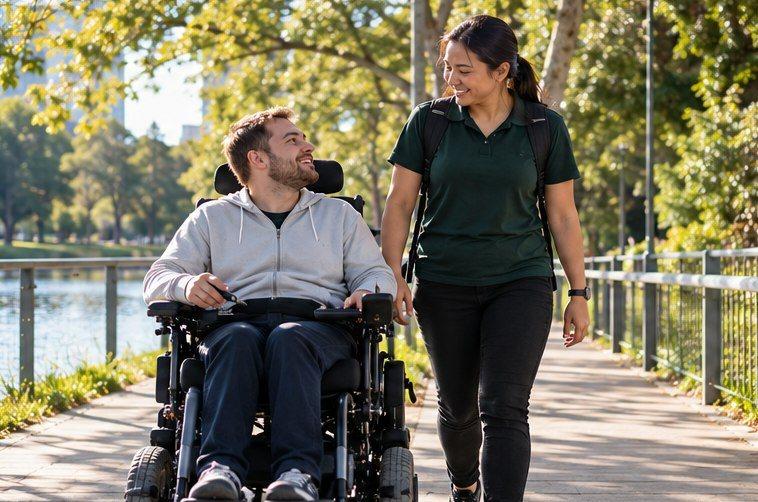
NDIS community participation in Sydney is not about slotting someone into a ready-made activity package. It is about access to people, places and experiences the participant actually chooses, with the right disability-related support alongside them. For one person that might mean attending a library program independently; for another it means having reliable assistance to visit friends, practise communication or explore a new hobby.
This guide explains in plain Australian English what community participation support can involve, how the funding generally works, the activities available across Sydney and Western Sydney, how to start when going out feels hard, and how to plan it with a support worker.
It is general information only — not an eligibility decision or financial advice. Rules depend on your individual plan, your disability-related needs, the service actually supplied and the current NDIS supports lists.
Book a Free Consultation
Quick answer: what can community participation funding cover?
Eligible NDIS supports may help a participant take part in community activities or build the skills needed to do so, where that aligns with their plan. The support itself — a worker's time helping with preparation, travel, communication, navigation or safe engagement in the activity — is the part that may be funded. The ordinary costs everyone pays, such as meals, admission tickets, standard memberships or leisure purchases, are generally not automatically funded unless a specific NDIS exception applies.
NDIS funding is not a general entitlement to every service. A support must be an NDIS support, must relate to disability, and must fit the participant's plan. Check carefully which worker supports are covered and which activity costs remain personal expenses, and verify support categories and current prices before spending.
- Generally may be funded: eligible disability-related assistance needed to access and take part in a community activity.
- Generally not automatically funded: entry tickets, food, standard gym or club memberships, sporting equipment and general entertainment.
- Treated separately: transport costs and a worker's travel charges, which have their own claiming considerations.
- Always individual: the funding category and rules must fit the proposed service and the participant's own plan.
What community participation support can involve
Support may include preparation before an outing, travel assistance, help navigating an unfamiliar venue, communication support, personal care where it is needed, or direct help engaging in a chosen activity. A worker might help plan the trip, accompany the participant on a journey, assist with wayfinding, or work through a new routine until it becomes familiar.
Direct assistance and capacity-building supports can sit in different parts of a plan — if an activity includes coaching or deliberate skill development, check the funding item and the support purpose rather than choosing a label based on a provider's marketing language.
The objective is participation, not dependence on a particular worker or program. Support should follow the participant's preferences, their risk assessment and their funding arrangements.
Start with the participant's own goal, not a timetable
Ask what a good week would look like: visiting a park, volunteering, learning a new bus or train route, going to a community group, trying a hobby or reconnecting with friends. Then ask what currently makes that difficult, and what kind of assistance would actually help. Avoid designing an activity timetable around what a provider wants to sell.
Goals such as meeting peers, building confidence on public transport or developing a weekly routine are far more useful than a vague statement that the person needs to get out more. Start with the participant's own goals and the actual wording in their current plan: ask what assistance is needed, why disability makes that assistance necessary, and what measurable difference the support will make.
An assessment is individual — two people with the same diagnosis may end up with very different arrangements. Preferences also change, so review whether an activity is still worthwhile rather than letting it run on autopilot.
- What does the participant actually enjoy, or want to try?
- Are group supports or individual one-to-one supports a better fit?
- Who pays for admission, snacks and transport?
- How will progress and participant feedback be reviewed, and when?
Accessible activity ideas across Sydney and Western Sydney
Lower-cost options worth exploring include accessible public library activities, local community centres and neighbourhood houses, accessible parks, community gardens, leisure centres, social walking groups, local arts opportunities and recreation programs run by councils. Western Sydney includes varied transport connections and very different venue facilities, so activity planning should account for physical access, the sensory environment, toilets and rest areas.
Community events and programs in Parramatta, Blacktown and nearby suburbs are a sensible place to start for Western Sydney residents, who often prefer a nearby activity with manageable travel over an ambitious cross-city itinerary. Begin with nearby, predictable routes and build confidence gradually if that matches the participant's goals.
Do not assume every advertised inclusive event is accessible for every participant. Verify current opening times, accessibility and costs directly with the venue before promising an outing — a published listing is not a guarantee.
- Library programs, reading groups and free local council activities
- Community gardens and accessible parks with sealed paths and nearby toilets
- Creative and arts workshops, including short introductory classes
- Sports and recreation programs at local leisure centres
- Social walking groups and relaxed cafe outings in quieter periods
- Volunteering, shopping trips and practising a specific public transport route
How community participation is funded
The NDIS may fund eligible disability-related support needed to access community activities when that support is included in the participant's plan. It does not automatically fund general entry tickets, entertainment, meals or other normal living costs. Direct support time, transport and third-party activity costs should always be distinguished from one another.
Rates are set by the current NDIS Pricing Arrangements and Price Limits, which vary by support item, time of day and day of week — check the current document rather than relying on a figure quoted in an article or a social media post. Prices and support rules change, so confirm the latest published material before you commit funds.
Your funding management type matters too: self-managed, plan-managed and NDIA-managed arrangements affect which providers you can use and how claims are processed, so confirm compatibility before booking.
Be careful about tickets, meals and memberships
An eligible support worker accompanying someone does not automatically mean admission charges, food, sporting equipment or memberships become NDIS-funded. A worker's time may be a disability-related support while the admission fee, the coffee and the general entertainment expense remain the participant's ordinary personal cost.
Ask providers to distinguish these clearly on the booking and the invoice. A community goal in a plan does not make every personal expense claimable, and the official NDIS supports lists are what separate eligible disability supports from ordinary living expenses. Replacement supports require an approved exception where applicable.
Do not rely on screenshots, social media lists of "free NDIS items", or a provider's sales claim as proof that an expense is eligible. If a provider and the NDIA differ, verify against the latest official guidance.
- Request the support item description and any relevant price or claim conditions in writing.
- Confirm the current funding period and any stated restriction or provider registration requirement.
- Ask whether travel, activity-related or cancellation charges are valid for that support item and your funding management type.
- Ask how participant consent, personal information and complaints are managed.
What if going out feels hard? Starting small
Plenty of people want more community connection but find the first step genuinely difficult — anxiety, fatigue, crowds, noise, an unfamiliar route or a bad past experience. A small predictable outing can be far more valuable than an expensive or overpacked excursion.
Choose something the participant genuinely wants to try, then make the first attempt deliberately low-stakes. Check venue access, quiet spaces, bathroom accessibility, arrival and departure arrangements, payment requirements and who the contact person is. Begin with a short session, build in a clear option to leave early without it being treated as a failure, and review it afterwards. If crowded settings are overwhelming, adjust the timing, choose a quieter venue or try something else — nothing about community participation requires it to look busy.
- Pick a quiet time of day rather than a peak period.
- Plan a short first visit — twenty or thirty minutes can be enough.
- Agree in advance on a signal or phrase that means "I want to leave now".
- Identify a quiet space, seating and the nearest accessible toilet before arriving.
- Debrief afterwards and change one thing for next time.
Planning it with a support worker
Specify the practical delivery of the support rather than just its name: tasks, frequency, duration, preferred communication method, accessibility needs, location, and what the participant would like to do independently. A clear plan avoids misunderstanding and helps the participant keep choice and control.
A worker should enable the participant's preferences, not replace them with a pre-selected itinerary. Offer genuine choices, explain routes and schedules in the participant's preferred communication format, support consent throughout the activity, and respect the person's right to take reasonable risks.
At the same time, agree on an accessible plan for emergencies, medication needs where applicable, fatigue, sensory overload and changing weather — without treating the person as incapable. The plan should be able to change on the day.
A step-by-step decision checklist
Use this in a real conversation with the participant, not as paperwork completed about them.
- Write a one-sentence goal in the participant's own words.
- Identify the disability-related barrier and the outcome being purchased.
- Locate the relevant plan budget and check the available balance.
- Verify the support category, management type and current support item rather than guessing.
- Confirm the service, frequency, rate, travel, cancellation policy and worker continuity in writing.
- Separate participation support charges from ordinary activity costs.
- Agree on a safety and communication plan.
- Trial a modest schedule, collect feedback, keep invoices and agreements, and set a review date.
Questions to ask a Sydney provider before you commit
Write down the outcomes you want before making enquiries, then give each provider the same information so the answers are comparable. Request a plain-language service agreement. Do not share sensitive plan or medical details until you understand why they are needed and how they will be protected.
- What exact disability-related outcome will this support address, and which tasks are excluded?
- Which NDIS support item or category is proposed, and why?
- Is my current plan and funding management type compatible with your service?
- What are the full rates, minimum shift length, travel charges and cancellation conditions?
- Which worker will attend, and what happens if they are away?
- How will you adapt to communication and accessibility preferences?
- How do you manage feedback, incidents, safeguarding, privacy and complaints?
- Who records outcomes, and how can I review or end the arrangement?
Common mistakes to avoid
Most problems people run into are avoidable and come from assumptions rather than bad intent.
- Treating every advertised disability service as automatically NDIS-funded.
- Using outdated prices instead of the current NDIS Pricing Arrangements and Price Limits.
- Booking before reading the written service agreement.
- Confusing ordinary living expenses with disability-specific supports.
- Assuming one participant's plan predicts another's funding.
- Disclosing sensitive medical information before you understand how it will be handled.
- Repeating the same outing because it fits a roster rather than because the participant wants it.
Measuring outcomes that actually matter
Rather than counting outings, ask whether the participant chose the activity, felt safe, made decisions, gained confidence or developed a useful everyday skill — and whether they want to go again. Avoid measuring success solely by attendance.
Keep a short record of what worked, what barriers came up and how much assistance was needed. A crowded event may be too exhausting, while a smaller group may do far more for social confidence.
Use that feedback to adjust duration, timing and level of assistance, with consent. If circumstances or needs change materially, speak to your my NDIS contact or plan manager rather than assuming a provider can simply claim more funding.
Illustrative examples (fictional, not guarantees of funding)
The following scenarios are invented for illustration. They are not a guarantee of approval, funding or outcomes, and they do not describe real Valencea participants. Any service still has to be matched to the plan and documented before claims are made.
Example one: a participant wants to attend a community art workshop each Thursday. Their support could focus on communication, planning and travel to the venue. The class fee and materials would be assessed separately from the worker's disability-related assistance, and the provider asked for an itemised quote — nobody should promise the NDIS will pay for the whole outing.
Other examples: a worker helps a participant plan and attend a library club; a participant practises ordering food independently with support; a worker assists someone to join a local recreational group.
A final example: a participant in Western Sydney has a clear weekly goal but struggles to arrange consistent support. They describe their needs in their own words, compare two options, check the plan and the written costs, then trial an arrangement — and after several weeks review whether it improved choice, participation or everyday functioning.
Talk to Valencea about community participation in Western Sydney
Valencea is a disability support provider based in Northmead, NSW, serving Western Sydney and other advertised Sydney service locations including Parramatta, Blacktown and surrounding suburbs. We support self-managed and plan-managed participants, and our services include everyday assistance with daily life, personal care, household and domestic tasks, community participation and transport.
If you are exploring community participation, transport assistance or everyday support in Sydney, contact us to discuss your needs, current availability and whether what you are asking for fits your plan. Ask about the participant-led planning process, staff availability, travel charges and the activities we can safely support, and ask for an itemised proposal.
Phone 0494 798 710, email hello@valencea.com.au, or visit valencea.com.au.
Official Australian sources
Check these official pages for current rules, budgets and pricing. Where this guide and an official source differ, the official source and your own plan take priority.
- NDIS — What are core supports? (ndis.gov.au/participants/using-your-funding/different-budget-types/what-are-core-supports)
- NDIS — What are NDIS supports? (ndis.gov.au/participants/using-your-funding/understanding-your-ndis-funding/what-are-ndis-supports)
- NDIS — What are NDIS support budgets? (ndis.gov.au/participants/using-your-funding/ndis-support-budgets/what-are-ndis-support-budgets)
- NDIS — Pricing arrangements and price limits (ndis.gov.au/providers/pricing-and-payments/pricing/pricing-arrangements)
- NDIS — What are NDIS pricing arrangements? (ndis.gov.au/participants/using-your-funding/using-portal-and-app/what-are-ndis-pricing-arrangements)
- NDIS — Support catalogue (ndis.gov.au/providers/pricing-and-payments/pricing/what-support-catalogue)
- NDIS — What is a support worker? (ndis.gov.au/participants/working-providers/support-workers-and-recovery-coaches/what-support-worker)
- NDIS — Changes to support budgets from 1 October (ndis.gov.au/news/11695-changes-support-budgets-1-october)
About this guide
This article provides general information only. It is not legal, financial or clinical advice, and it is not a personalised funding decision. NDIS funding depends on your individual plan, the applicable NDIS supports rules and evidence of disability-related need. National Disability Insurance Agency guidance, legislation and pricing schedules can change — check current NDIA guidance, or ask your my NDIS contact or plan manager, before committing funds.
Nothing here should be read as a promise that a particular activity, cost or support will be funded.
Last reviewed 18 October 2026.
Image disclosure: the photo on this page is an illustrative stock or AI-generated image. It does not show a real Valencea participant or support worker.
FAQ
Does the NDIS pay for social outings?
It may fund eligible disability-related assistance associated with participation, subject to your plan and the current rules. The worker support is the part that may be funded; the outing's own costs are assessed separately.
Can the NDIS pay for concert, cinema or event tickets?
Generally no, not automatically. Ordinary admission and entertainment costs are usually treated as personal expenses even when the support time is eligible. Check the current NDIS rules and whether any specific exception applies to your situation.
Can a support worker come with me to a cafe?
Potentially, where disability-related support is appropriate, funded and correctly agreed in advance. The food and drink remain an ordinary cost you pay yourself.
Can the NDIS fund community sports or a gym?
It may fund eligible disability-related assistance to participate, but not necessarily a standard membership, entry fee or sporting equipment. Confirm the support item and the exclusions in writing before you commit.
Does community participation funding cover transport?
Transport costs and a worker's travel charges may be treated separately from participation support. Check the applicable funding and claiming rules, and ask the provider to itemise travel on the invoice.
Is community access the same thing as transport support?
No. Support provided during an activity and transport expenses can be distinct, with different rules and different claiming arrangements. Do not assume one covers the other.
Can activities happen with one-to-one support rather than in a group?
Yes, where it is appropriately funded and aligned with the participant's needs and goals. Group and individual supports suit different people, so it is worth discussing both.
Do I choose the activities myself?
Choice and control should guide activity planning, within funded supports and reasonable safety considerations. A provider should not substitute its own preferences or push you into a provider-run group.
What if crowded events are overwhelming?
Adjust the timing, choose a quieter setting, shorten the visit or try a different activity. A small predictable outing is often more valuable than a large one, and nothing requires participation to look busy.
Is community participation only for young people?
No. Appropriate activities depend entirely on each participant's interests, abilities, circumstances and goals, at any age.
Can a support worker help me make friends?
A worker can support participation, communication and confidence, which often makes connection easier. The relationships themselves have to be participant-led — they cannot be arranged for you.
How much does community participation support cost per hour?
Rates are set by the current NDIS Pricing Arrangements and Price Limits, which vary by support item, time of day and day of week. Check the current document and ask your provider for an itemised quote rather than relying on a figure quoted online.
Ready to talk it through?
Get in touch and our team will help you work out what's genuinely possible for your plan.
Request SupportAbout Valencea
People First. Always.
Valencea is an NDIS support provider built on a simple belief: every person deserves to live a life of choice, dignity and connection. Our team works alongside participants, families and carers to deliver support that fits real lives — not the other way around.
Book a Free Consultation
