
Daily Living Support
What is the difference between personal care and domestic assistance under the NDIS?
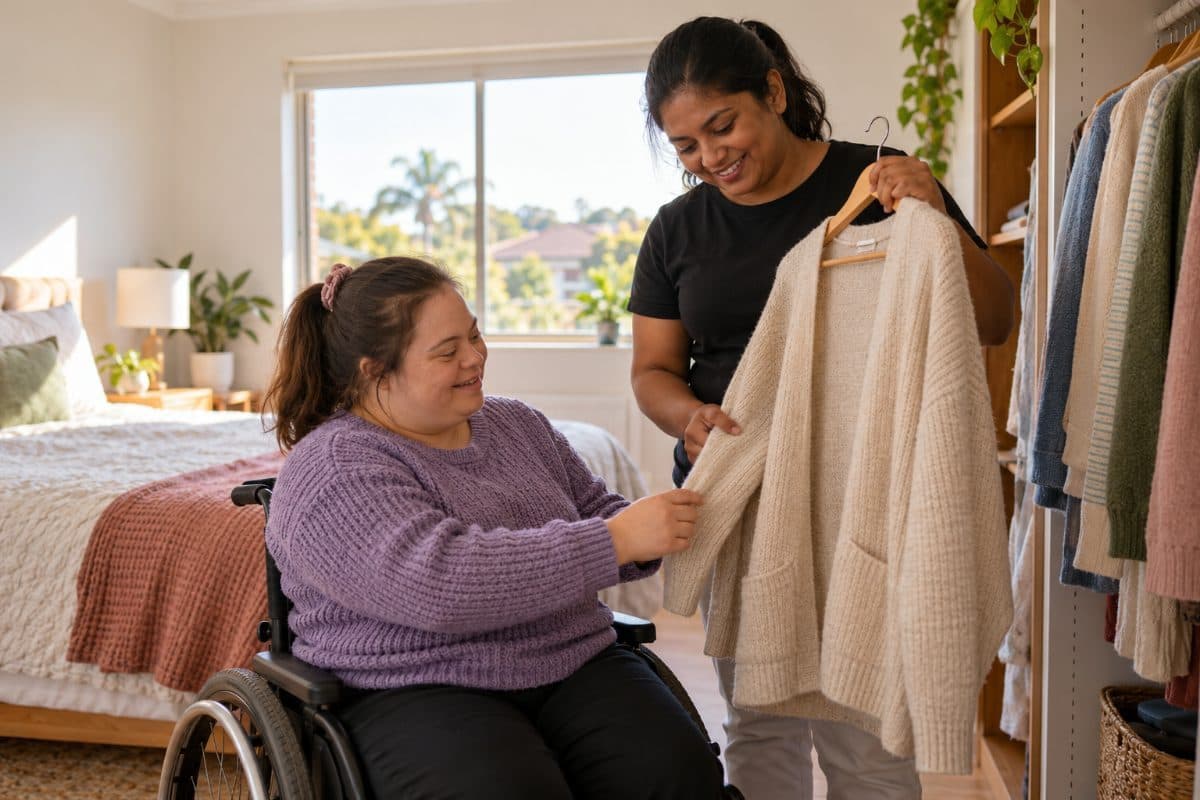
Personal care helps a person with their own daily routines, such as washing, dressing and getting ready. Domestic assistance helps with household tasks, such as cleaning and laundry. Under the NDIS, they may be discussed together as daily life support, but the tasks, personal preferences and funding arrangements need to be clear before support starts.
رزرو مشاوره رایگان
Key takeaways
- Personal care focuses on the person and their body, privacy and daily routine.
- Domestic assistance focuses on keeping the person’s home practical and manageable.
- A visit may involve both types of support, but agree on tasks, time and charges first.
- Whether particular tasks can be funded depends on the individual plan and applicable NDIS rules.
What does personal care mean?
Personal care is direct help with personal activities. It may include support with washing, showering, dressing, grooming and getting ready for the day. The right level of help depends on what the person wants to do independently, where assistance is needed and how they prefer support to be offered. Privacy is central. A good conversation covers consent, boundaries, the pace of the routine and whether the person wants instructions, hands-on assistance or simply someone nearby. Some tasks, especially those involving medication, clinical procedures or more complex personal care, need careful assessment of worker skills, responsibilities and service boundaries.
What is domestic assistance?
Domestic assistance is practical help with household jobs. This might mean cleaning a kitchen or bathroom, vacuuming, doing laundry or changing bed linen. The emphasis is on the home environment rather than hands-on care of the person. For example, wiping kitchen benches is domestic assistance. Helping someone wash their face is personal care. Washing clothes is domestic assistance; helping someone choose and put on clothes is personal care. Domestic support does not automatically mean every kind of housekeeping task will be included. Ask which tasks are possible, what equipment is needed and how the visit will be organised.
Personal care versus domestic assistance: everyday examples
Think about the reason for the task. If the support is about your own hygiene, dressing or getting ready, it is generally described as personal care. If it is about maintaining your living space, it is generally described as domestic assistance. Consider a bathroom visit: assistance with a person’s washing routine is personal care; cleaning the sink or mopping the bathroom floor is domestic assistance. In a bedroom, helping a person dress is personal care; changing their bedding is domestic assistance. The distinction helps everyone agree on priorities without turning a daily routine into a rigid checklist.
Can both types of help happen in one visit?
They can be discussed as part of the same daily life routine. A simple written plan could name the tasks in order, note anything the person prefers to do themselves and record the expected visit length. It should also say how changes are handled. One-to-one appointments have a minimum two-hour shift here, so this should be considered when discussing a suitable routine.
How does NDIS funding fit in?
The NDIS uses funding categories including core supports and capacity building. A self-managed participant pays and manages claims under their own arrangements. A plan-managed participant uses a plan manager to process eligible provider invoices. These are general descriptions only; the applicable funding, prices, claims and service rules should be checked against current NDIS guidance. If you are unsure how your plan is managed or whether a support is covered, speak with your planner or support coordinator.
What should I agree before support begins?
Start with the person’s goals and daily routine rather than a service label. Discuss which tasks matter most, what the person can and wants to do independently, preferences around privacy and personal space, and any safety needs. Ask for the proposed tasks and times to be explained in plain language. Check the practical details: the shift length, who will attend, how changes and cancellations work, what happens if a task cannot be completed and how the visit will be recorded. If a need involves therapy, nursing, clinical care or complex behaviours, discuss the right qualified professional and an appropriate service pathway with your planner or support coordinator. General daily life support is not a replacement for those specialist services.
Support that builds choice and independence
The aim of a useful routine is not to take over tasks the person wants to do. For example, someone might sort laundry while a worker handles a more difficult part, or choose their clothes and request assistance with fastenings. How help is shared should be decided with the person, not assumed. Preferences may change from day to day.
About Valencea in Western Sydney
Valencea is a small, founder-led NDIS support provider based in Western Sydney. It offers one-to-one support and a free, no-obligation Meet and Greet, with support worker matching based on personal preferences. It works with self-managed and plan-managed participants. The business has location pages for Parramatta, Northmead, Blacktown, Castle Hill and other named suburbs across Western Sydney.
FAQ
Is showering personal care or domestic assistance?
Helping a person with their showering routine is generally described as personal care. Cleaning the shower or bathroom afterwards is a household task and fits the domestic assistance description.
Is laundry personal care or domestic assistance?
Washing, drying, folding and putting away clothes are normally discussed as domestic assistance tasks. Helping a person put their clothes on is personal care. There can be overlap in a morning routine, so it helps to name each task in the agreement rather than using only a broad service label.
Can I use core supports for both services?
Core supports is an NDIS funding term that may be relevant when discussing everyday assistance, but it does not mean every personal or household task is automatically funded. Check the individual plan and current rules before making a claim. Your planner or support coordinator can help explain the plan.
Can a support worker do cleaning and help me get dressed in one visit?
You can ask about planning both tasks in a single routine. It is important to agree on the task list, boundaries and visit length beforehand.
Do I need a support coordinator to arrange this support?
Not everyone uses a support coordinator. A person can start by checking how their plan is managed and speaking directly with a provider about the support they want. If the funding is unclear or the situation is complex, ask the planner or support coordinator for guidance. This is general information, not individual plan advice.
Can NDIA-managed participants book this support?
No. People using NDIA-managed funding should speak with their planner or support coordinator about suitable provider options. They should not assume that a service can be paid for from a different plan-management arrangement.
What if I need nursing or therapy rather than daily help?
Therapy and higher nursing or clinical needs sit outside the provider’s current service scope. Discuss those requirements with your planner, support coordinator or an appropriately qualified health professional so that you can find the right type of assistance without relying on ordinary household or personal care support.
How long should a personal care or cleaning visit be?
The right visit length depends on the tasks, the person’s preferences and the practical time needed. There is no one length that suits everyone. The listed minimum shift is two hours, so discuss what can reasonably fit into that time and clarify task priorities, cancellations and charges before starting.
آمادهاید درباره آن صحبت کنید؟
با ما در تماس باشید تا تیم ما به شما کمک کند دریابید چه چیزی واقعاً برای برنامه شما ممکن است.
درخواست حمایتدرباره Valencea
همیشه، مردم در اولویت هستند.
Valencea یک ارائهدهنده حمایتی NDIS است که بر یک باور ساده بنا شده: هر فردی سزاوار زندگی با انتخاب، وقار و ارتباط است. تیم ما در کنار شرکتکنندگان، خانوادهها و مراقبان کار میکند تا حمایتی متناسب با زندگی واقعی افراد ارائه دهد، نه برعکس.
رزرو مشاوره رایگان
